

A booking form can be built quickly and still solve the wrong problem. It may collect a date without checking capacity, accept a phone number without explaining why, or confirm a request that staff still need to approve. Better coding tools make it easier to produce the form. A clear brief determines whether it is the right form.
Move the conversation towards behaviour
Anthropic introduced Claude Opus 4.5 on November 24 with an emphasis on coding and agent work. Model improvements are encouraging, but the most useful project conversation is still about what a person needs to accomplish. Screens are evidence of that behaviour, rather than the entire specification.
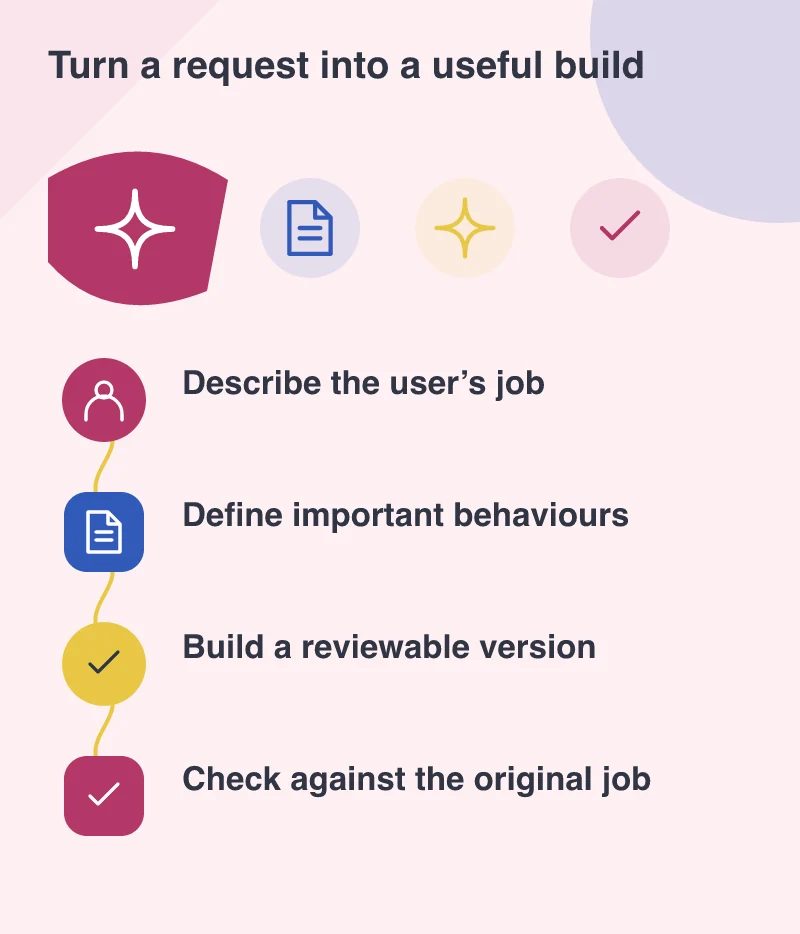
Describe the booking journey in ordinary language. A visitor chooses an available session, sees the relevant cost, provides the required details and understands whether the booking is confirmed. Each sentence gives the implementation something concrete to support and the reviewer something concrete to inspect.
Use prototypes to settle real questions
A prototype is especially valuable when stakeholders disagree about a workflow. Instead of debating a large specification, show a small version of the decision: should customers choose a time first, or a service? Which information changes the available choices? What does staff approval look like?
Imagine a workshop business with sessions of different lengths. A polished calendar that ignores duration can create a false sense of progress. A rough but functioning selection sequence can expose the important constraint immediately. AI-assisted implementation is well suited to making those discussions tangible.
Make maintenance part of the output
The person who changes the form next month needs to understand where its rules live. Business text, validation and integration settings should have clear homes. Avoid scattering the same rule through several generated components just because each version looks correct in isolation.
Ask for an explanation of the key decisions alongside the code. That does not require a long technical essay. A short map of the data, important states and external dependencies can make the result much easier to review and continue.
Spend the speed on a stronger result
Faster implementation creates room to try an alternative, simplify an awkward step and examine a real error state. Use that room. A project does not become better merely because it contains more screens or more generated code.
The opportunity is to bring working evidence into the conversation earlier. With a clear brief, the team can judge a prototype against the customer’s actual task and improve it while changes are still inexpensive. Good AI development starts with a useful question and ends with behaviour people can recognise.