
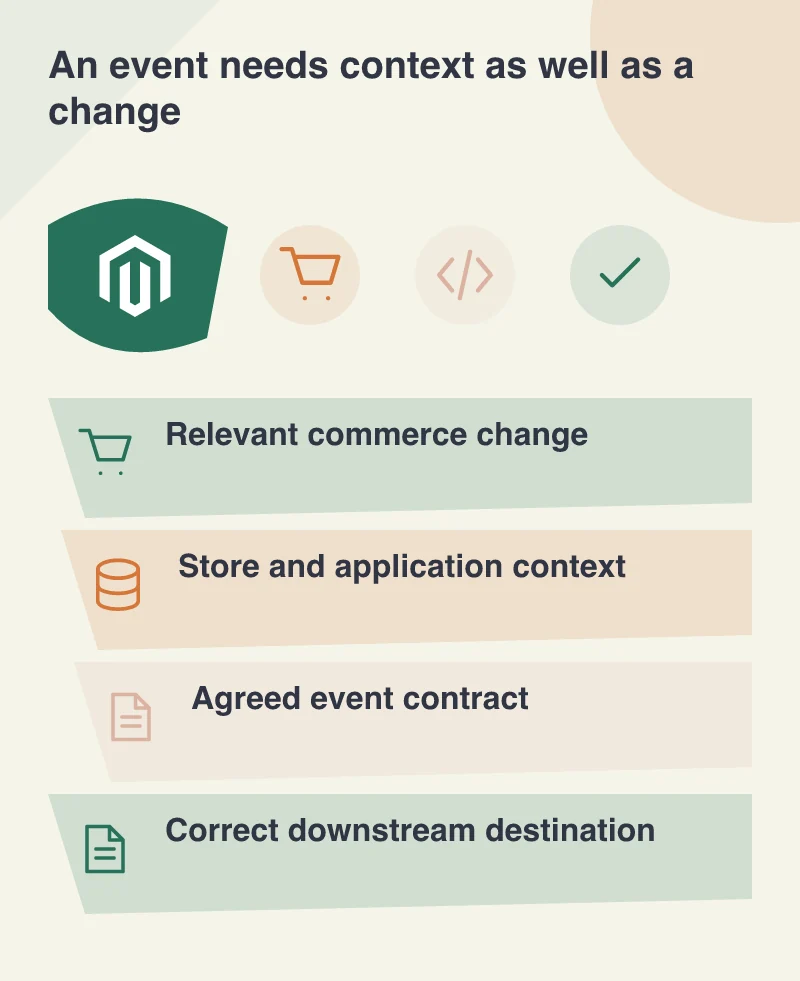
Two stores can sell the same product with different languages, currencies or fulfilment arrangements. A message saying that an order changed is not enough if the receiving system cannot tell which store’s process to follow. Context is a small part of an event payload with a large effect on the integration.
Put meaning around the identifier
Adobe I/O Events for Adobe Commerce 1.17.0, released on January 30, adds the ability to include values from application context in event payloads. This is useful where a receiving service needs information beyond the changed object itself. The exact available context still needs to be checked for the implementation.
Define the business meaning of each identifier. An internal order ID, a customer-facing order number and an identifier in another application may serve different purposes. Naming them clearly in the contract prevents the destination from making assumptions that happen to work for one store.
Route by an agreed rule
Imagine a commerce business serving retail and trade customers through separate store views. The receiving customer-service system needs the right workspace and language context. Guessing from a product name or email address is a fragile alternative to a deliberate field and routing rule.
Keep the rule understandable to operations staff. “Orders from this store view create tasks in this workspace” can be reviewed by the people who own the process. The configuration should reflect that sentence, with a clear exception path when the context is missing or unrecognised.
Separate stable facts from presentation
An event should carry stable references that the receiving system can use reliably. Human-readable labels are valuable too, but they can change. A renamed store or translated status should not silently become a new integration identity.
Document which values are authoritative and which are explanatory. This helps when teams add another region or refresh their branding. A good contract can accommodate a changed display name without requiring every downstream process to be rebuilt.
Make the expansion path ordinary
Test the integration with at least two distinct contexts before declaring it ready for a multi-store business. Check the destination, its readable labels and the record that support staff will use to investigate a problem. Do not judge only the event being successfully published.
The reward is a clearer connection between the commerce platform and the rest of the business. Each event says what changed and where that change belongs. That makes adding a store or a new destination a controlled extension of the process rather than another collection of special cases.