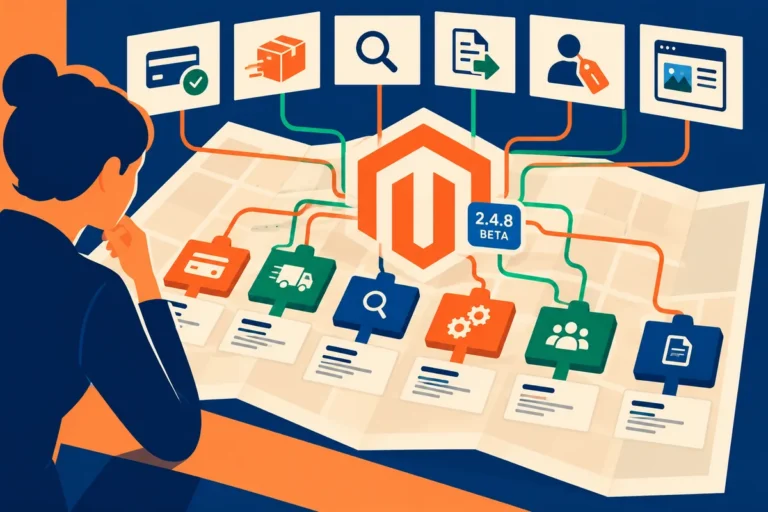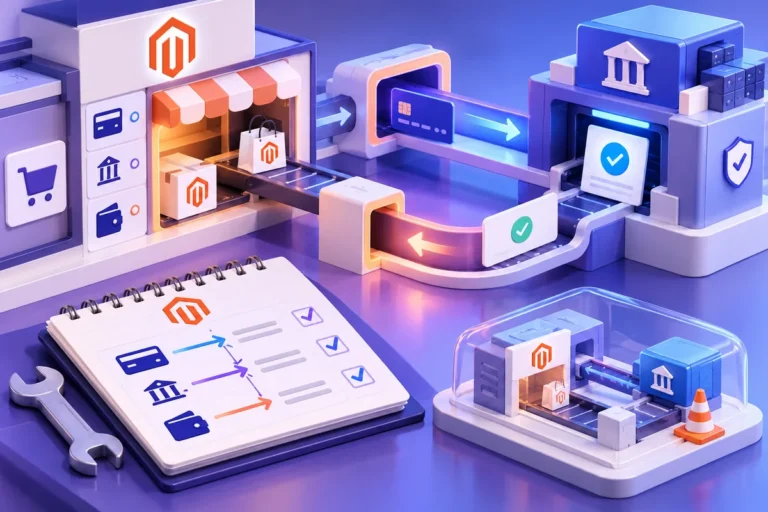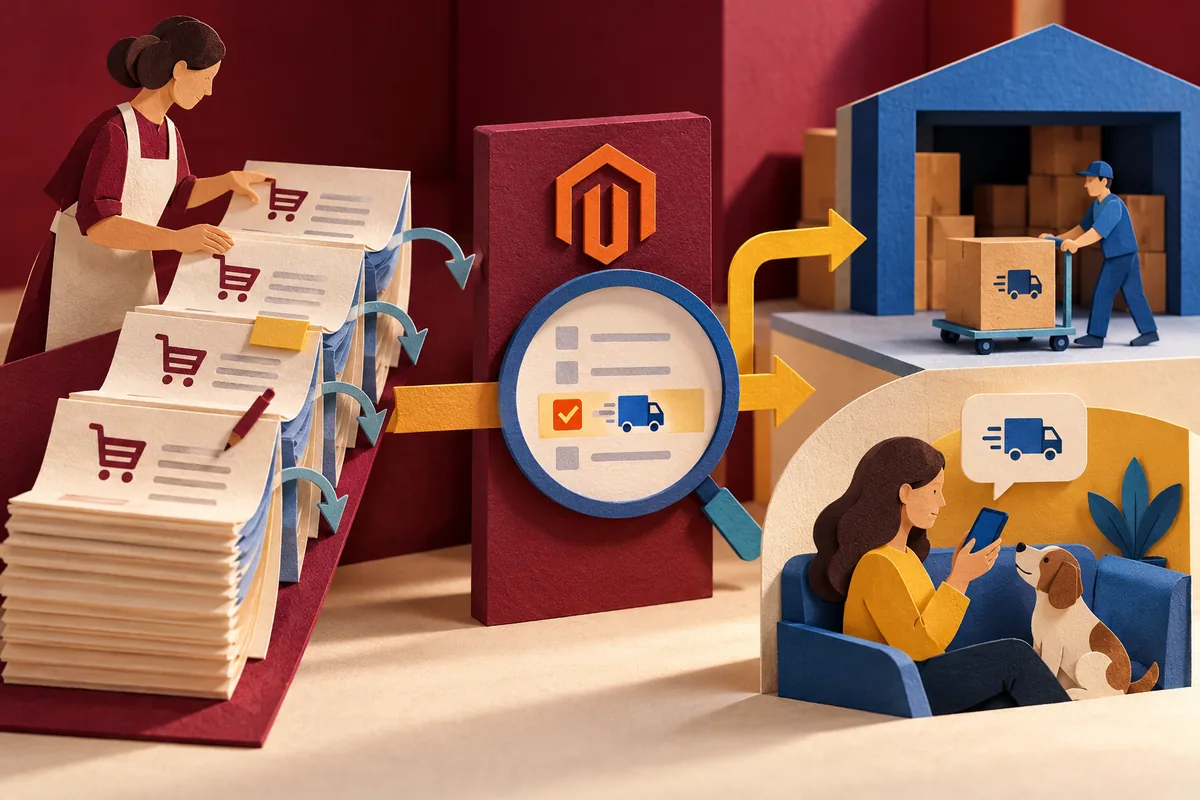
An order record can be saved many times before it reaches the customer. If every save triggers the same downstream action, a simple integration becomes noisy: repeated notifications, unnecessary CRM updates and staff unsure which event actually matters. Good automation begins with a more precise description of the change.
Name the business transition
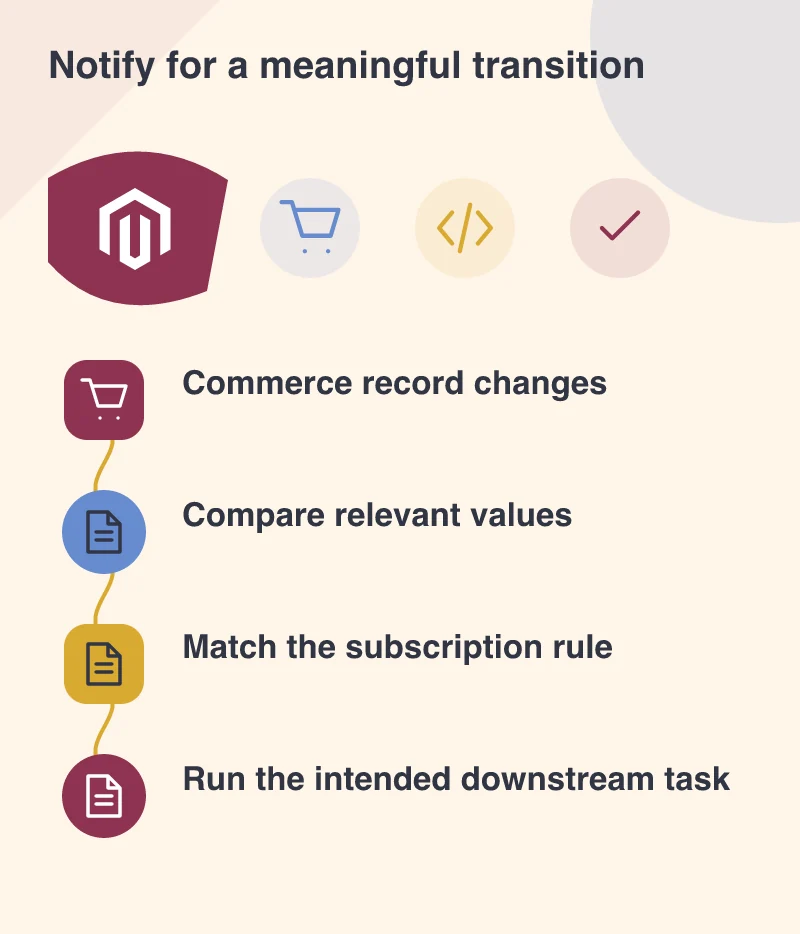
Adobe I/O Events for Adobe Commerce 1.14.0, released on October 30, adds original data and on-change rules for subscriptions. These are useful building blocks for distinguishing a changed value from a record that has merely been saved. They apply to the relevant Adobe Commerce eventing extension, rather than every Magento installation automatically.
Start with a sentence such as “When the order moves into the agreed fulfilment state, create the warehouse task.” That is more informative than “sync orders”. It identifies the trigger, the information needed and the expected result.
Keep the message suited to the job
A downstream service rarely needs the entire commerce record. Decide which identifiers and values it requires to complete its task, and give those fields clear meanings. A warehouse task and a customer notification may need different information from the same underlying event.
Imagine a store connecting fulfilment updates to a customer-service workspace. Staff need the order reference, the relevant transition and enough context to open the correct record. Sending every unrelated field makes the integration harder to inspect and maintain without necessarily helping the agent.
Design for repeated delivery
Event-driven systems need a deliberate response when a message is processed more than once. A stable event or business identifier can help the receiving application recognise work it has already accepted. Otherwise, an ordinary retry may become a second task or notification.
Keep a visible record of the receiving outcome. “Sent” from the commerce side and “completed” in the destination are different states. When support staff investigate a missing update, they should be able to follow the event across that boundary without guessing from an email timestamp.
Agree what happens when events arrive in an unexpected order. A receiving system may need to check the current commerce record before updating its own task. This is especially relevant when a later update overtakes a delayed message and the older event no longer describes the active situation.
Make the integration understandable to its owner
Document the transition, the destination and the person responsible when it fails. This can be a short description beside a simple diagram. It should explain the business process without requiring someone to read the implementation.
A focused event contract makes automation easier to extend. Another system can respond to the same meaningful transition without every integration learning every detail of the store. The benefit is a cleaner operational story: this changed, this task followed, and the team can see whether it finished.