
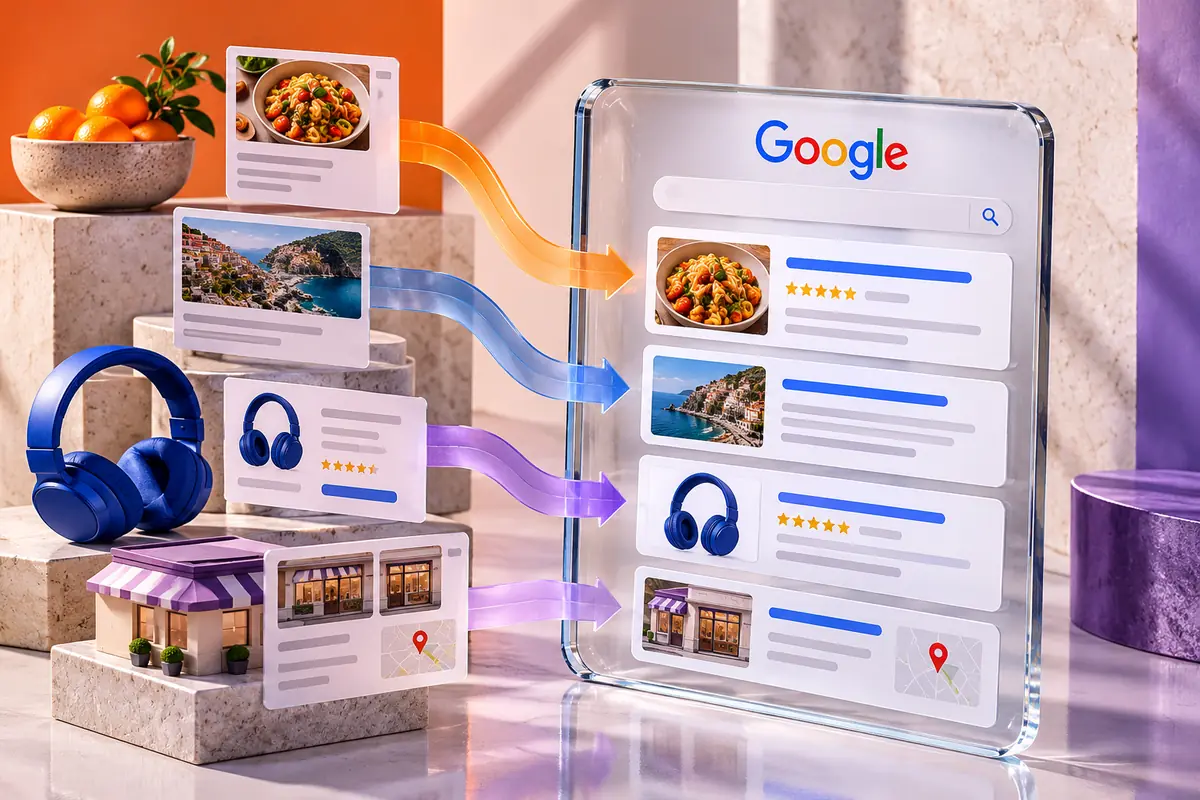
A search result has very little space to explain why a page is useful. Rich cards offer some publishers a more visual way to introduce suitable content, and Google’s March update expands their availability globally. For a business team, the interesting question is not how to decorate every result. It is whether the page has a clear, accurate set of information that a richer presentation could help somebody understand.
Begin with the kind of page you actually have
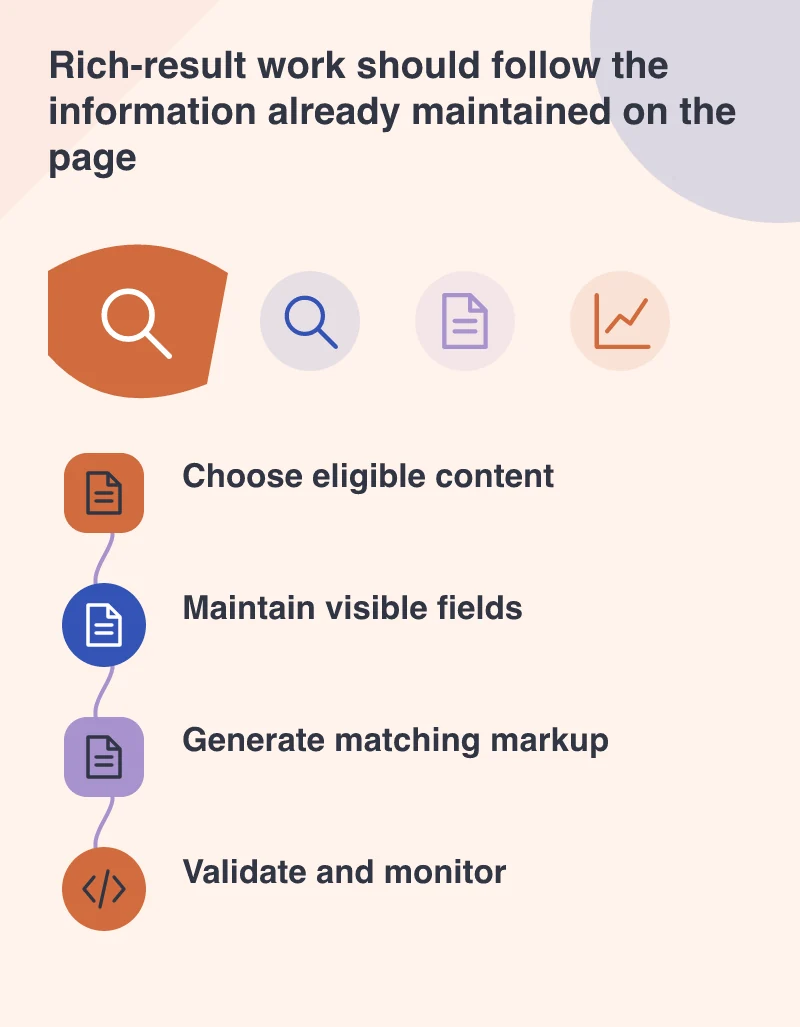
Google’s rich-card announcement describes supported content types and a workflow for exploring, implementing and monitoring structured data. Eligibility depends on the content and the supported search feature; adding markup is not a promise that Google will display a card. A company profile, a recipe and a product detail page should not be forced into the same format just because one of them has an attractive example in a presentation.
Imagine a cookery business publishing recipes alongside its classes. A recipe has useful components such as its name, preparation information, an image and clear instructions. The team can maintain those parts consistently on the page before asking a developer to describe them in machine-readable markup. If the visible article is incomplete or misleading, another layer of syntax will not repair the reader’s experience.
Keep the visible page and the markup together
Structured information is easiest to trust when it comes from the same content fields used to render the page. If a duration is entered once for readers and typed again into a hidden code snippet, the two values can drift apart. An editor changes the recipe but forgets the snippet. The result may be technically well-formed while describing something different from the page a visitor opens.
This is where a sensible CMS model helps. Define which information editors supply, which fields are optional and what happens when a value is missing. Explain image requirements in the editing screen. Use a preview that shows the real page, not an invented guarantee of a Google result. The development task becomes keeping a clear publishing system rather than repeatedly pasting bespoke markup into articles.
Validate an example, then watch what happens
Start with a small group of representative pages and use the testing and reporting tools linked from Google’s announcement. Check an ordinary completed page, one with an optional field missing, and a page after an editor changes its title or image. The most valuable failures are often the ones that reveal an unclear content rule, such as whether two different values are both being called the cooking time.
After publication, separate implementation evidence from search-performance evidence. A valid test shows that the page can be read in the expected way; it does not prove a ranking improvement or a particular click-through rate. Make eligible content easier to interpret and maintain. A richer search appearance is one possible way for people to discover it.