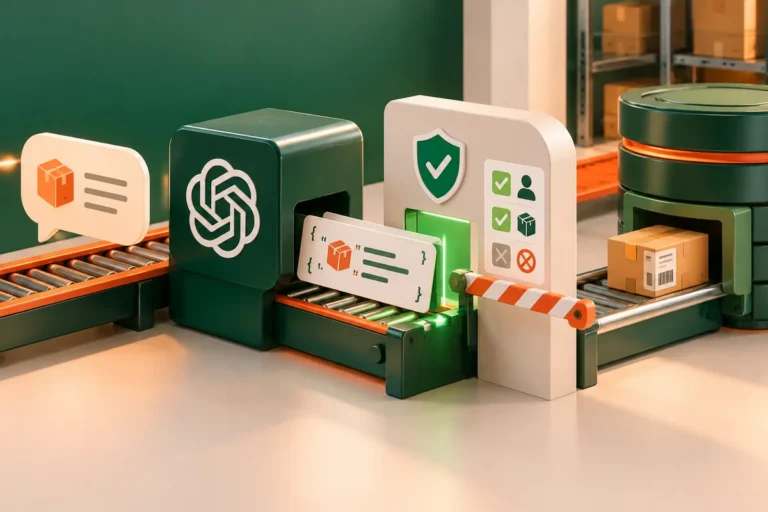

“Book it for Tuesday—actually, make that Wednesday.” A voice interface has to deal with the correction before it turns the first half of the sentence into an action. With the Realtime API now available in beta following October’s announcement, conversational applications are easier to explore. The difficult product work is deciding when a spoken intention becomes a confirmed business operation.
Define the action in ordinary language
Choose a limited task such as requesting an appointment slot or looking up an order status. Write down which parts are informational and which would change a record. The person speaking should understand when the assistant is exploring options and when it is about to make a commitment.
A natural voice can make those stages feel closer together than they really are. Do not rely on tone alone to distinguish a suggestion from a completed booking. Use a concise confirmation containing the relevant details, and show the same details visually where the product has a screen.
Treat corrections as part of the normal conversation
People pause, interrupt themselves and use relative expressions such as next Friday. The application needs a clear representation of the current intended values, not an irreversible sequence of every phrase recognised along the way. Ask a useful clarifying question when more than one interpretation remains.
Test changes to time, quantity, names and destinations with fictional examples. Examine whether an earlier value remains in a pending action after the customer has corrected it. This kind of state mismatch can be difficult to notice in a smooth demonstration but frustrating in an ordinary working conversation.
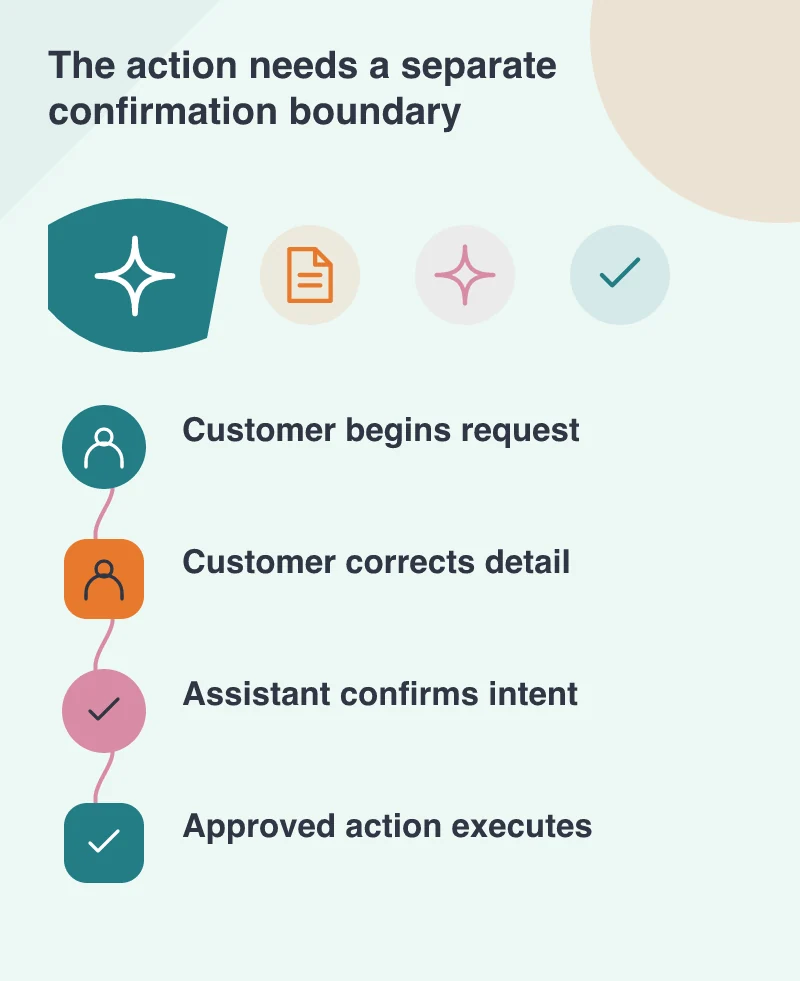
Keep the system operation behind its own checks
The announced API supports function calling, but the application remains responsible for authentication, permission and input validation. A spoken request should not grant access to another person’s account or make an operation valid merely because the model selected a function for it.
Handle interruptions and network failures deliberately. If an action may already have completed, check its actual result before inviting the user to repeat it. The spoken response should distinguish a proposed change, a submitted request and a confirmed outcome. Those states can sound similar unless the dialogue has been designed carefully.
Make another route available
A customer may be in a noisy place, have difficulty speaking or prefer text. Provide an appropriate alternative for the same task and a clear path to staff assistance. Voice is an interface choice, not a reason to remove other ways of completing important work.
A useful trial includes misunderstandings and corrections, not only prepared sentences. Watch whether the customer can tell what will happen next and whether the recorded operation matches the final confirmed request. The strongest voice experience is one that remains understandable when the conversation becomes ordinary, untidy human speech.