A platform acquisition naturally raises questions for a business that depends on that platform. On 19 June, Adobe announced completion of its acquisition of Magento Commerce and described a broader ambition to connect commerce with its experience products. For an existing store owner, this is news to follow carefully. It is not, by itself, a specification for the next project or evidence that every part of a store should change immediately.
Separate an announcement from an available feature
A company’s strategic direction and the software installed in a store are different things. An announcement about combining capabilities does not demonstrate that a particular integration is available, included in a current contract or compatible with a merchant’s extensions. Ask for concrete product documentation and terms before budgeting around any proposed capability.
Imagine a wholesaler whose immediate priorities remain contract pricing, stock accuracy and reliable order transfer. If these work adequately, the acquisition does not explain why they should be replaced. If they do not, describe the failure in business terms first. A platform roadmap becomes useful when it answers a specific need rather than replacing the need with a larger list of products.
Make the store’s dependencies visible
List the Magento edition and version, hosting arrangement, theme customisations and active extensions. Add the systems that exchange information with the store: accounting, warehouse software, payment services and customer management. Record who supports each connection. The inventory is valuable whether the next decision is a routine update, a new integration or a substantial rebuild.
Then trace a representative order. Identify which system decides the selling price, which reserves stock and which confirms dispatch. If two systems can change the same value, establish how conflicts are handled. These operational relationships often constrain a project more than the visible design. A new storefront cannot correct contradictory stock records simply by presenting them more attractively.
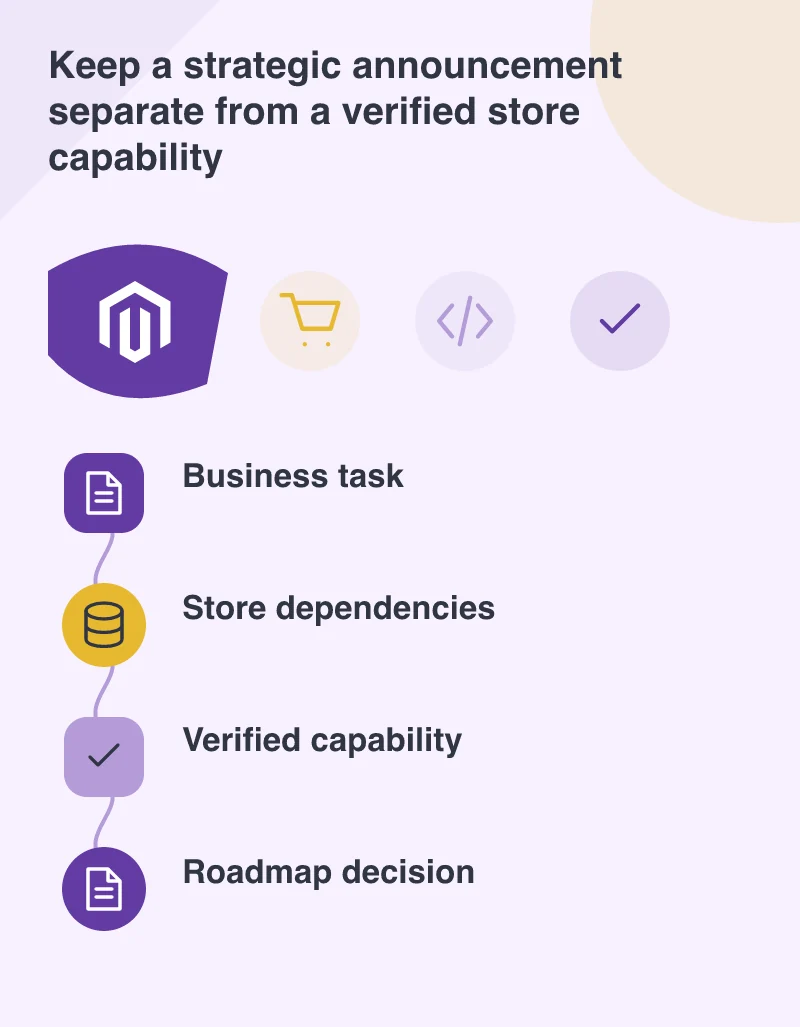
Compare decisions using the same business task
Suppose the wholesaler wants buyers to reorder a previous purchase more easily. Compare potential approaches against that exact journey. Does the buyer see current availability? Are negotiated prices preserved? Can an out-of-stock line be explained? Who supports the resulting order when something fails? A prototype or test environment should demonstrate those details before a major commitment.
Include the cost of maintaining custom integrations and training staff, not just the first build. A useful estimate names assumptions and exclusions. It also distinguishes work needed now from capabilities that might become relevant later. This prevents a strategic announcement from turning a modest usability improvement into an unnecessarily broad programme.
Keep today’s store healthy while evaluating tomorrow
Continue appropriate security maintenance, backups and essential transaction checks while the longer-term direction is reviewed. A business can investigate future options without leaving its current checkout unattended. Maintain a record of the questions that require answers from the platform provider, host or implementation partner.
The acquisition may shape future choices, but the merchant can make a sound decision using evidence already available: present problems, supported software, integration behaviour and a realistic operating budget. Review new announcements as they arrive. Commit to a change when the proposed solution can be demonstrated against the store’s actual work.