
A photograph may show a blue bag with two straps. It cannot reliably establish the fabric composition, warranty or weight limit. ChatGPT’s September rollout of image and voice capabilities makes it easier to experiment with visual assistance, but an ecommerce team needs a clear boundary between describing what appears in a picture and publishing facts about the product being sold.
Treat the rollout as a defined product capability
OpenAI describes a staged release to specified ChatGPT users, not an immediate promise that every website can call the same feature through an unrestricted API. Keep a proposed workflow separate from the capability and access actually available to the team. A successful conversation in a product demo is not a completed integration.
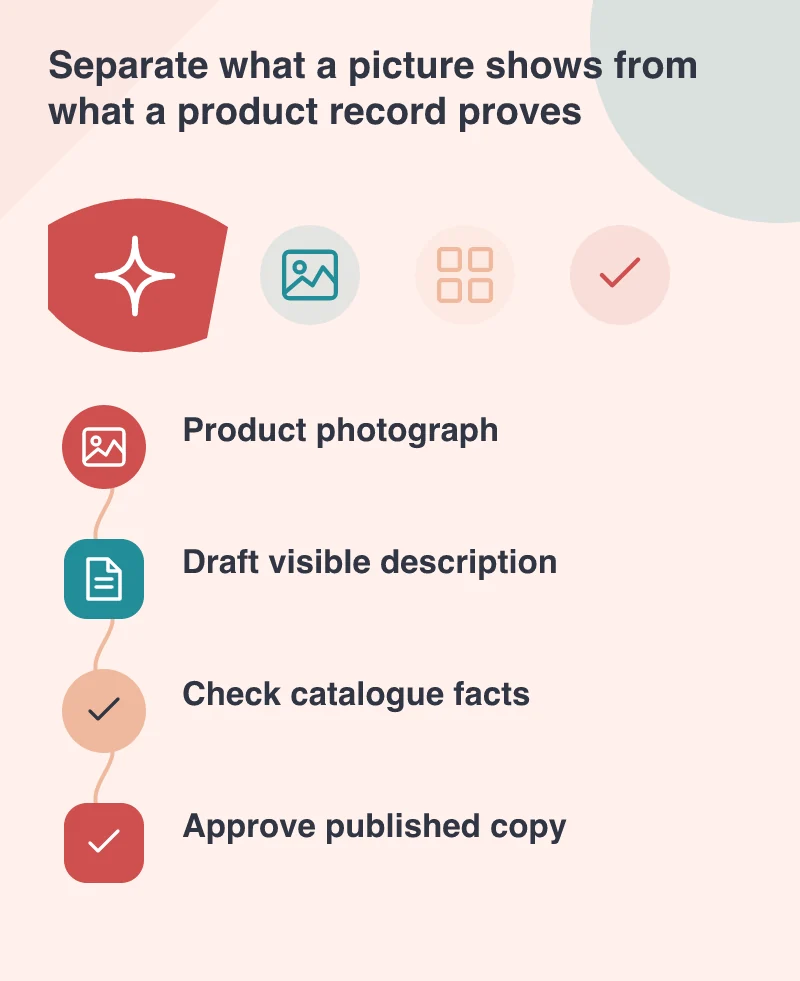
For an editorial trial, use a small set of approved product photographs and an ordinary task, such as drafting a visual description. Make it clear which output is a suggestion. The person reviewing it should not have to infer whether an attractive sentence came from the catalogue or from the model’s interpretation.
Split appearance from specification
Imagine a furniture retailer preparing a product page. A visual assistant may help describe the arrangement of shelves or the shape of the legs. Dimensions, material grades, load-bearing claims and assembly requirements should come from the authoritative product record or supplier information, not an inference from the image.
That separation helps the reviewer work efficiently. Present the photograph, the verified fields and the proposed prose together. Mark missing information as missing rather than asking the model to make the page sound complete. A shorter description with accurate facts is preferable to an elaborate description containing an invented feature.
Review difficult images deliberately
Include reflections, partial views, similar product variants and photographs with small text. Ask the reviewer to identify errors that would matter to a buyer, such as confusing a component with an included accessory. These are more useful tests than choosing only photographs that are easy for the system to describe.
The announcement acknowledges limitations in image understanding and discourages high-risk reliance without verification. For commerce, the corresponding discipline is to avoid allowing an unchecked interpretation to become a product promise. Keep a route for an editor to reject the draft and write the description directly.
Preserve the source of the published claim
Once a description is approved, store it through the normal content workflow. Catalogue fields, translations and variant-specific details still need ownership and updates. If the supplier changes a specification, a generated paragraph should not become an untraceable second version of the truth.
Give visual input a defined editorial job, with its uncertain details still visible to the reviewer. Used carefully, visual input can give an editor another way to begin a description. The catalogue remains responsible for what the business says the customer will receive, and a person remains responsible for making that distinction before publication.