

A reply in a neat data structure can look more trustworthy than a paragraph. It is also easier for software to consume, which makes a mistake easier to pass downstream. OpenAI’s November developer announcements include GPT-4 Turbo and JSON mode. For teams extracting business information, the useful distinction is between a response that can be parsed and a record that is correct enough to use.
Decide what each field is allowed to mean
Imagine turning an incoming product enquiry into a draft task for a sales team. The desired fields might include the product reference, the question and whether a follow-up is needed. Write down what each field means, which values are allowed and which information must remain empty when the source does not provide it.
A model should not invent a customer number because the destination expects one. If a required identifier is missing, the application needs an explicit unresolved state or a request for clarification. A structured format makes that state easier to handle only when the business has actually defined it.
Validate beyond the parser
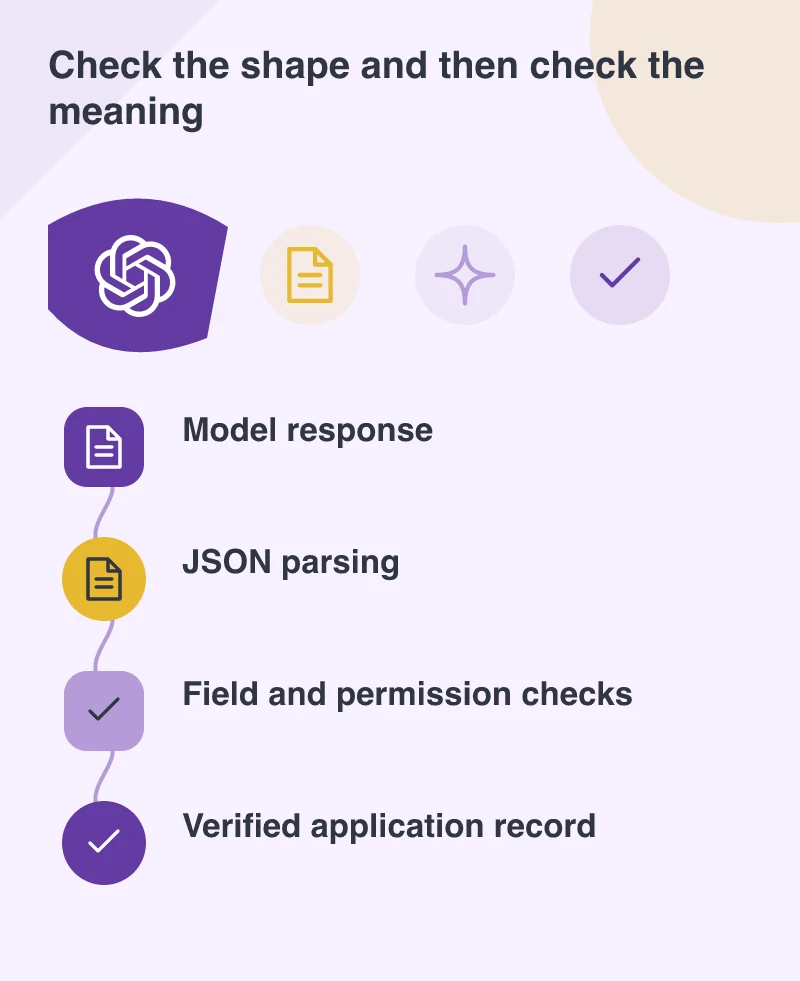
JSON mode is about a valid JSON response, not a guarantee that the content matches every rule of an application’s data model. Check the expected keys, types and ranges, and reject unknown or inappropriate values. Then check the meaning: does the product exist, and does the signed-in person have access to the record being referenced?
Keep those checks on the application side. An instruction in a prompt is useful guidance, but it should not become the only enforcement of an important rule. A record can be syntactically tidy and semantically wrong in ways that matter to a customer or a member of staff.
Keep the original message available for review
For a first trial, create a draft rather than an irreversible action. Show the original enquiry beside the extracted fields so a reviewer can see whether an important qualification was lost. A customer asking about a particular colour and delivery date should not become a generic product-interest task.
Include awkward examples in the evaluation: several products in one message, a correction halfway through, an unrelated question and an identifier that resembles another identifier. Measure the corrections people make and distinguish formatting errors from misunderstandings. That tells the team where the workflow still needs human judgement.
Choose the release status deliberately
The November announcement identifies the new Turbo model as a preview. That matters when deciding whether a business-critical workflow should depend on it immediately. Keep the trial’s model choice and configuration recorded, and repeat the evaluation before changing them.
The opportunity is to reduce retyping while preserving accountability. A well-designed extraction flow makes uncertain information obvious, prevents invalid records from being accepted and gives the reviewer the context needed to decide. The useful promise is a cleaner starting point for work, rather than automatic truth merely because a response arrived between braces.