Getting access to an API can feel like the end of a project when it is really the beginning of an operating decision. OpenAI’s July announcement broadens GPT-4 API availability and sets out changes for older completion models. For a business building an AI feature, the useful next step is to decide how that feature should behave when the model is unavailable, slow or simply wrong.
Define a result the customer can recognise
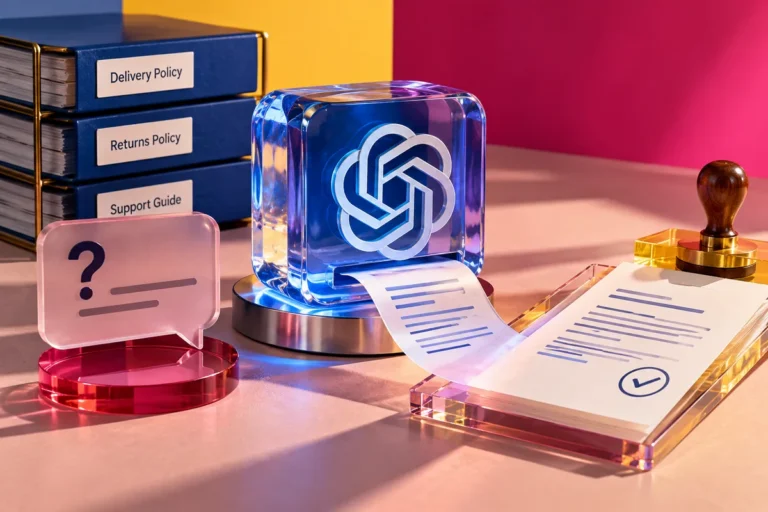
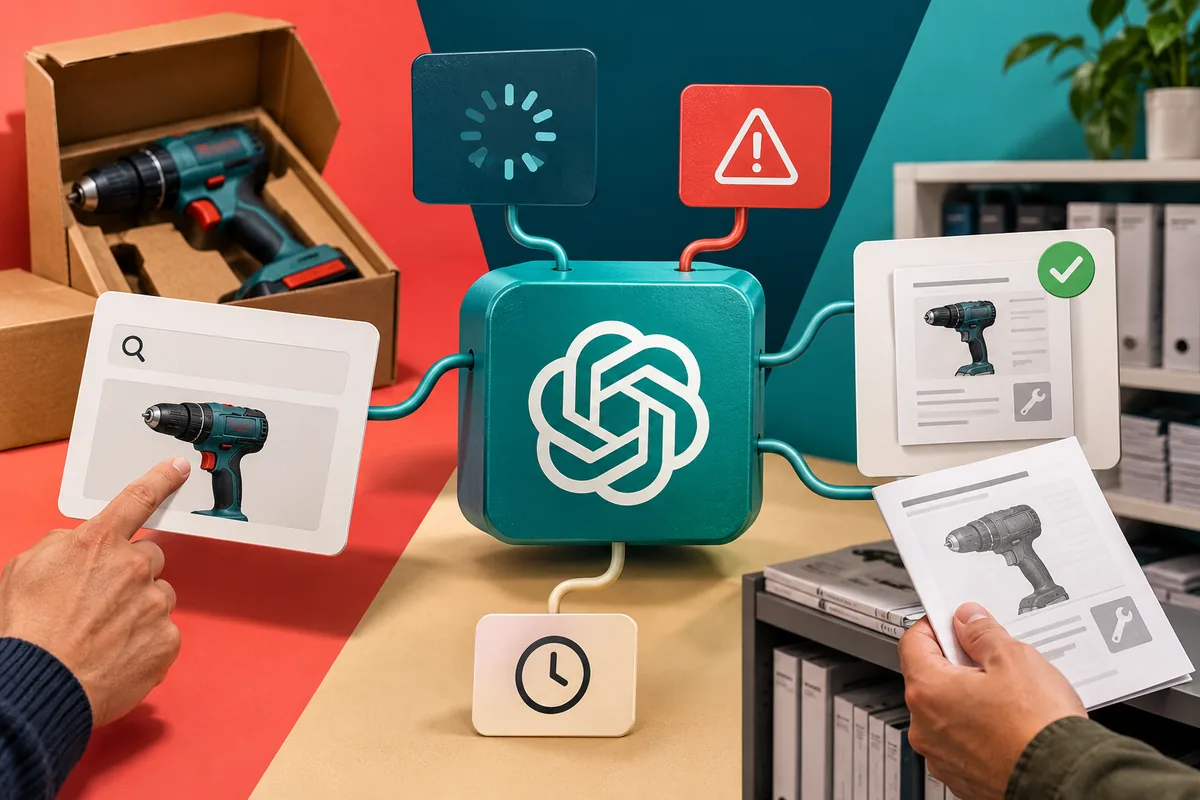
A catalogue assistant could help a visitor find the correct product instructions. Its result should be an identified document and an understandable explanation, not merely a paragraph that sounds knowledgeable. The team needs to know whether the document exists, applies to the chosen product and is current for the question.
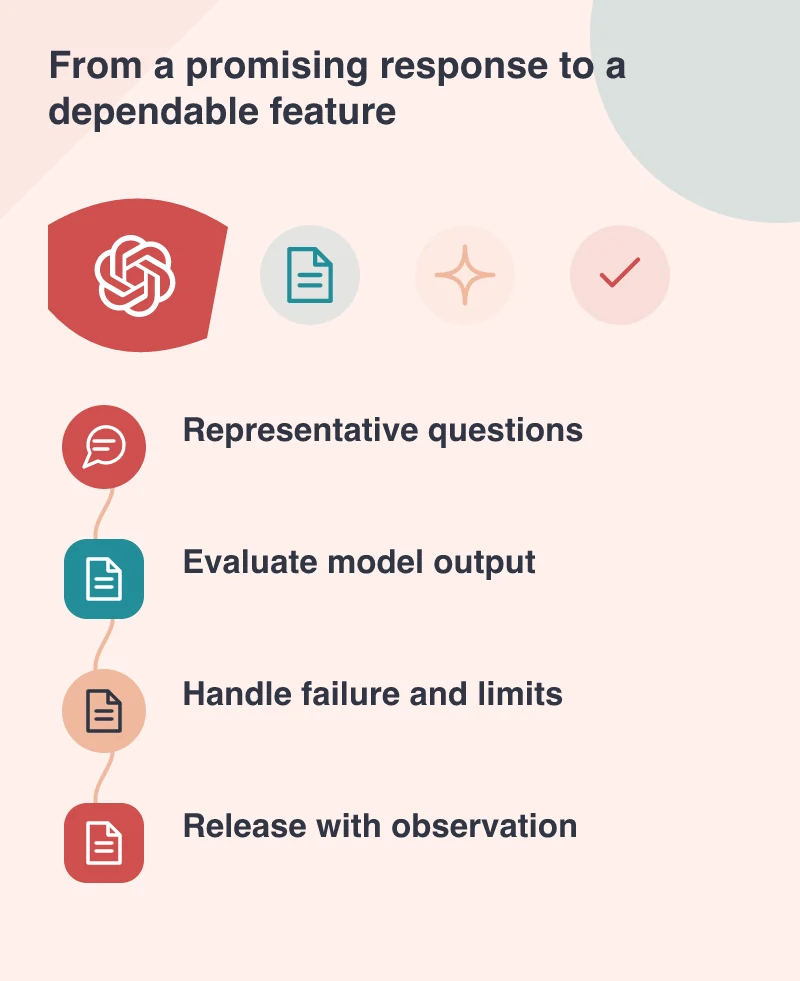
That definition makes evaluation concrete. Test requests with a clear answer, similar product names, missing context and no appropriate document. Include the ordinary vocabulary a customer uses. An apparently capable model can still struggle with the particular labels, abbreviations or exceptions in a business’s own catalogue.
Keep the application useful during a failure
The interface needs a response when an API request fails or takes too long. Show that the request is still being processed where appropriate, and give the person a clear alternative rather than leaving a silent input box. A link to the document library or a staff enquiry route may be enough for a first version.
Retries should also be deliberate. An interrupted connection does not always tell the application whether an earlier operation completed. Begin with read-only assistance where possible and make any action that changes business data separately observable. Do not turn a network retry into a duplicate customer message or an unintended repeated operation.
Make the version part of the release record
The July notice describes the move towards chat-based models and a transition for older endpoints. That is a reminder to record the model and interface used by an application. A generic label saying that it uses AI tells the maintenance team very little when behaviour changes.
Keep a small, repeatable set of evaluation cases alongside the product. Before changing a model or prompt, compare the results against that set and inspect meaningful failures. The aim is not to preserve every sentence word for word; it is to preserve the accuracy and task boundaries the business depends on.
Observe the work without collecting everything
Record enough operational information to understand errors, timing and the route to human help, while avoiding unnecessary storage of private conversations. Decide who reviews reported mistakes and how corrected source material reaches the application. A feature without an owner can keep repeating an outdated answer long after someone notices it.
API availability makes a pilot easier to start. Production readiness comes from the surrounding workflow: a known purpose, tested examples, useful failure states and a clear maintenance decision. Build those foundations while the feature is still small enough to understand, rather than attaching them after customers depend on it.