
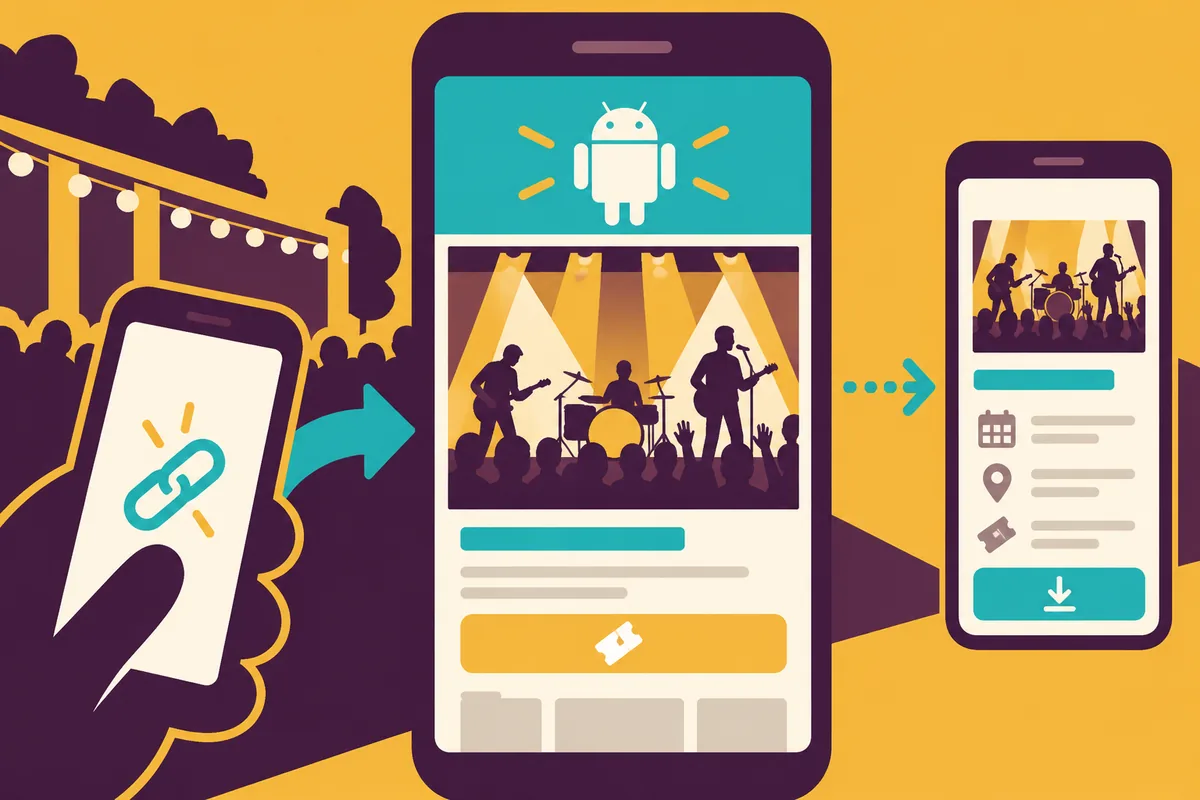
A customer follows a link to a property, an event or a product. They want to see that thing, not begin by deciding whether another app deserves space on their phone. On 17 May, Google opened Android Instant Apps to all developers. The idea gives app teams a practical challenge: can the important task stand on its own before the visitor has installed the full application?
A smaller entrance is a product decision
The announcement describes running an app experience without requiring installation, with development tools for modularising an existing codebase and distributing instant and installable APKs through Google Play. Availability is still expanding, so a business should check the supported devices and countries instead of treating the launch as universal access. An ordinary website remains an important entrance for people outside that support.
Choosing the first instant experience matters more than squeezing the whole application into it. Imagine a ticketing app that lets a visitor inspect one performance and its venue details. Requiring account creation before those details appear would undermine the reason the person followed the link. The full app can still serve regular customers, while the linked experience answers the first, narrower question.
Keep the link’s promise all the way through
Deep links need to lead to the thing they describe. If a campaign promotes a particular performance, opening the application’s generic dashboard leaves the visitor to search again. The same principle applies when the item is unavailable: explain what happened and offer an appropriate next step. A small experience needs deliberate empty and error states just as much as a large one.
Think through what happens if the visitor later installs the application. A selected performance or a saved preference should not disappear without explanation. Product and development teams need a clear plan for continuity, account boundaries and the handover to the installed experience. This is a design requirement to investigate; the announcement does not promise that every application’s existing state management will become seamless automatically.
Prototype the first minute
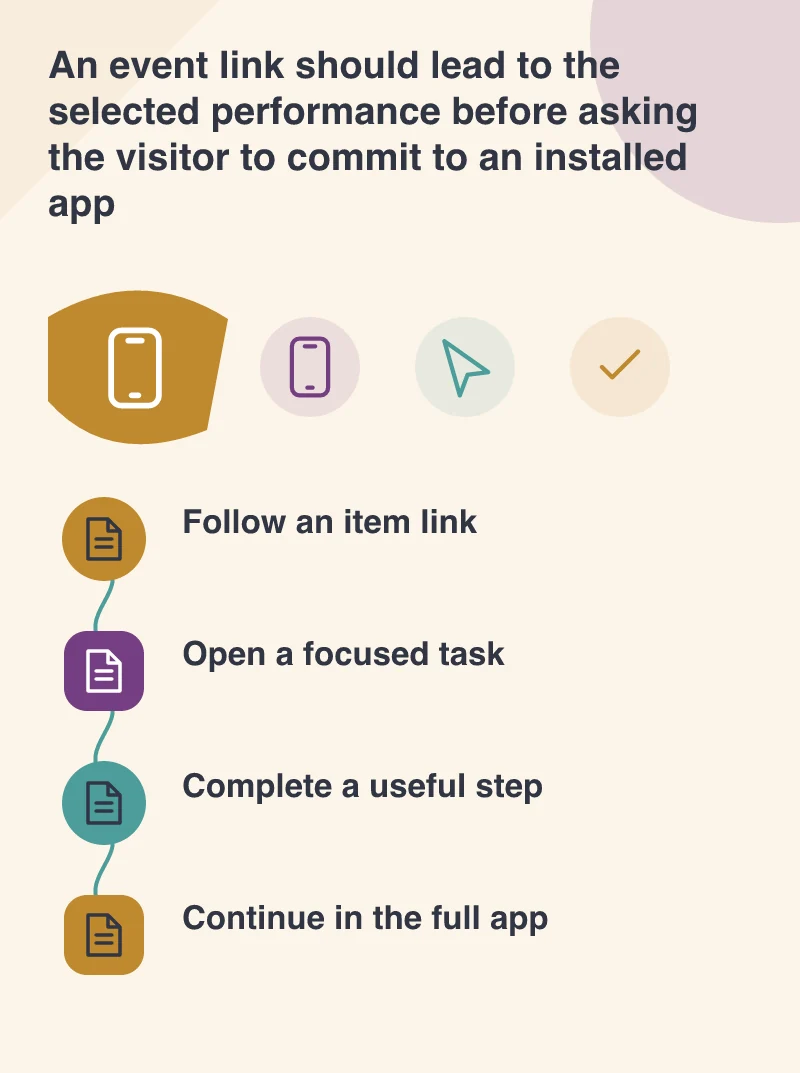
Before restructuring a large codebase, storyboard the first minute from the customer’s point of view. Start with the message or search result, continue through the opened link, and finish with a useful outcome. Remove steps that only make sense to someone already familiar with the app. Then test the prototype with people who have never seen its navigation or naming conventions.
A technical pilot can follow once that minute makes sense. Check download behaviour, poor connections, supported-device fallbacks and the relationship with the normal web page. Judge the pilot by completion of the chosen task, not by assuming that avoiding an installation will guarantee more purchases. May’s launch makes a new entrance possible. The business still has to make the room behind that entrance worth visiting.
Make the fallback part of that same storyboard. If a device cannot open the instant experience, the linked web page should still identify the performance and provide useful information. The campaign’s promise should survive a difference in platform support rather than end with an unexplained installation instruction.