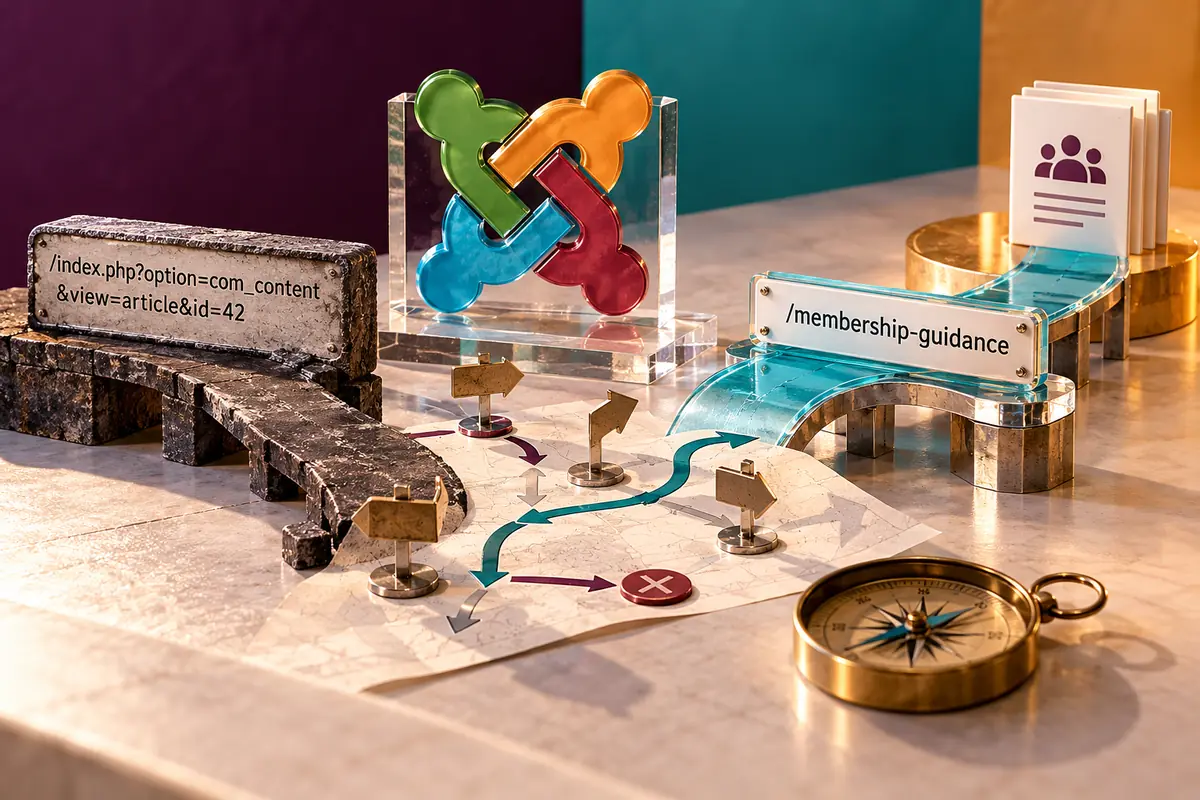
A cleaner-looking address can be attractive in a redesign meeting. A customer’s old bookmark is less visible in that meeting, but it still needs to reach the right page afterwards. Joomla 3.8, released on 19 September, introduces a new routing system with more control over URL structure. For an established website, the useful question is how to improve those addresses without losing the paths people already use.
Treat a URL as a public promise
Joomla’s announcement highlights the ability to remove content IDs from URLs and explicitly recommends staging tests and redirections before enabling the modern router on an existing site. It also introduces a compatibility layer for future Joomla development. Those are separate concerns: installing the update and choosing a new public URL structure should not be mistaken for one indivisible action.
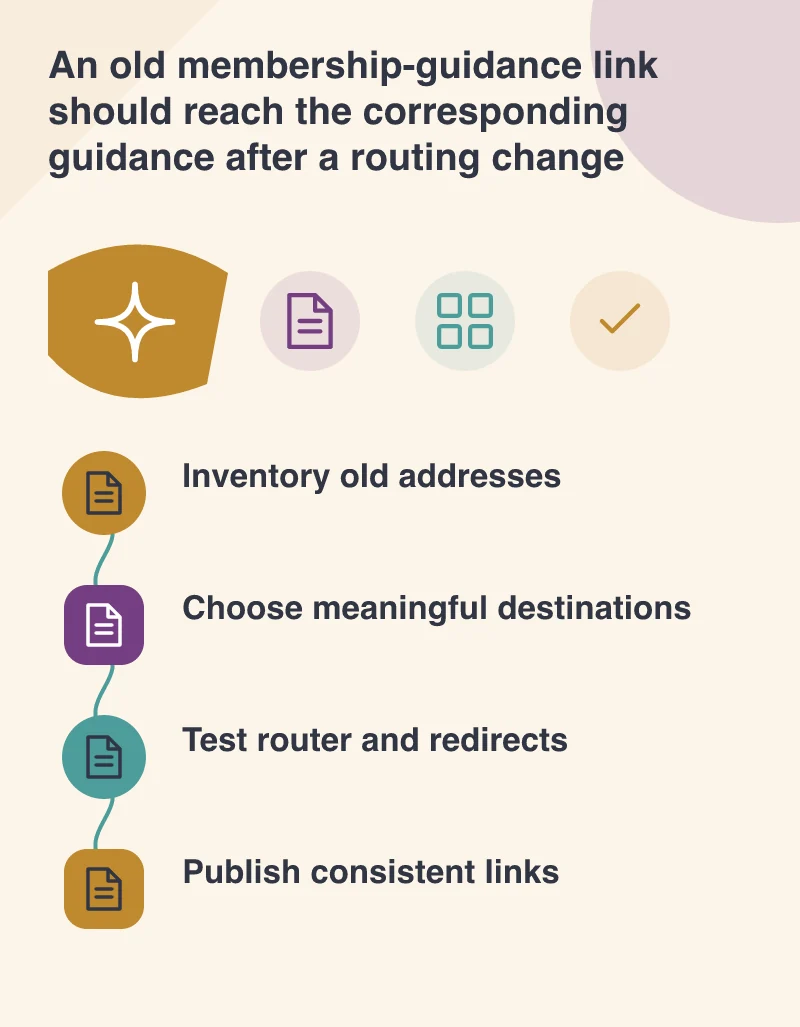
Imagine a professional association with years of links to membership guidance in emails, printed documents and other organisations’ websites. Even an awkward address can be valuable if it is the address people know. Start by listing important public URLs and where they should lead. Do not assume that a visually similar new address will be understood automatically by a browser, a search engine or somebody opening an old PDF.
Map meaning, not just character patterns
Some old addresses have a clear one-to-one replacement. Others may refer to material that has been merged, split or retired. A useful redirect map records those decisions explicitly. Sending every old page to the homepage avoids some error screens but leaves the visitor to hunt for the information again. The appropriate destination is the page that best continues the original task.
Test representative menus, categories, articles and language versions on a staging copy. Follow both internal navigation and an old direct link. Check that the new page points consistently to its chosen address and that the redirect does not bounce through several unnecessary stops. A URL change is a small string change with effects across navigation, publishing and external references.
Keep the change understandable to editors
Content editors should know which controls can affect an address. Explain the role of aliases, menu relationships and the agreed publishing structure in terms of their actual work. A new article should enter the same sensible pattern without requiring a developer to invent a special route each time. If an editor changes a title, the team should understand whether that change is also supposed to change the public address.
A successful routing improvement is one where old links continue to help people and new links are easier to manage. Keep the map with the project, verify it with saved URLs after deployment and watch for unexpected missing pages. The release makes a cleaner structure possible. The care lies in carrying the website’s existing references into that structure rather than asking every returning visitor to start again.