
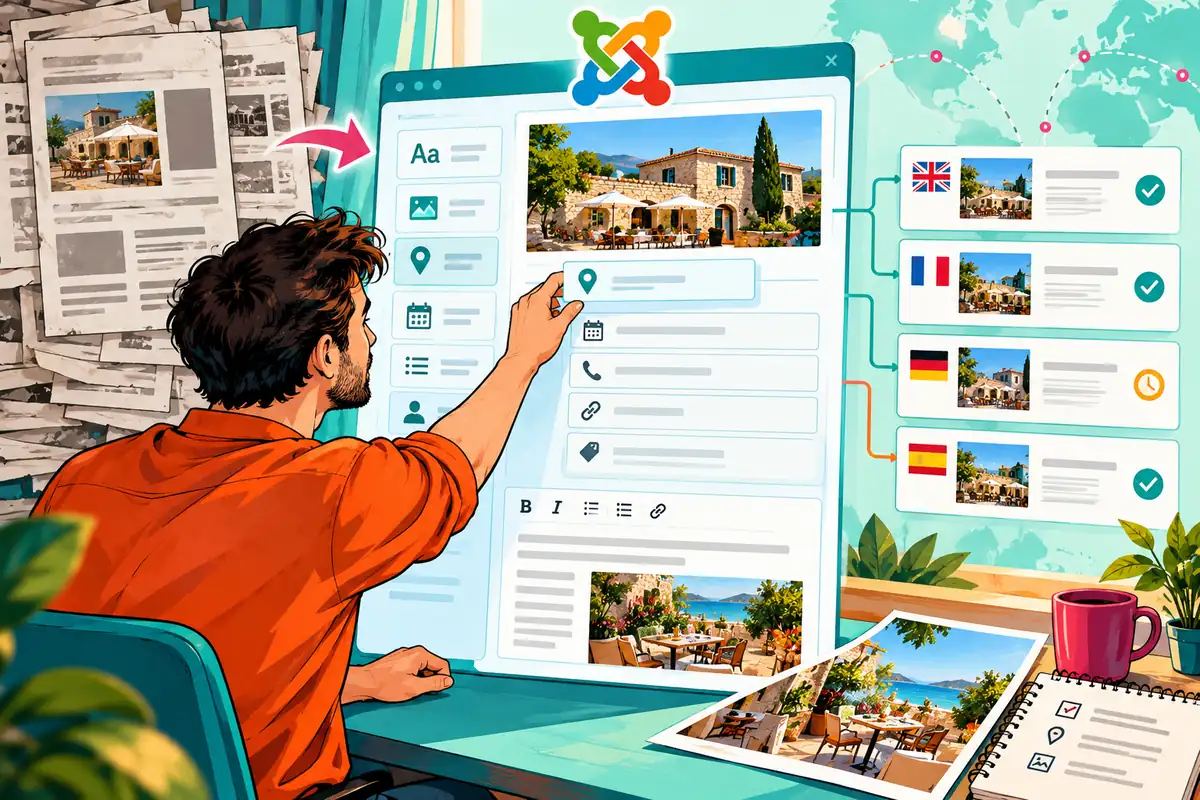
A staff member should not need to copy an old article, remove somebody else’s details and hope the layout survives just to add a new service. Joomla 3.7’s arrival on 25 April introduces custom fields and a more joined-up multilingual workflow. The useful opportunity is to replace repeated formatting work with a content form that matches the information a business publishes.
Ask what repeats before designing a field
Joomla’s release material describes fifteen custom-field types for articles, users and contacts, along with a multilingual associations component. Those additions can help structure recurring information, but they do not decide the model for a particular website. Creating a field for every sentence is as awkward as leaving everything in one large editing area. The right boundary follows the things editors repeatedly have to identify and update.
Imagine a venue directory. Address, capacity and accessibility notes have different jobs from a free-form introduction. Editors may need consistent places for the first three while keeping room to explain what makes a venue distinctive. A simple content inventory can show which values recur across entries, which need validation, and which belong in the editorial description rather than in another small input box.
Make translation relationships understandable
A multilingual website is more than several copies of a menu. When a service description changes, the team needs to know which translated articles belong together and which still need review. The associations interface is useful because that relationship can be managed deliberately. It should support a publishing responsibility already understood by the people working in each language, rather than conceal an unfinished translation behind a language switcher.
For the venue example, some values may be shared while descriptive text needs translation. Plan that distinction with the actual editors. A telephone number should not accidentally diverge simply because two language pages are edited separately. Equally, a translated accessibility explanation should not be overwritten by assuming every field is language-neutral. The content model and the translation workflow need to be designed together.
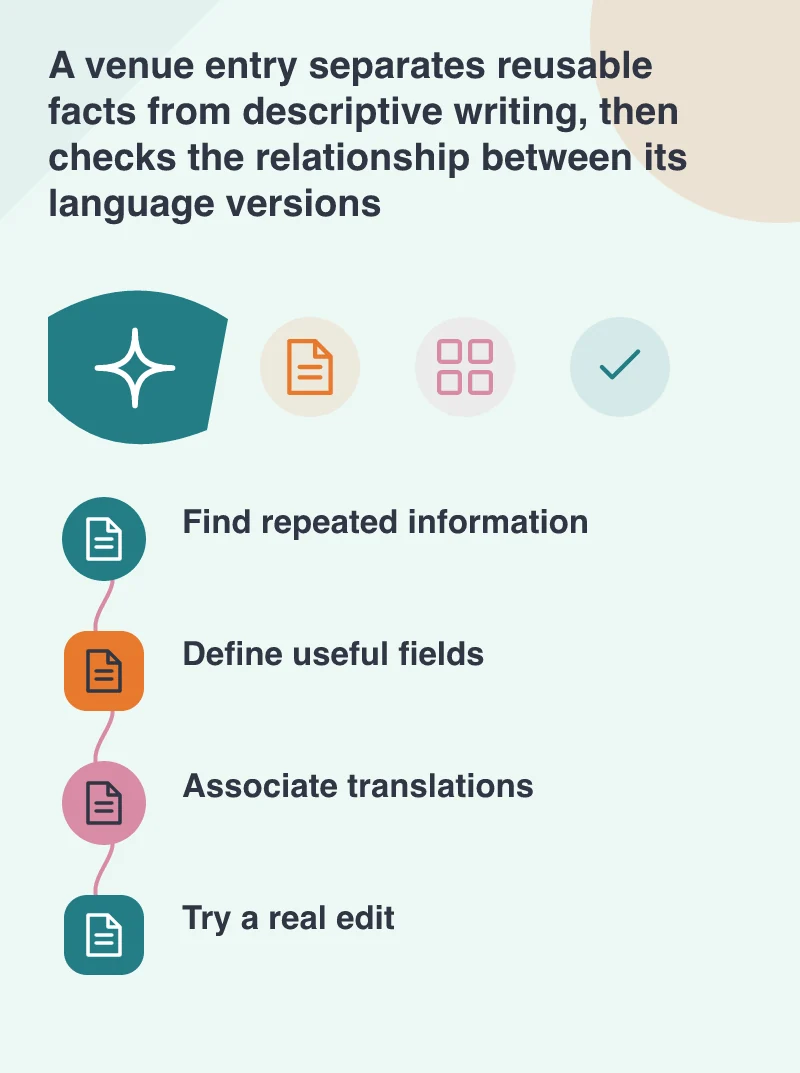
Pilot a real entry before rolling it across the site
Use a staging copy to create one ordinary venue, one entry missing optional information and one translated pair. Ask somebody who did not build the form to make a change. Check how empty fields display and whether the public page still reads naturally. The purpose of structured fields is to reduce ambiguity, not to make every page look like a database export.
Existing templates and extensions also need testing around the upgrade. Joomla’s release candidate guidance asks extension and template developers to prepare for the new features, and the stable release should be approached with a tested backup. Editors should come away able to maintain consistent information with less guesswork. New controls in the administrator for everyday publishing are useful only when the resulting workflow makes sense to the team.