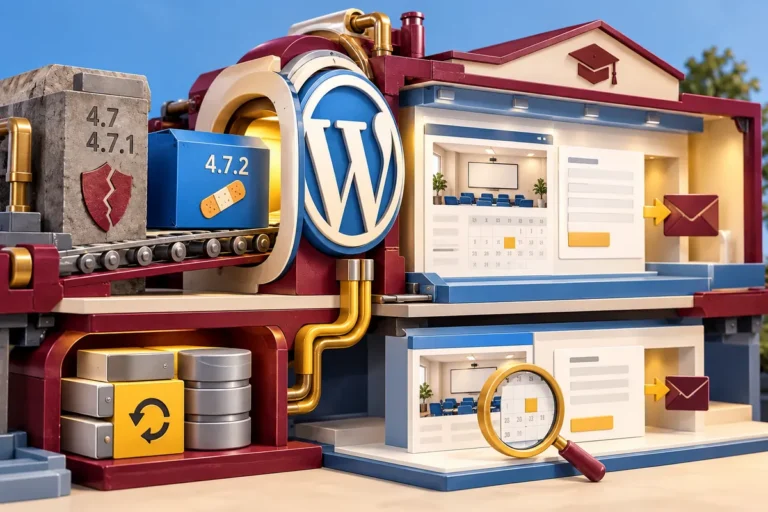
Website checks often end with a developer opening the homepage. Yet the site may look fine while the person responsible for news or product information cannot use the editor properly. WordPress 4.7.4, released on 20 April, includes a fix for an incompatibility between an upcoming Chrome version and the visual editor. That is a practical reminder to test the publishing side of a website as carefully as the public side.
The administrator is part of the product
The release announcement also mentions media-handling inconsistencies and REST API improvements. These are maintenance changes rather than a new public design, but they touch the daily work of running a site. A company that depends on fresh course dates, staff profiles or announcements has a business process inside the WordPress dashboard. An editor unable to complete that process can be a real problem even when customers see no error page.
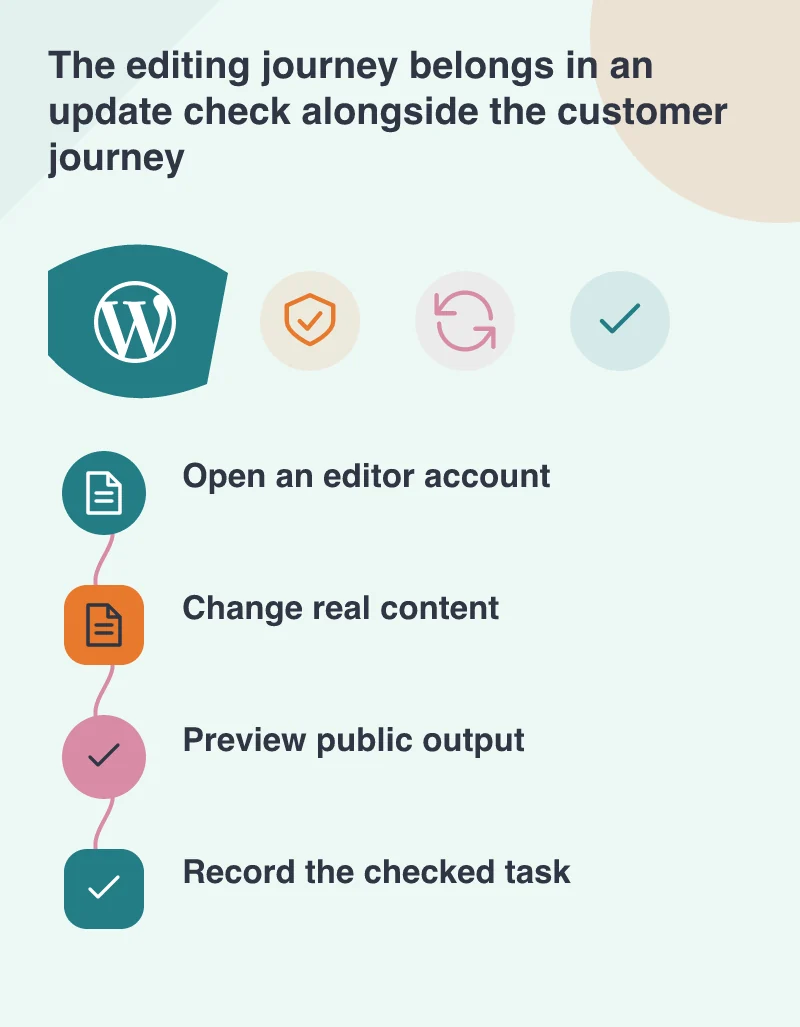
A useful acceptance check therefore has two viewpoints. The public check asks whether the information is clear, the links work and the enquiry reaches the right place. The editor check asks whether a person with the normal content role can create the same information, preview it and publish a correction. Neither viewpoint can stand in for the other, and the two need not require the same permissions.
Choose a small set of representative publishing tasks
For a local retailer planning this update, a suitable test might be updating opening hours, replacing an image in an offer and changing a linked document. Use the browser and account type the content team actually uses. A developer’s administrator account can hide a permissions problem, and a different browser may avoid the very incompatibility the team needs to discover.
Media needs its own attention because it crosses several parts of the system. Upload an ordinary image, choose an existing library item and check the preview after saving. If the site uses captions, verify the text as well as the picture. These are not elaborate tests, but they are more revealing than repeatedly refreshing a page whose content has not changed since the update.
Leave a useful record for the next person
Record the version installed, the date, the publishing tasks checked and any extension that still needs attention. A short note such as “offer edited and previewed using the content editor account” tells a business owner more than “update successful”. It also gives the next maintainer an example to repeat, so checking does not depend entirely on one person remembering how the site works.
WordPress 4.7.4’s announcement recommends the dashboard update route and notes background updates for supported sites. However the software reaches the site, the editing check remains worthwhile. Customers need to use the website and the business needs to keep it accurate. Maintenance becomes easier to trust when the report includes both halves of that promise.