
An online store can look unchanged after an upgrade while a crucial job behind the screen stops working. A payment response may arrive differently, an extension may need attention or a warehouse export may no longer contain the expected information. Magento 2.4.6’s March release is a useful trigger to review the whole order journey, not only the version number shown in the administration area.
Begin with the store you actually operate
Make an inventory of the running platform, hosting components, theme, extensions and integrations. Record which parts are maintained by the store’s own developers and which depend on another supplier. The official release is a starting point for a compatibility review; it does not certify every combination assembled around an individual shop.
Ask each relevant supplier about the intended upgrade path and the version being used. A custom price rule, an old payment module and a search service can each change the scope of the work. Finding those dependencies before choosing the deployment date is much easier than discovering them when a live customer is waiting.
Rehearse a representative order on staging
Use a separate environment and an appropriate copy of the store’s configuration. Keep the environment from sending real customer messages or creating real fulfilment instructions. Test payment integrations in their supported test mode and confirm that the people performing the review understand which systems are connected.
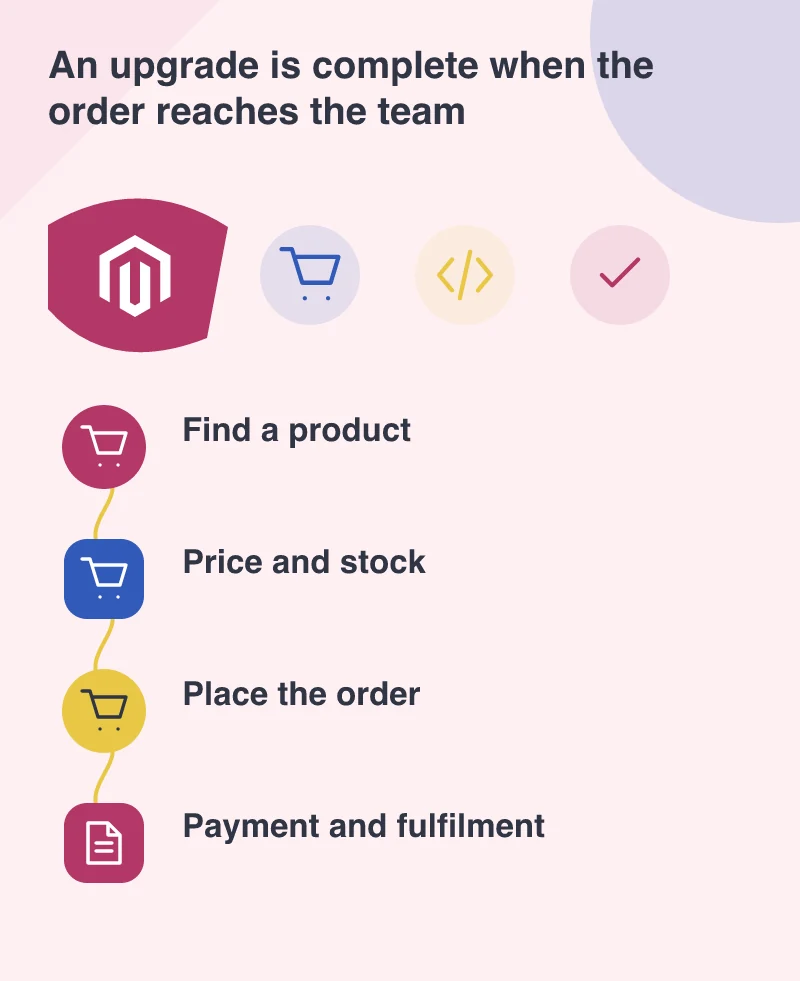
Choose orders that exercise important business rules. A simple product alone may not reveal a problem with a configurable product, a discount, a shipping threshold or a customer-group price. Follow the order into the administration area and then into the relevant downstream process. The important question is whether the same business meaning survives each handoff.
Check the return journey too
A completed checkout is not the end of commerce. Staff may need to cancel an order, issue a credit memo, create a shipment or explain a delayed payment. Those actions deserve their own rehearsal, especially where external systems are involved. A storefront-only review can miss the tools people use to resolve a customer’s problem.
Also inspect search, product URLs and important landing pages. If a route changes during the upgrade work, preserve a deliberate redirect plan. Compare the customer’s ability to find and understand a product, rather than assuming that an unchanged homepage proves the catalogue is healthy.
Agree what would make you stop or roll back
Write down the checks that must pass, who approves them and which failures would delay release. A backup is useful only when its recovery process has been considered, including orders created after deployment. The database and the code need a coordinated plan rather than unrelated copies.
Keep someone available to watch actual orders and error reports after release. A rehearsed upgrade reduces uncertainty; it does not remove the need for observation. The release should leave the team with a more maintainable store whose catalogue, checkout and operational work have been reviewed together, with a recovery decision the team understands.