

The redesign looks complete in a browser. The search report tells a different story. These conversations become expensive when the developer and search specialist are examining different stages of a page. Google launched a JavaScript SEO video series on 6 March, explicitly connecting web development with crawling, rendering and indexing. A business commissioning a JavaScript-heavy site can use that as a prompt to put both teams around the same acceptance task.
Agree what the page must communicate
Choose an important page and write down its essential information: a product name, a service description, a price where appropriate and links to the next relevant pages. Then identify how that content reaches the browser. Some may be present in the initial document; other parts may arrive through scripts and additional requests.
Imagine a product page that opens with an empty shell and then fetches its details. A customer with a working connection may see the result quickly. If the request fails, the page needs an understandable state. Search processing also needs the relevant resources and content to be available. Neither team should assume that a successful local demonstration proves every delivery path.
Crawling, rendering and indexing are separate concerns
Google’s series identifies these stages as part of understanding JavaScript sites. Crawling obtains resources, rendering processes the page and indexing concerns the information recorded for search. Treating all three as one vague question about whether Google likes JavaScript makes diagnosis harder.
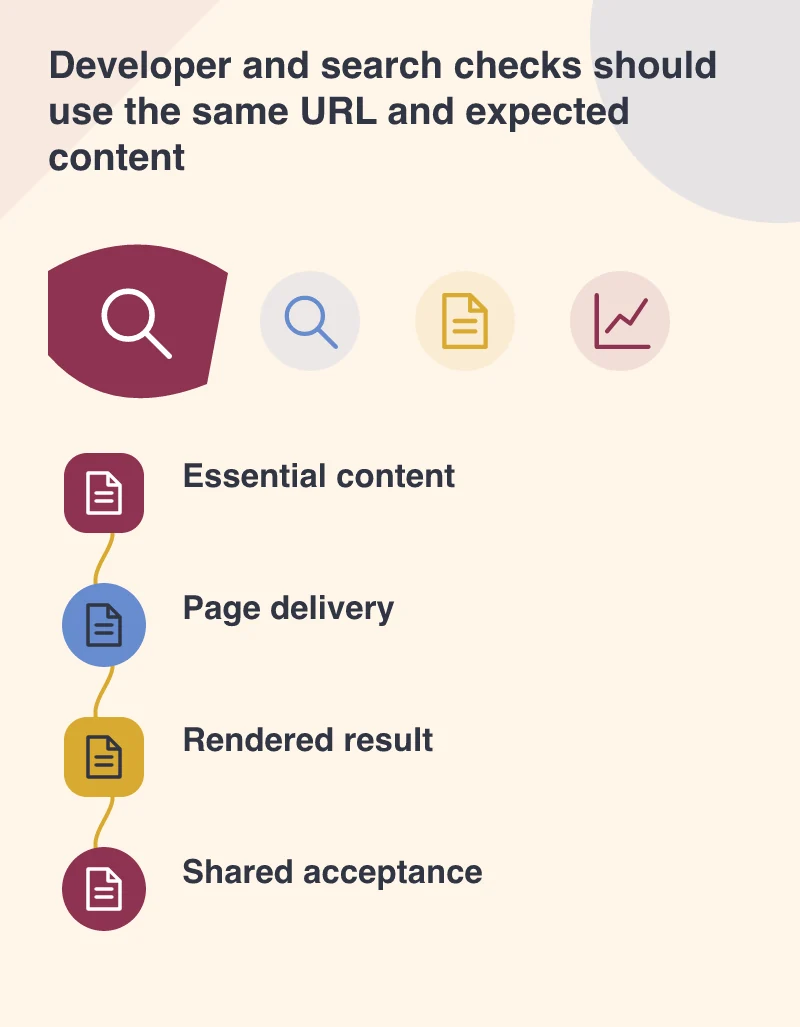
Ask the developer and search specialist to demonstrate the same URL using suitable testing tools. Compare the important text and links with the intended result. If something is missing, establish which request or instruction explains the difference. Do not replace evidence with a blanket claim that all script-based sites are invisible or that every modern framework is automatically understood.
A rendering strategy is an operating decision
The new series includes dynamic rendering among its announced topics. Different rendering approaches have different implementation and maintenance costs. Discuss them in relation to the site’s content, interaction and update frequency. Avoid adding another rendering system merely because its name appears in an industry discussion.
For the product example, any alternate output needs to preserve the same meaningful product information. If prices, availability or descriptions diverge between outputs, the team has created another source of inconsistency. Establish who maintains the relationship and how changes to templates and APIs will be checked.
Make the handover show the evidence
Include representative page types in the acceptance record, not just the front page. Save the URLs, expected content and the checks performed. A category page with pagination, an unavailable product and a long article may reveal different assumptions about links and content delivery. Each should remain understandable when a request is slow or fails.
Search visibility is not a substitute for good usability, and an attractive interface is not a search diagnosis. Both teams can contribute to one practical goal: a page that reliably delivers its essential information and makes the next step clear. Agreeing that goal before launch is cheaper than debating responsibility after important pages have gone missing.