

A ranking announcement can trigger a rush of anxious requests for a perfect speed score. Google’s 17 January announcement deserves a calmer and more useful response. Starting in July, page speed is due to become a factor in mobile search ranking, focused on pages delivering the slowest experience. The months before that change are time to investigate real problems, rather than to treat every page as an emergency or every score as a ranking prediction.
Read the scope before writing the brief
Google describes the planned Speed Update as affecting a small proportion of queries and applying the same standard regardless of the technology behind the page. It also says relevant content remains important: a slow page can still rank well when it strongly answers the query. No tool directly tells a site owner whether an individual page will be affected by this new factor.
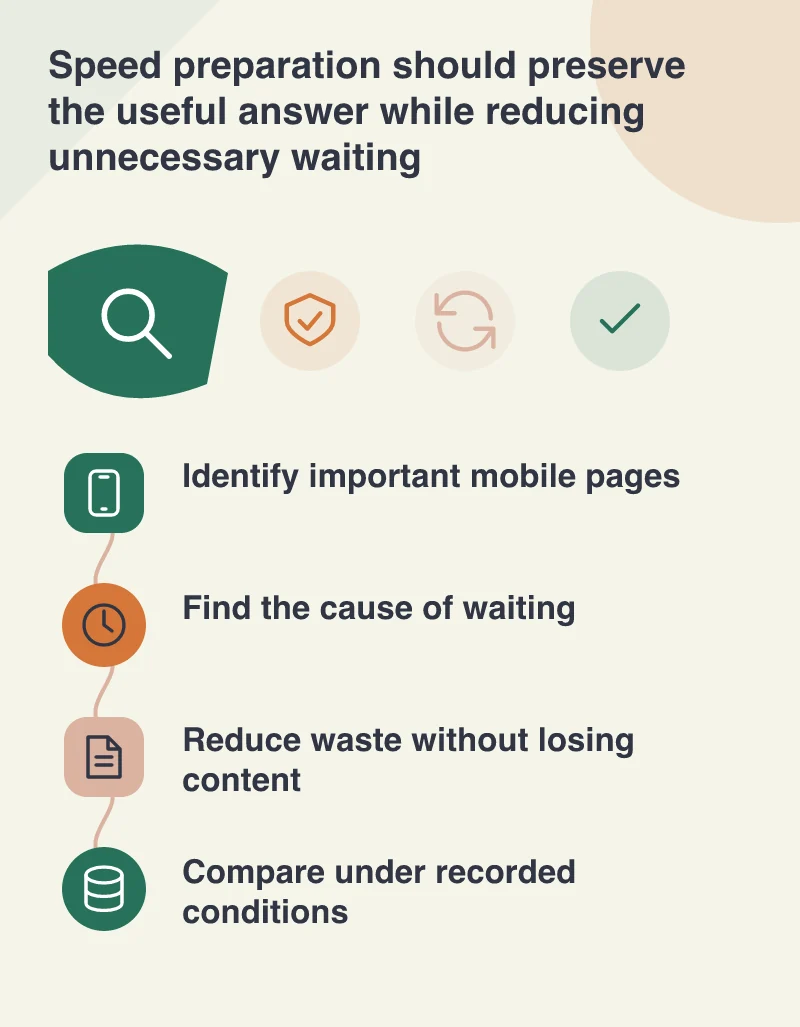
That means a speed brief should describe a customer experience and an investigation, not promise a future search position. For a service company planning this work, begin with pages that bring enquiries or answer important pre-sale questions. Find out whether people can see the useful information promptly on a phone. Improving an unvisited test page’s score while leaving a heavy service page untouched would be a poor use of the preparation period.
Look for the source of waiting
A page can wait on the server, on a large download or on work done in the browser. Those require different remedies. Ask for evidence that identifies the likely cause before changing hosting, replacing the design or removing features. Image dimensions, resource requests and the timing of scripts can provide useful starting points without assuming that one technology choice is responsible for every delay.
The January announcement points to the Chrome User Experience Report, Lighthouse and PageSpeed Insights as complementary resources. Use them alongside a direct check of the task. A report may suggest that something is expensive, while a person’s visit shows whether that work appears before or after they need the page. Keeping those observations together helps prioritise changes that are both technically sensible and useful.
Do not trade away the answer to make the page smaller
Removing specifications, delivery information or a necessary contact route can make a page lighter while making it less helpful. The more productive question is how to deliver useful information with less waste. Prepare images for their actual display size, review unnecessary dependencies and consider whether optional content needs to load immediately. Each proposal should identify what remains available to the visitor.
Make the first improvement now, then repeat the check under recorded conditions. Keep the published page’s important journeys in the acceptance criteria. There is no need to wait until July to make a slow mobile page easier to use, and no need to invent a guaranteed ranking gain to justify the work. A clearer, quicker route to the information is already a concrete benefit worth investigating.