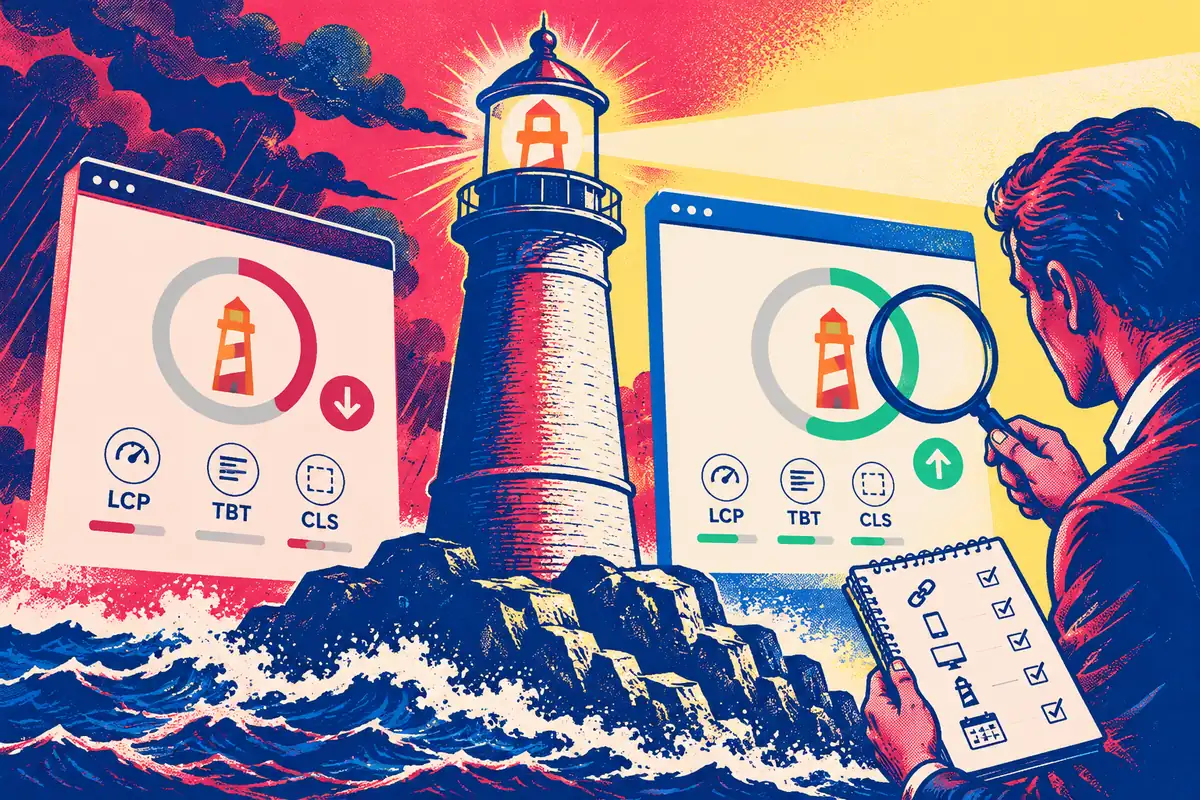
A website receives a lower performance score even though no one has changed its theme. That can be unsettling if a number has been treated as a permanent certificate. Lighthouse 6.0, introduced this month with a revised scoring model, is a reminder that a performance report is a measurement made by a particular tool under particular conditions. Read the evidence before ordering a hurried redesign.
The formula is part of the result
The Lighthouse 6 announcement introduced changes to performance scoring and incorporated metrics including Largest Contentful Paint, Cumulative Layout Shift and Total Blocking Time. A score produced by the new version is therefore not a direct continuation of every score produced by the old one. The tool is changing what it emphasises.
That does not make the new result unimportant. It means a team should look below the headline number. Which measured behaviour is weak? Does the page show its important content late, spend too much time blocking work, or move unexpectedly? Those questions lead to a fix more reliably than the colour of the badge alone.
Write down the conditions
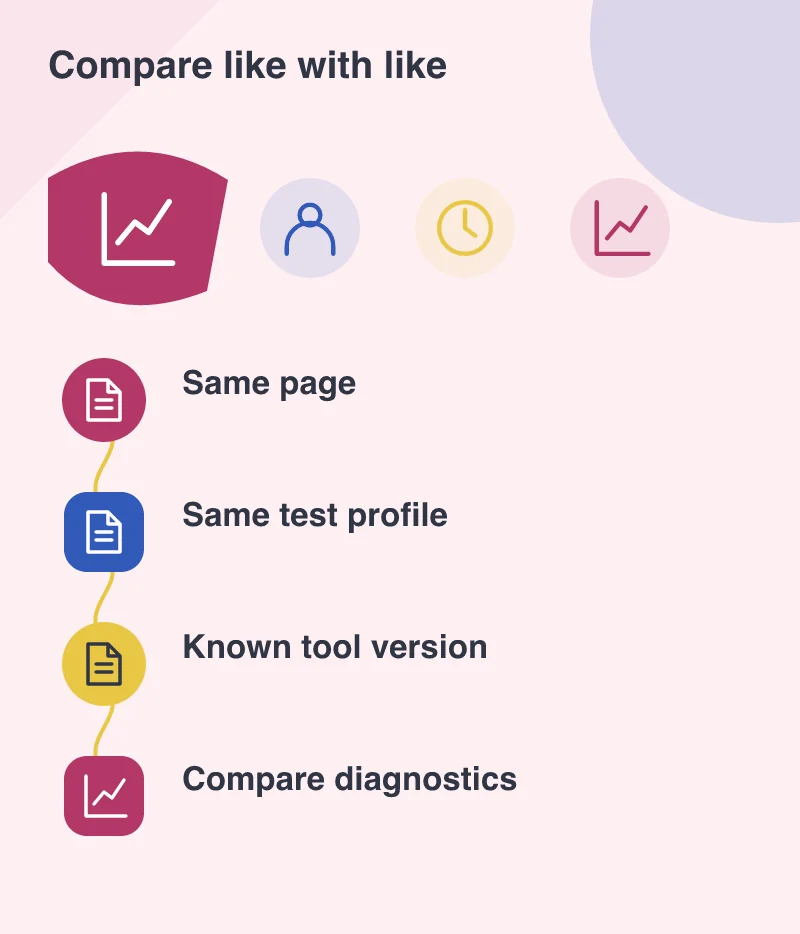
Record the URL, whether the test represents a mobile or desktop profile and the tool version. Keep the date and the deployment being measured as well. A screenshot without those details is difficult to interpret later, particularly when the website contains content or third-party components that can change independently of the theme.
For a retailer, testing a product with several reviews and a large image gallery may produce a different problem from testing a simple category page. That variation is useful evidence. It should not be hidden by selecting only the page that happens to produce the most flattering score.
Follow a diagnosis into the customer task
If blocking time is a concern, inspect the scripts needed for the first useful action. A customer should not have to wait for an unrelated marketing widget before choosing a product option. If the main content arrives late, review image delivery, render-blocking resources and server work in the context of that page.
Make one purposeful change and repeat the comparable test. Keep the original report so the team can see whether the relevant metric improved. A bundle of unrelated adjustments may change the score without explaining which one helped or whether another part of the experience became worse.
Use the score as a working conversation
A Lighthouse report is particularly useful during development because it makes potential problems visible early. It can support a release checklist and help designers understand the cost of new components. It is less useful when treated as a guarantee that all real visitors have the same experience.
Agree on representative pages and keep the test conditions stable. When a score changes, the saved reports should let someone explain whether the site changed, the tool changed or both. That makes a performance review a discussion about evidence and customer actions, rather than an argument over a badge.