

The website began with one person publishing updates. Now a colleague uploads photographs, another prepares articles and an outside partner maintains the platform. Everyone needs access, but they do not all need the same responsibility. September’s WordPress 5.8.1 security and maintenance release is a sensible prompt to review that growing team’s publishing boundary alongside applying the relevant fixes.
Name the work before choosing the role
The release announcement recommends the security update; installing it is an important maintenance task in its own right. A separate operational review asks who can draft, upload, approve and administer the site. Those responsibilities can become blurred when the easiest way to help a new colleague is to copy the broadest existing account.
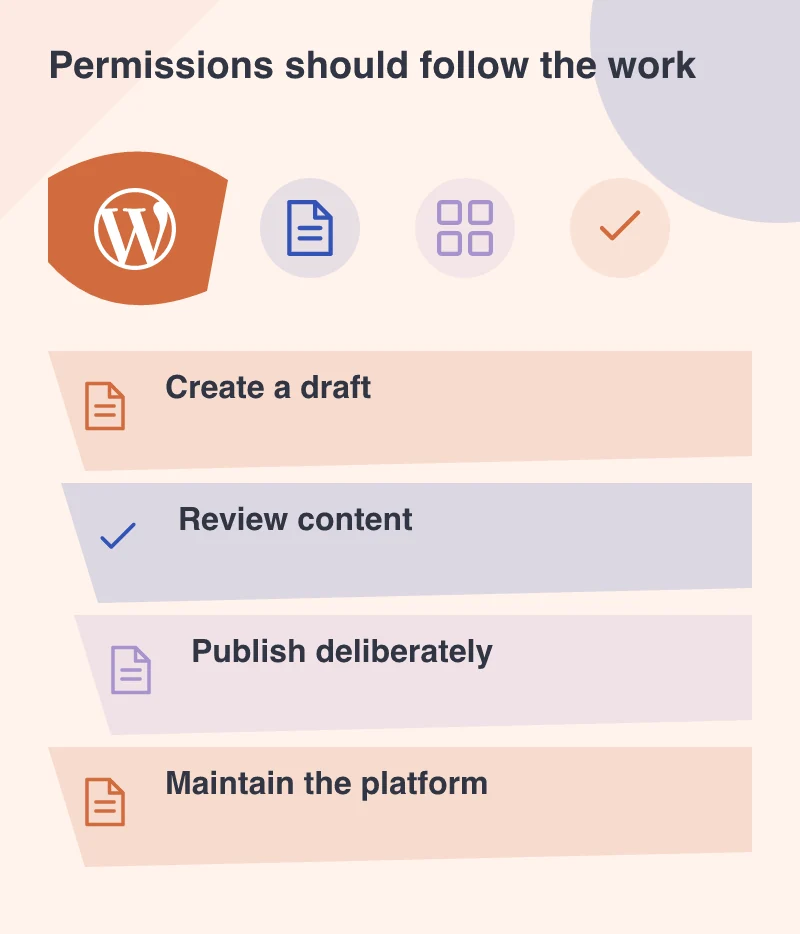
Start with the task each person performs. Someone preparing article text may not need to install plugins. A maintenance partner may not be the person who approves a public announcement. The role should reflect the work rather than the seniority of the individual.
Make approval visible
Picture a business that publishes customer stories. One colleague knows the project, another checks the wording and a third confirms that the material is ready to share. A draft-and-review route helps the team preserve those decisions. If everyone publishes directly, the process depends on informal memory and messages outside the system.
Keep the route proportionate. A simple article should not require an elaborate bureaucracy. It should still be clear who has decided that the words and images are suitable for the public website.
Treat media as content with an owner
Photographs and documents deserve review as well as paragraphs. Check what an uploaded file contains, whether the business has an appropriate basis to publish it and which version should be used. The person selecting an image should understand its subject and purpose rather than treating the media library as an anonymous collection of interchangeable assets.
A useful handover explains file naming, alternative text and what to do with an outdated document. These decisions improve ordinary publishing and make it easier to notice material that should not have been uploaded or made public.
Review access when the working relationship changes
Keep a short account list with an identifiable owner for each login. Revisit access when a colleague changes responsibilities or a supplier engagement ends. Shared administrator accounts make that review harder because the business cannot easily tell which person or service still depends on them.
The September update is a reminder that technical fixes and clear working practices support one another. A well-maintained WordPress site gives people enough access to do useful work while keeping public approval and platform administration understandable. That clarity becomes more valuable as the team grows, because the website should not depend on one person remembering every informal agreement.