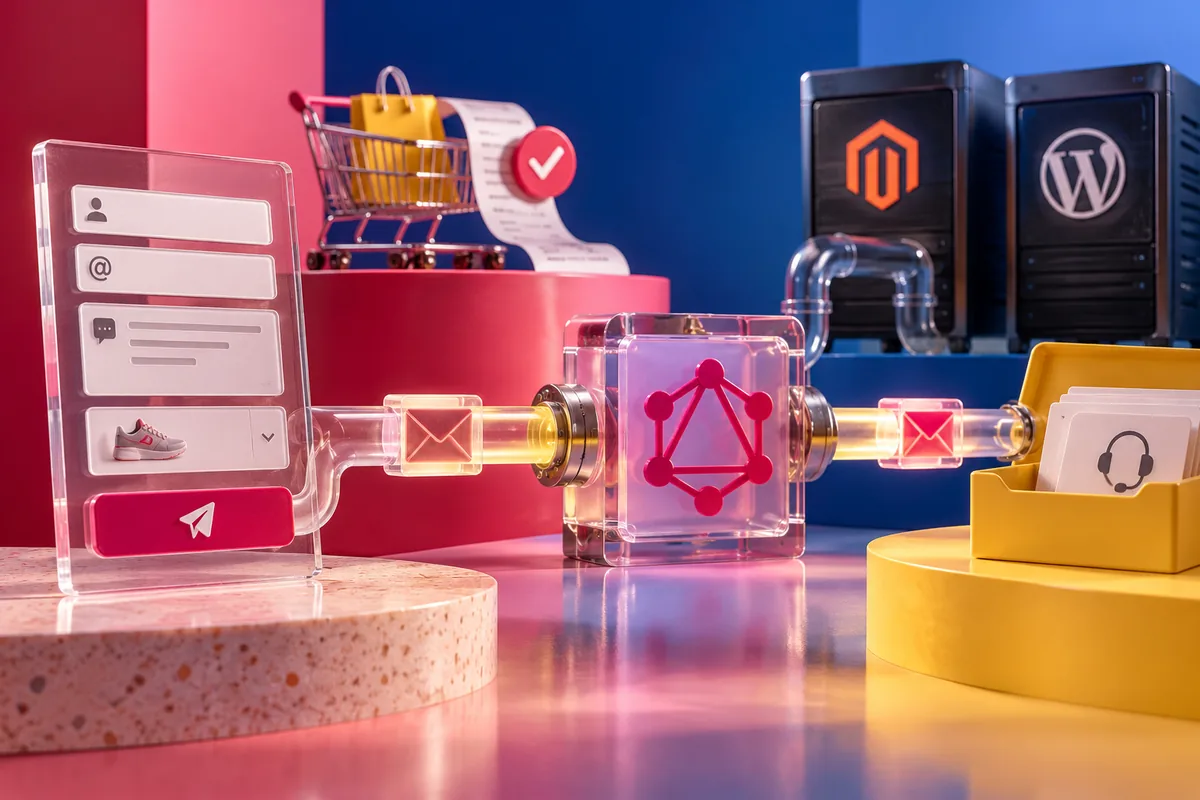
A customer cannot find the answer they need, writes a message and sees a reassuring confirmation. If nobody receives the enquiry, the interface has made a promise the business cannot keep. PWA Studio 12.1’s November addition of a contact-form mutation is a reminder that the quieter parts of a headless store deserve the same end-to-end attention as the purchase flow.
The frontend is only the first part
The release adds a contactUs GraphQL mutation and related configuration fields, alongside other changes and a metapackage dependency. Those details matter when integrating the supported storefront and backend versions. A visible form should reflect whether the service is enabled and use the intended submission route.
The business question is simple: where does an accepted message go, and who is responsible for it? Answer that before polishing the success animation. A form is a small customer-service workflow, not merely a set of inputs.
Ask only for information the team can use
Picture a customer asking about a product’s compatibility. A name, reply address, message and optional product context may be enough to begin. Adding several mandatory marketing fields can make the customer work harder without improving the response. Give each required field a clear reason.
The form should also help someone correct a mistake. An error should identify the relevant field and preserve the rest of the message where possible. Losing a carefully written question after one invalid address is an avoidable frustration.
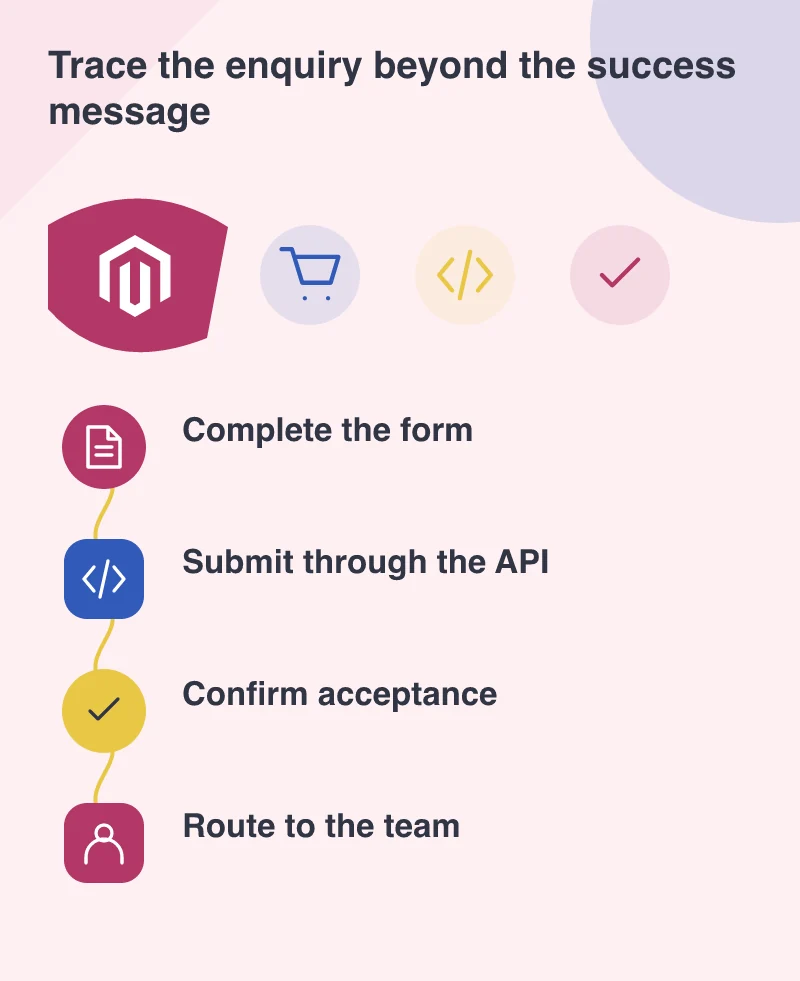
Confirm what actually happened
Distinguish a pending submission from an accepted one. If the API is unavailable, explain that the message has not been sent and provide a useful alternative. A generic success panel should not appear simply because the person pressed the button.
On the backend, test delivery and routing with an explicitly marked enquiry. Confirm that the recipient can reply using the expected customer address and recognise which form or store produced the message. If a queue or external mail service is involved, give the team a way to investigate failures.
Make response ownership visible
Decide who monitors the destination and what happens during absence or busy periods. The website should not imply a response time the team has not agreed to provide. A clear, modest expectation is better than a familiar promise inserted into the design without operational support.
Support staff should see enough context to understand the question without exposing unnecessary personal data to every recipient. The form’s convenience should extend to the people who handle the enquiry.
Include the form in release checks
A headless storefront upgrade can affect API configuration and dependencies even when the form’s appearance has not changed. Keep a submission check in the acceptance routine and record its destination.
Include the form in the next release review and make the receiving colleague part of acceptance. A completed request should arrive with the information needed to answer it. If delivery fails, the visitor and the team both need a route to recover.