
A returning shopper sees the product they viewed yesterday, with a price and availability that look familiar. The page feels quick because it remembers information. The important question is whether that information is still appropriate for the decision being made now. At the start of 2021, PWA Studio 8’s caching and GraphQL work offers a useful context for reviewing how a headless Magento storefront balances speed with accuracy.
A cache is a choice about time
The available PWA Studio 8 release incorporates Apollo Client 3 and changes to data fetching and caching. These tools help a frontend reuse information instead of requesting everything again. The business still needs decisions about which information can safely be reused and which actions require a current answer from the commerce system.
A category description and a customer’s basket do not have the same sensitivity to change. Treating them as identical technical resources can either waste requests or leave the interface presenting a state that no longer matches the store.
Follow a price change through the journey
Consider a retailer running a short promotion. A customer opens a product before the promotion changes, leaves the tab open and returns later to buy. Test what the page shows, what happens when the item enters the basket and how the final amount is explained. A correction should not feel like an unexplained price substitution.
The same test can be repeated with stock. If the selected variation becomes unavailable, the interface should explain the current situation and preserve a useful route forward. It should not keep inviting a purchase that the backend has already rejected.
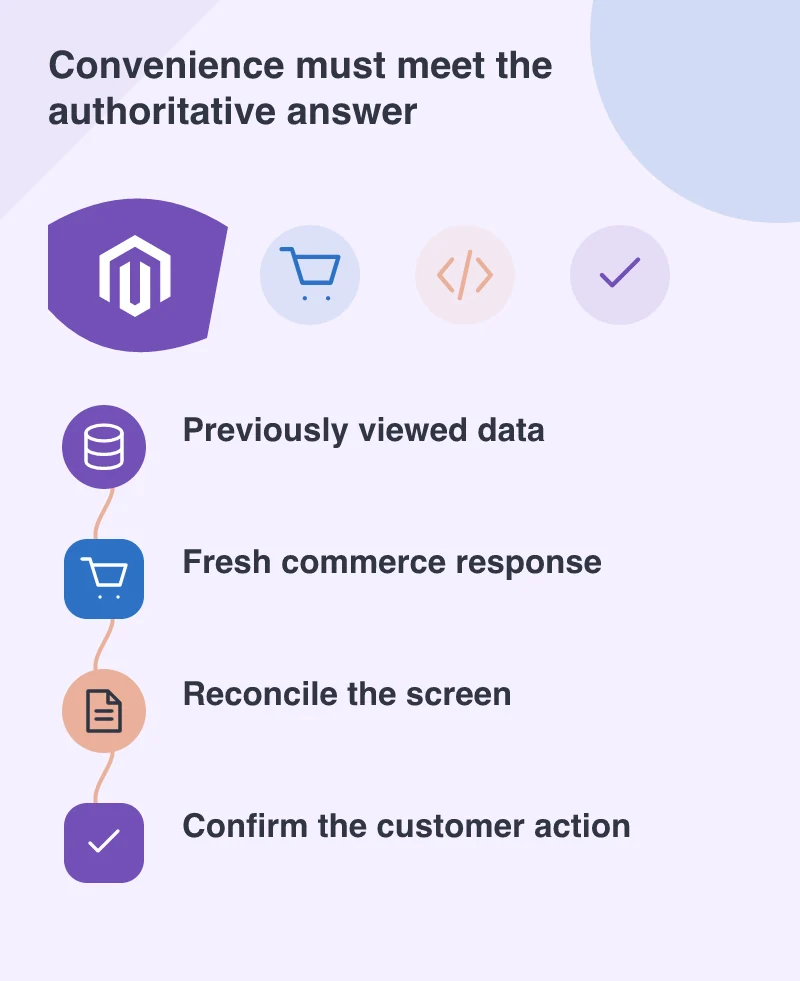
Keep personal information out of the wrong context
Signed-in data deserves particular attention. Test sign-out, another account signing in and the use of a shared device. The storefront must not confuse a fast transition with permission to retain somebody else’s information in the visible interface. Authentication and cache ownership need to be considered together.
Ask developers to describe the relevant boundaries in ordinary terms: which data is public, which belongs to an account and which changes when a session ends. That explanation helps a business understand the design without requiring everyone to inspect the underlying library configuration.
Test freshness as well as loading speed
A useful acceptance checklist includes changing data while a page remains open, navigating back to an earlier screen and returning after a session expires. These are normal customer behaviours. They reveal a different class of issue from a first-load performance test.
A promotion gives the team a concrete freshness test: change the offer, revisit the page, sign in and inspect the basket. The important result is not simply a quick return visit. It is a responsive storefront whose remembered information yields to the commerce system’s current answer when a customer commits.