
A beautiful product page is only the beginning of an ecommerce experience. The customer still has to change a quantity, understand delivery, recover from a failed payment and recognise the final order. PWA Studio 8’s October release completes its full-page cart and checkout workflow. That gives a headless Magento project a more concrete starting point, and a useful reason to examine every transition between the storefront and the commerce engine.
A reference flow is a starting point
The release also introduces a Shopping Bag feature and includes caching and data-fetching work around Apollo Client 3. These are implementation developments, not a promise that every merchant’s payment and fulfilment requirements are already covered. A retailer still needs to compare the reference experience with the way its own business trades.
Write that comparison in customer terms. Which delivery choices exist? Can a customer buy as a guest? Which product options need confirmation? Which payment methods are essential? Those answers define the checkout that needs to be delivered more clearly than a list of screens alone.
Test a changed basket
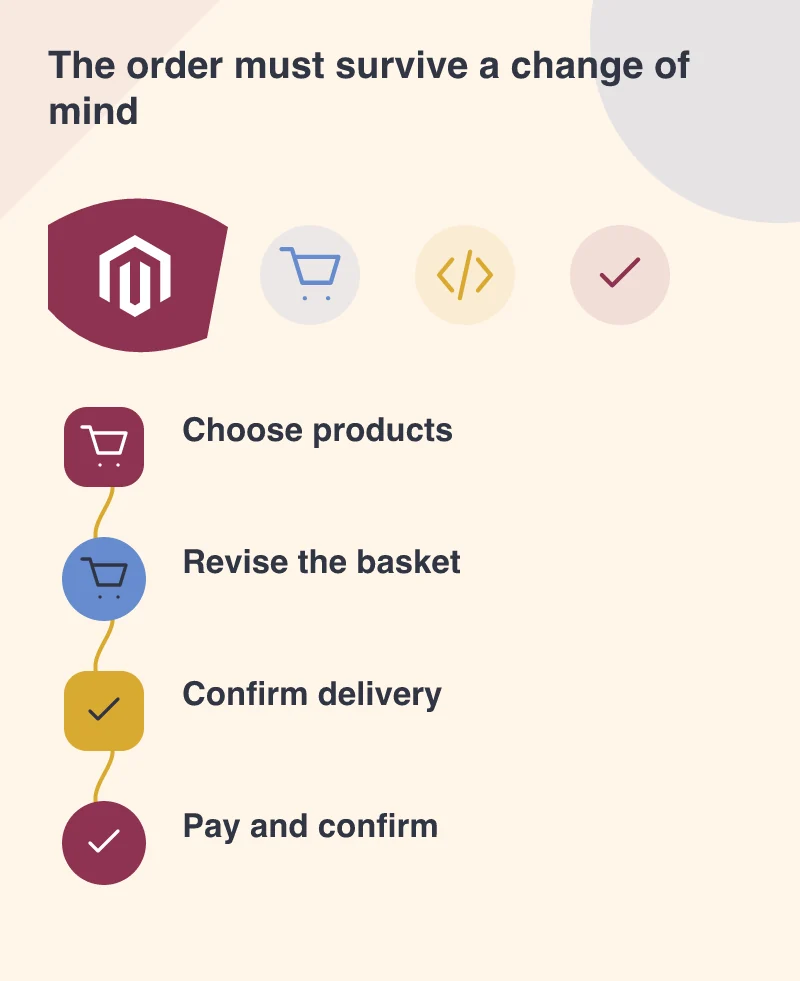
Take a shop selling items in several sizes. A shopper adds two products, changes one size and removes the other. The basket total, selected variation and available delivery methods should all remain understandable. If the customer goes back to a product page, returning to the basket should not create a different account of the order.
This is where headless architecture needs careful attention to state. The browser presents the interaction while the commerce backend remains responsible for the authoritative order information. A fast local update is helpful only if it is reconciled with the response from the store.
Make failures part of the design
A payment can be declined, a connection can drop or a product can become unavailable. Decide what the customer sees in each situation and which information remains safe to keep. An error message should explain a useful next action without suggesting that a payment succeeded when its status is uncertain.
Support staff need the corresponding operational view. They should be able to distinguish a completed order from an abandoned attempt and know which reference a customer can provide. A polished animation in the storefront cannot compensate for an unclear payment state in the administration system.
Accept the journey, not the screenshot
During review, ask somebody outside the implementation team to complete ordinary and awkward orders on a phone. Observe where they hesitate. Check keyboard access, readable labels and the return from an external payment provider. Keep the test environment separate from live financial activity.
Follow the order from selection to confirmation, including the moments when the customer changes their mind or a system cannot complete the next step immediately. The reference checkout supplies a foundation. The store earns its reliability through the particular buying journey and operations built around it.