
A search crawler catching up with modern browser technology is good news for web teams. On 7 May, Google announced an evergreen Googlebot using a newer Chromium rendering engine, with ongoing updates intended. Some workarounds for an older engine may therefore deserve review. The temptation is to hear that announcement as permission to put every essential part of a page behind more scripts. That would confuse compatibility with dependable delivery.
Modern syntax does not supply missing content
The announcement expands the browser features available to Google’s rendering. It does not make a failed product-data request succeed, remove an accidental indexing instruction or provide a description that the page never includes. Keep those basic questions separate when diagnosing search visibility. A newer engine can process more, but it still needs something meaningful and reachable to process.
Imagine a service page whose main explanation appears only after a second request. If that request times out, a visitor may receive a heading and an empty space. The problem deserves attention even if Google’s renderer supports the JavaScript syntax perfectly. Good error handling and a sensible delivery strategy help the page remain useful under imperfect conditions.
Retire workarounds with evidence
Inventory any code added specifically for the older Googlebot environment. Establish why it exists before removing it. A compatibility file may also serve older customer browsers, and a separate rendering route may support more than one consumer. Test the intended change against those requirements rather than deleting every component associated with search.
Use representative page types and compare the important text, links and metadata. If a workaround is redundant, removing it may simplify maintenance. If it still solves a real delivery need, keep or replace it deliberately. The announcement is a reason to reassess assumptions, not evidence that every existing implementation is unnecessary.
Keep the browser workload proportionate
A technically supported feature can still consume time and resources on a customer’s phone. Review the scripts required before the visitor can read a service description or use the main control. An animation library that delays the quotation form has a business cost even if every relevant browser can execute it.
Ask for a controlled performance comparison when adding substantial code. Then try the page on the devices the business actually expects people to use. Technical compatibility, responsive interaction and accessible controls are related but distinct requirements. Meeting one does not demonstrate the others.
Agree on a page that works before adding flourishes
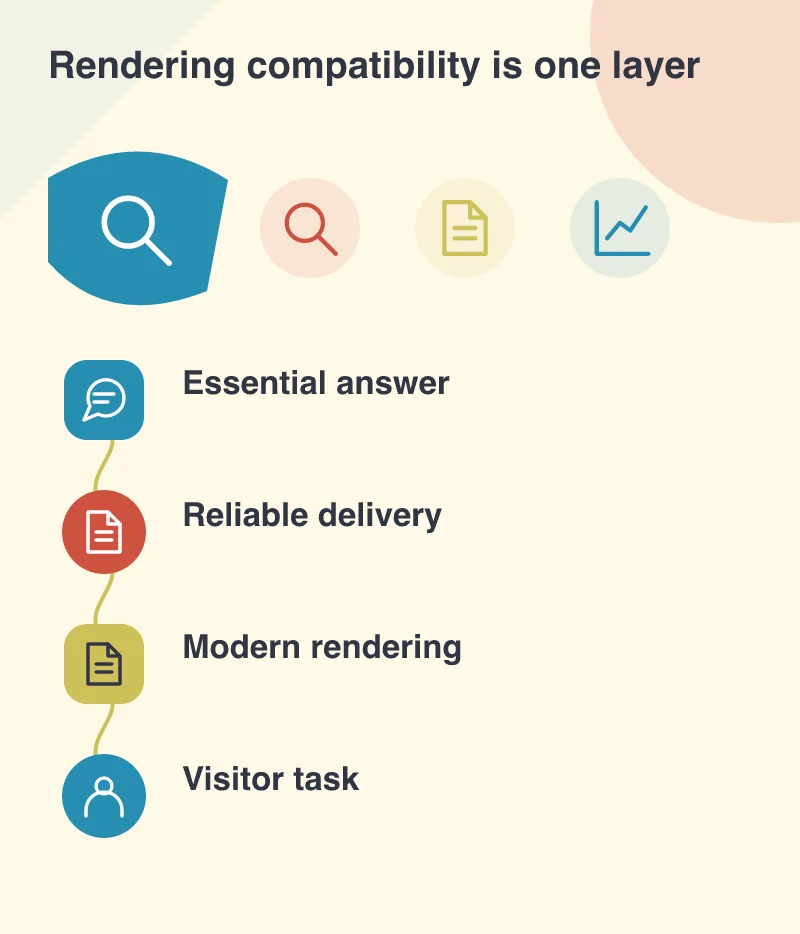
Write the page’s essential promise in ordinary language: the visitor can understand the service, follow a relevant link and make contact. Build the acceptance check around that promise. Additional interaction should support it, with a clear state if a request fails. A page can feel contemporary without making its core message fragile.
The evergreen Googlebot reduces one source of friction between modern development and search. Let it simplify the system where evidence supports that choice. Keep the more durable priority in view: deliver the information people came for, with as few opportunities for an unnecessary dependency to get in their way.