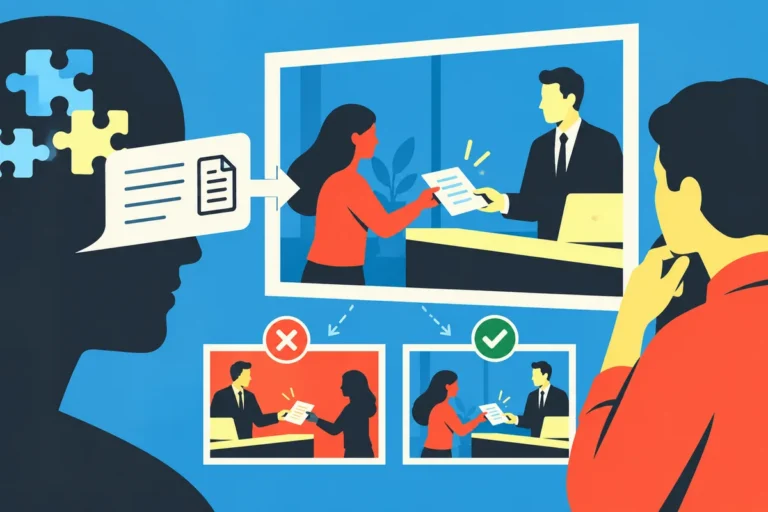
A useful conversation can disappear into an hour-long recording. Someone remembers that delivery dates were discussed, but nobody remembers when. Replaying the entire file is possible; doing it during a busy working day is less likely. Whisper, introduced by OpenAI on September 21, offers developers openly released models and inference code for speech recognition. It supports transcription across multiple languages and translation into English. That creates an opportunity beyond displaying a wall of automatically generated words: helping people return to the right part of a conversation.
Keep the recording and the text connected
Imagine a supplier briefing recorded with everyone’s agreement. A buyer wants to check whether a date was a firm commitment or a proposed target. Searching the transcript for the product name can narrow the task, but the sentence alone may not carry the speaker’s hesitation or the following correction.
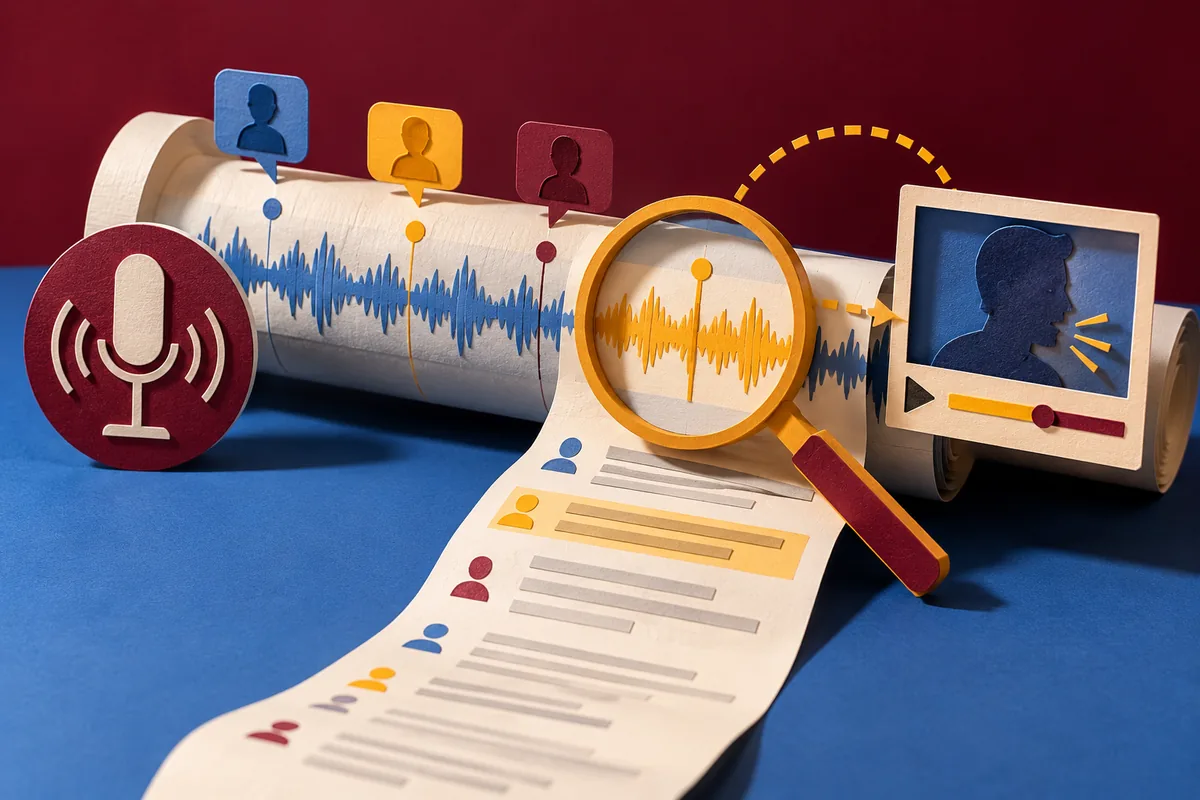
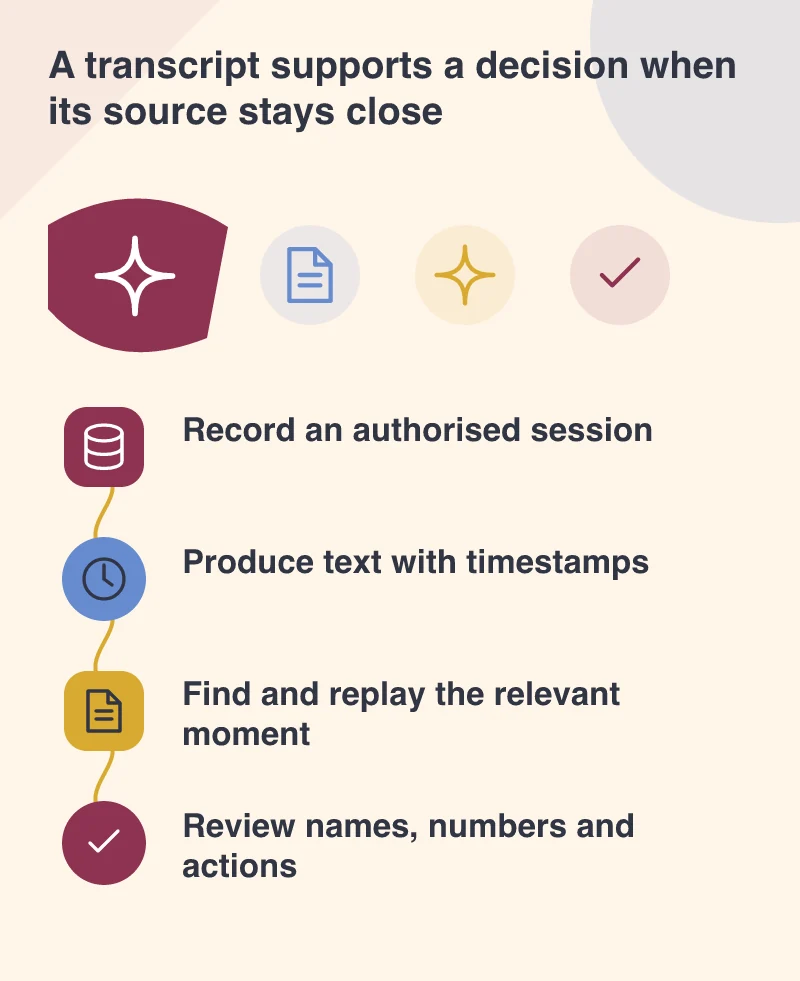
Timestamps make the text a route into the recording. Place a replay control beside each relevant segment so the reviewer can hear the original context. The transcript becomes an index, rather than a substitute for listening.
Whisper’s architecture includes timestamp prediction. Turning that capability into a dependable interface still requires work: storing the audio, lining up playback and keeping a segment connected to the correct file.
Preserve uncertainty instead of polishing it away
Names, catalogue numbers and amounts deserve special attention. A plausible word can be more dangerous than an obvious gap because it passes unnoticed into an email or order.
Let a reviewer correct the text while keeping a record of the original output. Do not silently turn an unclear phrase into a confident promise. If a task is extracted from the conversation, include who will verify it before it becomes an instruction to another system.
Translation adds another distinction. An English translation can help a colleague understand the discussion, but it is not a word-for-word record in the original language. Label the two outputs clearly and retain the source needed to resolve a disagreement.
Start with a bounded recording job
A short internal training session is a better first experiment than a high-stakes call that immediately changes customer records. Compare the transcript against the audio, including background noise, overlapping speakers and terminology the organisation uses.
Decide who may upload, hear, correct and delete recordings. These are product requirements, not details to leave until the interface is finished. Running an open model also brings practical questions about hardware, processing time and storage.
The strongest early application may be modest: make an existing recording easier to search and review. When a colleague can find the exact explanation, hear it and use it correctly, speech recognition has helped the work move forward.