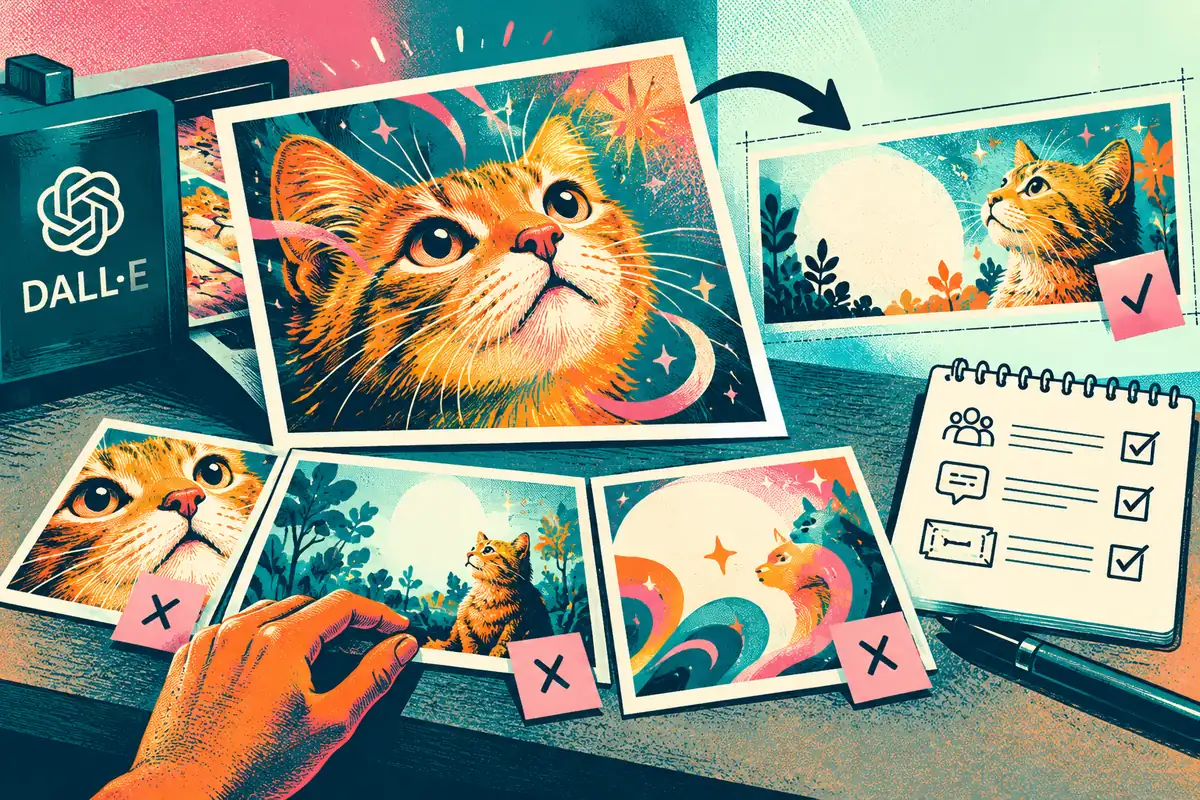
The first attractive AI-generated picture can end a design discussion too early. Everyone likes it, so the campaign quietly changes to fit the picture. The audience, the message and the space needed for a headline become secondary. OpenAI’s July 20 announcement brings DALL·E into an invitation-based beta, with tools for image variations and editing. Access is expanding, rather than becoming universally available at once. For teams experimenting with it, the practical challenge is now as much about choosing and directing as it is about generating.
Put the job on one page
Imagine a workshop organiser preparing a banner for a beginner’s class. The image needs to make the session feel approachable. It must leave space for a short title, work at a narrow crop and avoid implying that specialist equipment is required.
Those requirements form a brief. A spectacular futuristic studio could be the wrong answer even if everybody admires the rendering. A quieter arrangement of ordinary tools might explain the event better.
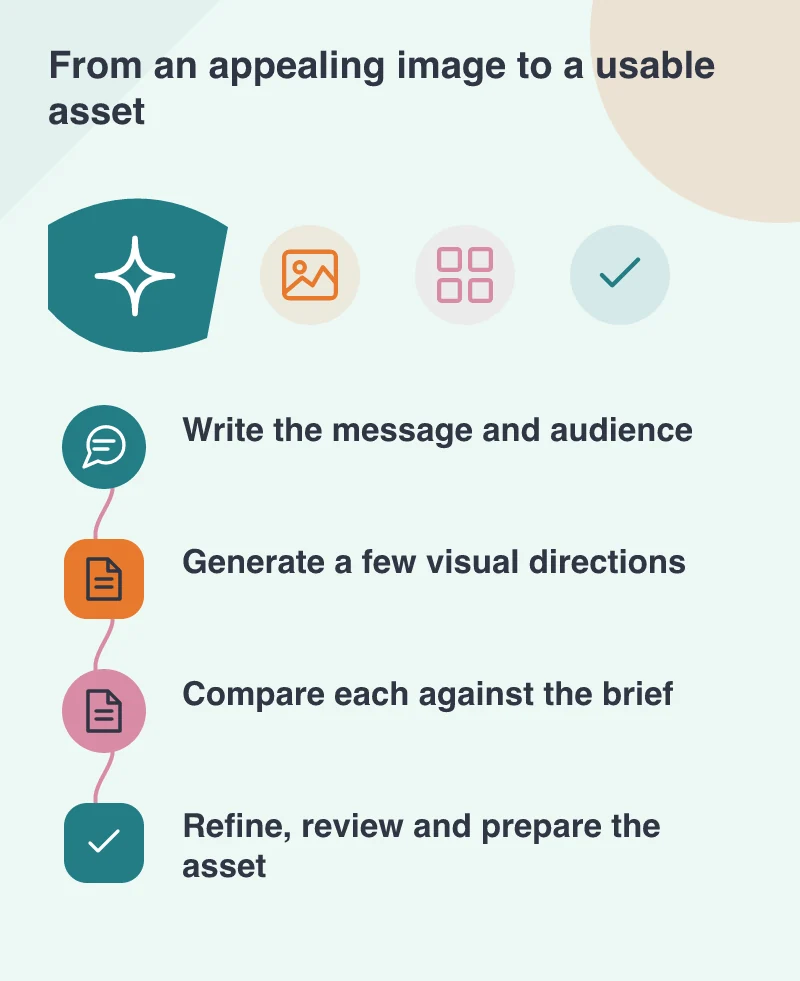
Record the audience, intended message, placement and restrictions before opening the generator. Separate essential facts from stylistic preferences. “There must be empty space on the left” can be checked. “Make it innovative” gives the team very little basis for a decision.
Compare directions before polishing one
Generate a small set of genuinely different compositions. Changing only colour can create the illusion of choice while leaving the same problem unsolved. Compare a close view, a wider scene and an abstract interpretation against the actual placement.
Review each image at the size visitors will see. An intricate result can become unreadable in a small article card. A composition that looks balanced on its own may fight the headline when placed in the page.
DALL·E’s editing and variation tools offer ways to explore a promising direction. They do not remove the need to inspect what changed. A revised background can also alter a small object that was correct before.
Finish it as a design asset
Check visible objects, accidental text, unintended associations and the relationship between the image and the accompanying words. Keep genuine product photographs when customers need to judge an actual item. An invented scene should not become evidence of an event, a customer or a business outcome.
Prepare the final crop, compression and alternative text for its destination. Keep the selected prompt and brief with the working files so another designer understands the choice.
The beta announcement also expands how generated images may be used commercially. That is a reason to read the applicable terms for the project, rather than treating every generated detail as cleared by default.
AI can make exploration much faster. A good brief ensures that the speed produces a better communication decision, instead of a folder full of attractive distractions.