
There is a large difference between asking whether a service includes installation and asking whether installation is required. A page that repeats the same product words may fail to answer either question. Google announced on 25 October that it is applying BERT language models to Search to better understand context in queries. For a business website, that makes a familiar editorial problem harder to ignore: does the page answer what the person means?
Small words can carry the decision
Google explains BERT as a way to consider words in relation to their surrounding context, rather than treating them only as an isolated sequence. Its examples show why relationships in a question matter. This is a search-language development, not an instruction to add a new BERT field to every page or install a plugin claiming to optimise for the model.
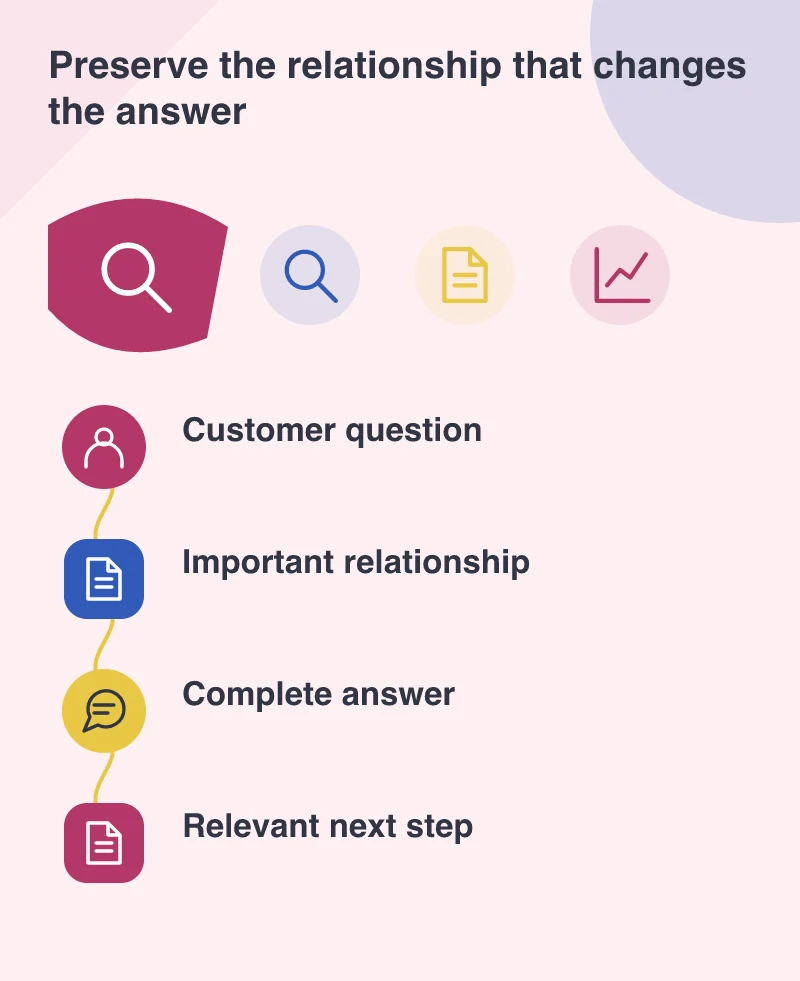
Imagine a customer asking whether a replacement part works without an adapter. The word without changes the question. A product description that says adapter several times but never explains the requirement is still incomplete. State the relationship plainly: what is included, what is needed and which combinations are supported. That information helps a person even before any search system processes it.
Listen for the point of uncertainty
Ask customer-facing staff which questions require repeated explanations. Look for distinctions: compatible with versus supplied with, available now versus made to order, installation service versus installation instructions. These are strong subjects for clear content because a wrong assumption can waste the customer’s time or create an unsuitable enquiry.
Write an answer that stands on its own. Name the product or service when necessary, define the relevant condition and include the next action for an unusual case. Avoid making every paragraph a teaser that sends the reader to another page before providing the basic fact. Related links should deepen the answer rather than hide it.
Use structure to make meaning easy to find
A descriptive heading helps a reader recognise the question being answered. A comparison table can clarify supported options. A labelled diagram may explain a connection better than another paragraph. Choose the format according to the information, not because every article is expected to contain the same number of sections.
Do not manufacture an enormous FAQ from slight variations of a phrase. Repetition can make the page harder for a human to use. Combine genuinely related questions and preserve distinctions where the answer changes. If two questions lead to the same explanation, one clear section may be enough.
Expect a language change, not a guaranteed ranking change
Google’s announcement concerns query understanding and describes an initial application to English searches in the United States, alongside use for featured snippets in other languages. It does not promise a specific result for an individual website. Avoid turning the announcement into a forecast of enquiries or a reason to rewrite accurate content without a demonstrated weakness.
The editorial opportunity is more concrete. Replace vague claims with explanations that resolve a real uncertainty. If someone can read the page and tell whether the offer fits their situation, the content has done useful work. Better language understanding in search makes that a sensible priority; it does not change who the page is ultimately for.