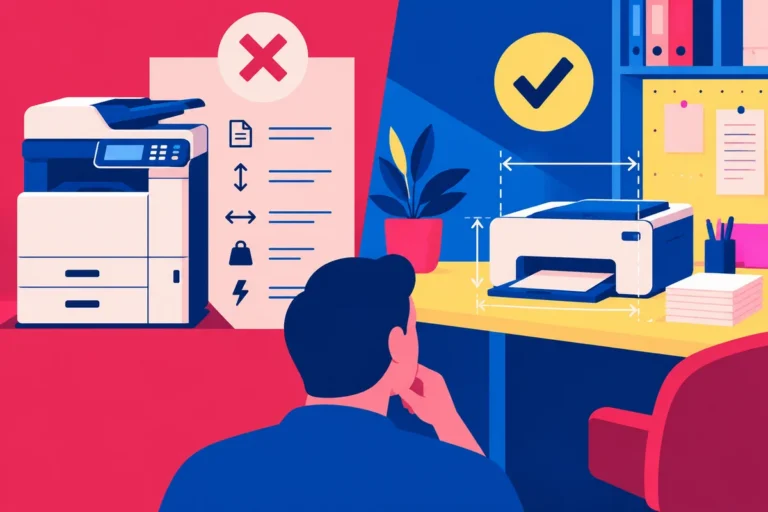
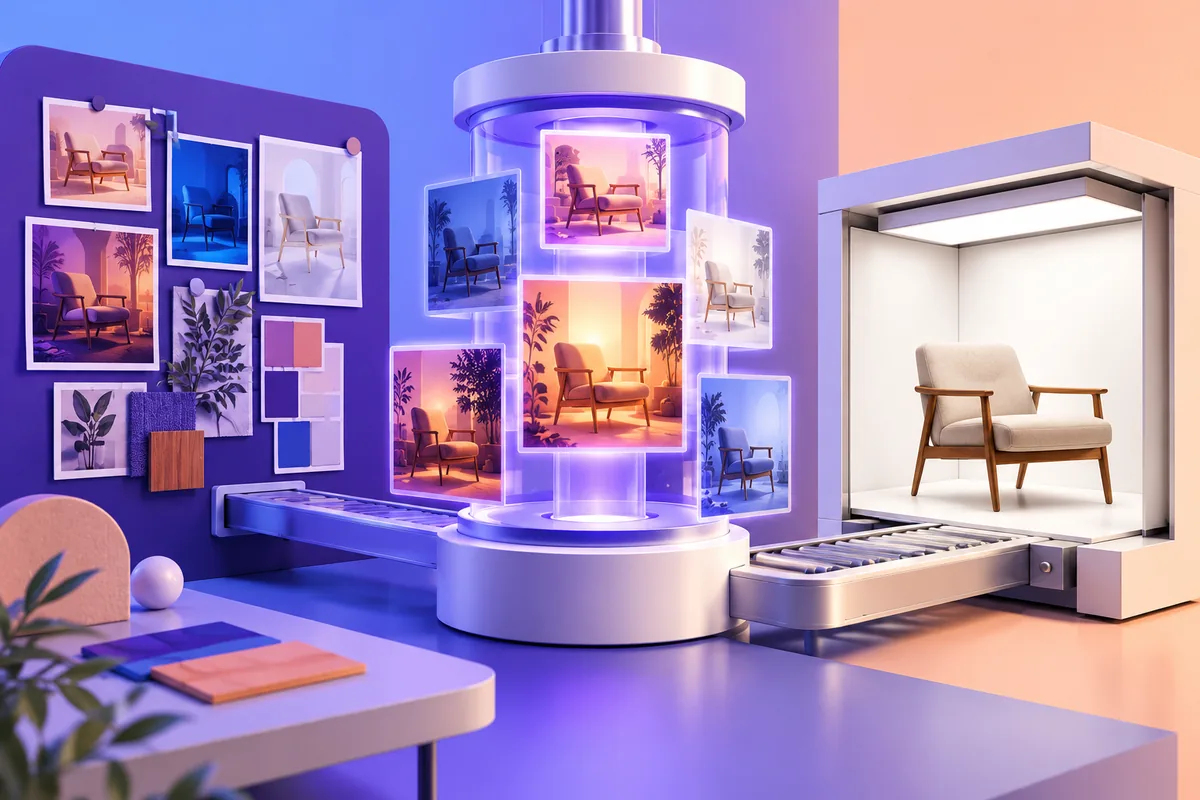
A design team can spend a meeting trying to describe the atmosphere of an image: warmer light, a quieter background, a different sense of scale. Text-to-image research such as DALL·E 2 makes that exploration newly interesting in April. But a picture that helps people discuss a direction is doing a different job from a picture presented as evidence of a product a customer can buy. Keeping those jobs separate gives the technology a useful place without asking an attractive result to be more reliable than it is.
Use the image to sharpen the brief
The original research describes a text-conditional image-generation approach using CLIP latents. Its commercial relevance for a design conversation is the possibility of exploring a visual description quickly. A concept can help a team compare mood, composition or an unusual idea before committing to a finished asset.
Imagine a studio considering a campaign about a more organised workspace. Several concept directions could reveal that the team prefers a simple desk scene to an elaborate futuristic environment. The output is then evidence about the team’s design preference, not evidence that a particular photographed room or product exists.
Do not let realism impersonate accuracy
A catalogue photograph must show the item the buyer will receive. The number of parts, materials, dimensions and visible controls can matter to the purchase. An image can look plausible while quietly changing one of those details. Visual polish does not establish that the product representation is correct.
The same applies to a diagram used to explain a service. Labels, relationships and sequence need checking. If the point of the illustration is to teach a process, a carefully drawn original diagram may communicate it more clearly than an impressive image filled with ambiguous technology shapes.
Bring the human decision back into the workflow
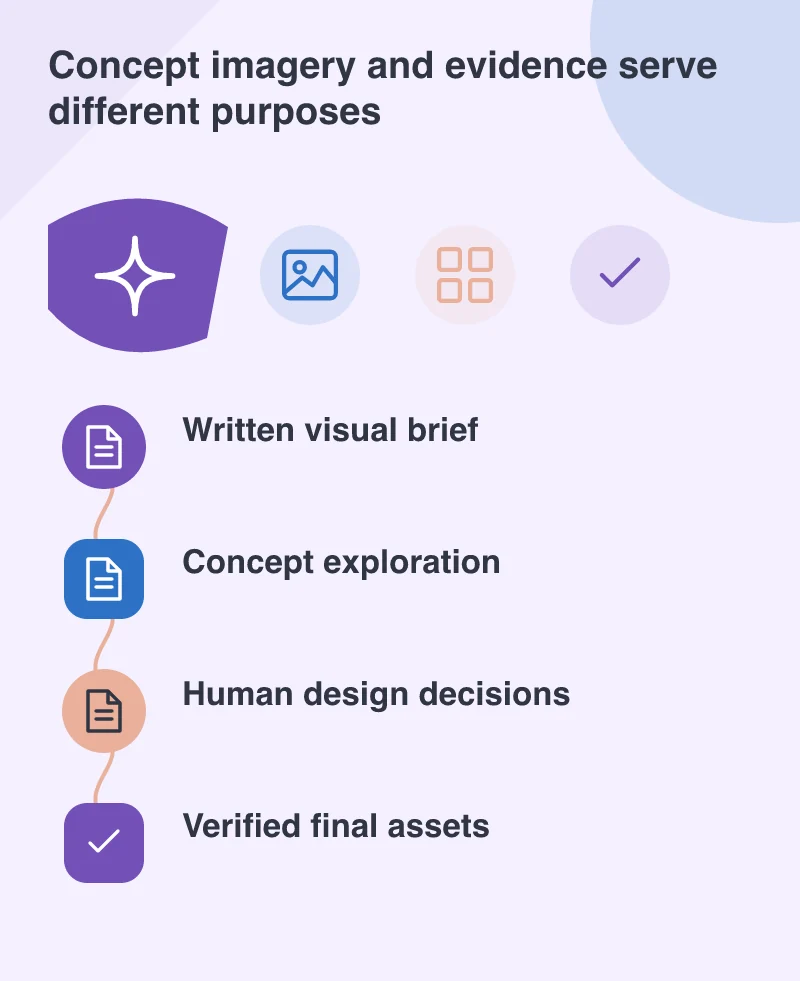
Review an exploratory result against the brief and name what is worth keeping. It may be the lighting, the negative space or the idea of showing a task from the customer’s viewpoint. A designer can then develop those choices through an appropriate production method, with the necessary source material and review.
Keep the asset’s intended use visible during approval. An internal moodboard, a clearly illustrative editorial image and a product-detail photograph should not pass through the same accuracy test simply because all three are image files. Their responsibilities to the viewer are different.
Choose the role of the image before choosing the tool. A moodboard can propose an atmosphere; a catalogue photograph must show the real item. Keeping those jobs distinct lets a team explore freely without allowing an attractive invention to become product evidence.