
“We deliver innovative solutions” gives a prospective customer very little to work with. They may be trying to replace a slow store, connect an enquiry form to their sales process or find out whether a complex catalogue can be moved safely. A service page earns its place by answering those concerns clearly.
Resist the rush to another content formula
Google’s May 21 guidance on AI experiences in Search continues to emphasise useful, distinctive content, technical access and a good page experience. It also says structured data should match the visible page. This is a reason to improve the substance of a website, rather than attach an AI label to the same vague paragraphs.
Start with a question your sales team regularly has to clarify. “Can we keep our existing product information?” is a stronger editorial starting point than “The future of digital commerce”. It gives the page a reader, a decision and a boundary that can be explained.
Put the constraints beside the promise
Imagine a manufacturer considering a new customer portal. They need to know how trade accounts, product information and existing ordering processes might fit together. A useful page can explain the discovery work, the information needed from the business and the parts that require an assessment.
It does not need to promise an instant migration or invent a result. Show a small, understandable example: a customer signs in, sees the appropriate catalogue and submits an order through an agreed process. Make clear what is illustrative and what the business must confirm for its own situation.
Let images carry evidence
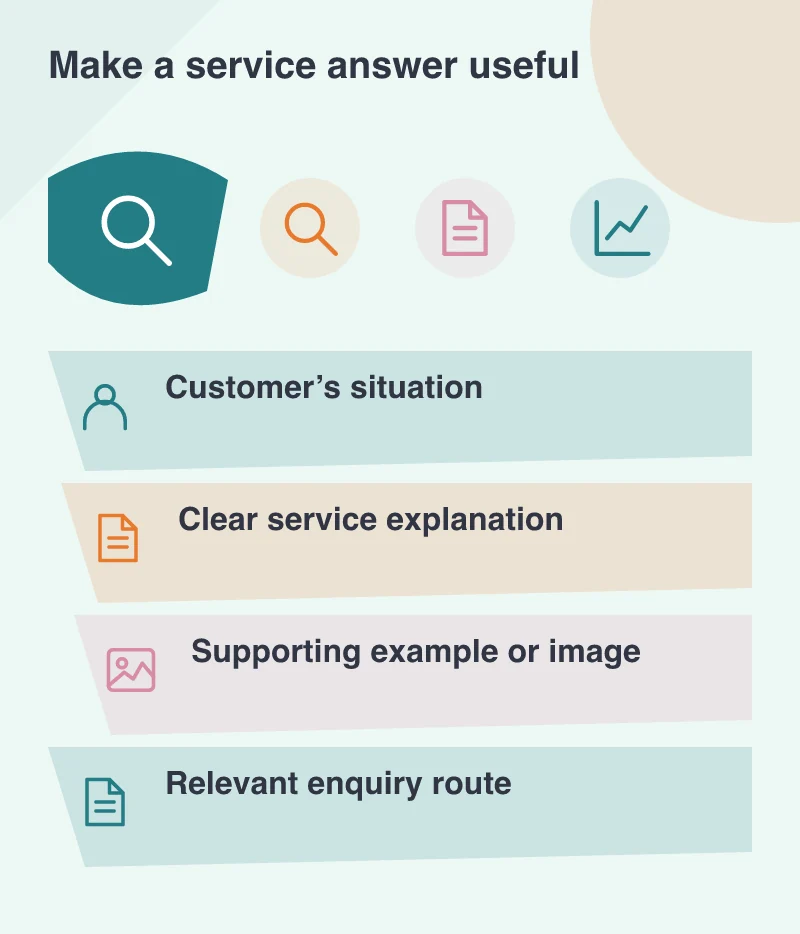
A diagram should answer a question the prose raises. If the page describes an integration, show where information begins, where it goes and what the customer sees. Avoid decorative dashboards whose labels are too small to read or whose impressive numbers have no source.
The same standard applies to screenshots. Explain which part matters and supply a text description for people who cannot use the image. A visual that clarifies a process gives a visitor something concrete to inspect; an unexplained collage merely adds another layer to decipher.
Judge the visit by the decision it supports
Search traffic is useful when it brings people closer to a relevant outcome. Look at whether visitors find the right service, read supporting information and reach an enquiry route that suits their need. A change in clicks alone cannot explain the quality of those journeys.
There is no guaranteed appearance in an AI answer, and no single paragraph format can create one. There is, however, a practical editorial improvement available now: replace broad claims with clear explanations of the problems you can help solve, the work involved and the evidence a customer can examine.