

The search system finds three documents about the same product. One is current, one belongs to a discontinued version and one is an internal draft. A stronger embedding model may improve similarity matching without resolving which document the customer should trust. OpenAI’s January release of new embedding models is a useful opportunity to review the information behind an AI search feature, not only its model setting.
Keep the document’s identity with its text
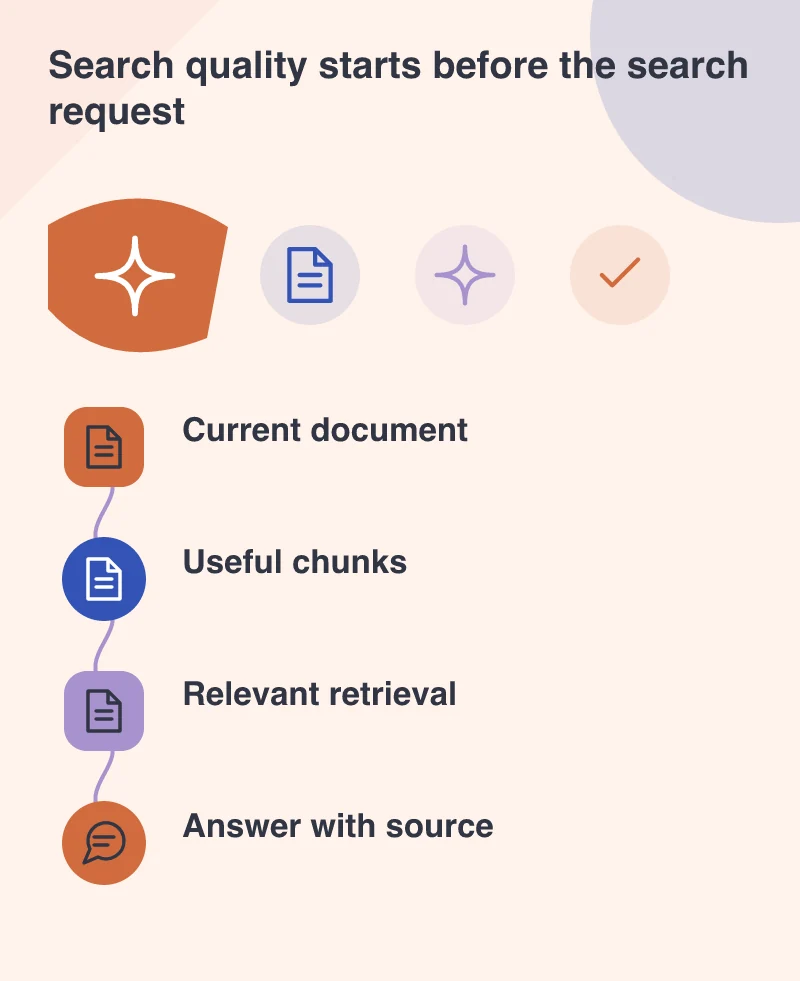
An embedding represents aspects of content in a numerical form that can support retrieval. It is not a judgement that the content is correct, approved or appropriate for a particular reader. Keep the document title, product identifier, version, owner and publication status available alongside the searchable text.
For an equipment supplier, the installation guide for an older model may be highly similar to the current guide. The search application needs a way to distinguish them. A source without version information creates a problem that a carefully worded prompt cannot reliably repair after the wrong passage has been selected.
Divide content around meaning
A long manual usually needs to be divided into smaller pieces for retrieval. Keep headings, units and important qualifications attached to the passage they explain. A warning separated from the instruction it limits can produce an answer that is technically drawn from the source but practically misleading.
Review the retrieved passages directly before evaluating generated prose. If the right section never reaches the answering stage, changing the style of the answer is unlikely to solve the problem. The team should be able to see which document and section were selected for an ordinary customer question.
Compare using your difficult questions
The January announcement offers model choices and configurable embedding dimensions. Evaluate those choices against a small set of business examples rather than adopting a larger representation simply because it is available. The appropriate balance depends on the collection, the questions and the surrounding system.
Include similar product names, abbreviations, older terminology and questions with no answer in the approved library. Ask a subject expert to judge the retrieved result. A test limited to exact phrases copied from the documents will not tell the team much about the language a real customer brings to the search box.
Give corrections a route back into the library
When someone finds an outdated answer, identify whether the problem lies in the source document, its metadata, the retrieval choice or the generated explanation. Those causes need different corrections. Rewriting a response template does not remove an obsolete manual from the collection.
Assign ownership to the content and define how an updated document replaces its predecessor in search. A useful AI feature needs that operating process as much as it needs a good retrieval model. The new embeddings can support better search, but the business still has to decide which information deserves to be found and how a reader can check it.