A new AI demonstration can make last month’s system look suddenly outdated. That is not a useful way to decide what a business should build. Google’s December introduction of Gemini broadens the choice of models and products being discussed. The sensible response is to compare them against a defined piece of work, using the same source material and the same standard of correctness.
Separate the model family from the available product
The Gemini announcement describes several model sizes and a staged route into products and developer access. Those are different things from a single capability available everywhere immediately. Record which model, interface and access arrangement a trial actually uses before drawing conclusions from it.
This is particularly important for demonstrations combining different kinds of input. A published example may not match the input method, limits or availability of the product a team can use today. Check the relevant announced scope and avoid turning a future plan into a requirement that an application is assumed to satisfy now.
Build a comparison around an ordinary task
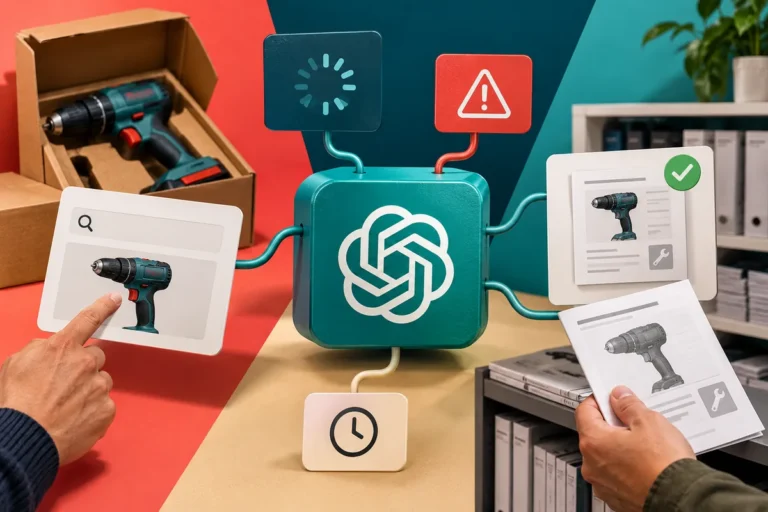
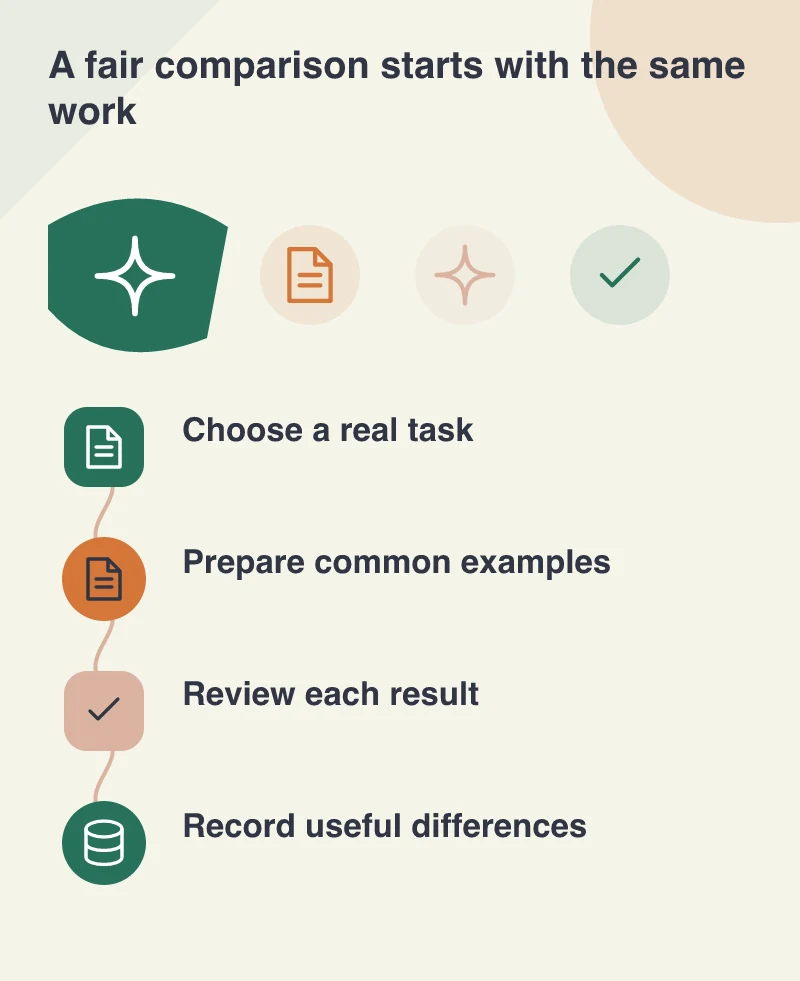
A distributor might want help locating the right installation guide from an approved set of documents. Prepare questions with an obvious answer, a near match, missing details and no answer in the material. Ask the same questions under comparable conditions, and keep the original documents available to the reviewer.
Judge the useful result. Did the system identify the correct guide? Did it preserve the product distinction? Did it admit when the required information was absent? A response that sounds more confident or uses more polished headings is not automatically the better answer. The business needs evidence about the task it intends to support.
Inspect the work around the answer
A model connection also involves response time, handling of errors, data flows and a route to human assistance. The team should understand what happens when the service is unavailable or when a user asks something outside the feature’s purpose. A product that works only in the ideal demonstration is not ready to support an ordinary working day.
Consider what the reviewer must correct and how much context they need to make that correction. An assistant that saves drafting time but introduces difficult factual checks may change the workload rather than reduce it. Record that trade-off instead of forcing every comparison into a single winner.
Leave room to change the implementation
Keep the application’s useful task and its provider-specific connection separate enough to evaluate alternatives. That does not require building a complicated abstraction before the first trial. It means avoiding unnecessary assumptions in the user experience and keeping the evaluation examples available for future decisions.
A new model is an invitation to examine where it fits. Keep a working design until a comparison establishes a reason to change it. A modest, documented comparison can show where a new capability helps and where the current process remains preferable. The result should be a decision the business can explain, using its own work as the reference point.