
A customer asking for opening hours should not have to wait while a model performs an elaborate analysis. A colleague comparing several technical proposals may welcome more time spent examining the material. Anthropic’s February Claude 3.7 Sonnet announcement brings standard and extended thinking into one model. The product decision is when that extra processing effort serves the person using the application.
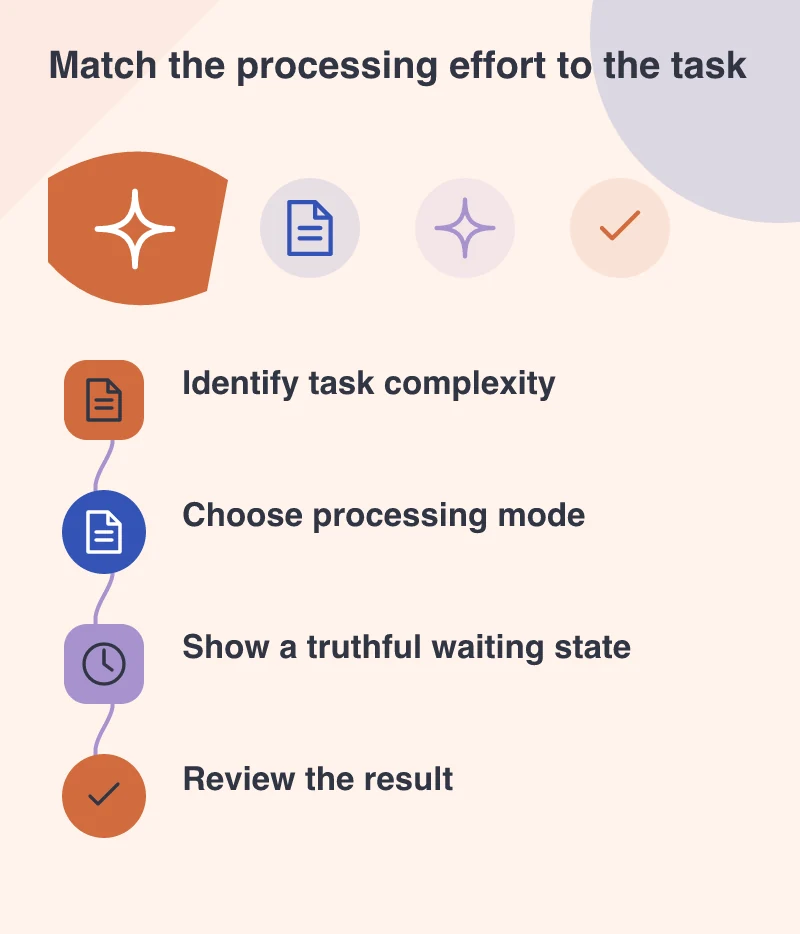
Separate a quick fact from an analytical task
List the requests the feature is meant to support. Some should be answered by a direct lookup in an approved system. Others involve summarising differences or assembling a draft explanation from several sources. Routing everything through the most elaborate option can introduce waiting without improving the result.
For a business-document trial, define the analysis being requested and the evidence the reviewer needs. A longer response is not proof of better reasoning. The useful result may be a short comparison that preserves important conditions and clearly identifies information the documents do not settle.
Set an expectation the interface can keep
The announcement gives API users control over the thinking budget. Treat that as an implementation choice that affects the user experience, not a hidden setting chosen only for a demonstration. Decide how the application communicates that work is ongoing and what happens if it takes longer than expected.
A truthful waiting state can explain the current task without displaying speculative internal progress. Give the user an appropriate route to cancel or continue another task where the product supports it. Do not turn an uncertain duration into a countdown the system cannot reliably honour.
Evaluate the answer, not the apparent effort
Use the same representative tasks to compare the intended modes. Ask a reviewer to check correctness, omissions, source alignment and usefulness for the next decision. A polished explanation can still contain an unsupported assumption, even when the model has spent more time producing it.
Include cases that do not need extended processing and cases where the provided information is insufficient. The application should not reward itself for inventing a detailed answer to an unanswerable question. A useful analytical assistant can identify the missing input and help the person ask a better follow-up.
Keep important decisions with the responsible person
The model can support work such as comparing requirements or drafting a review, while the business remains responsible for approval and action. Preserve the source material and distinguish a generated recommendation from an authorised instruction. That boundary is especially important when another system could act on the result.
The new capability makes processing effort more adjustable. A well-designed application uses that flexibility selectively: quick where a straightforward answer is available, more deliberate where the task warrants it and clear about what still needs review. The user should experience useful judgement about the task, rather than waiting for complexity that adds little to their day.