
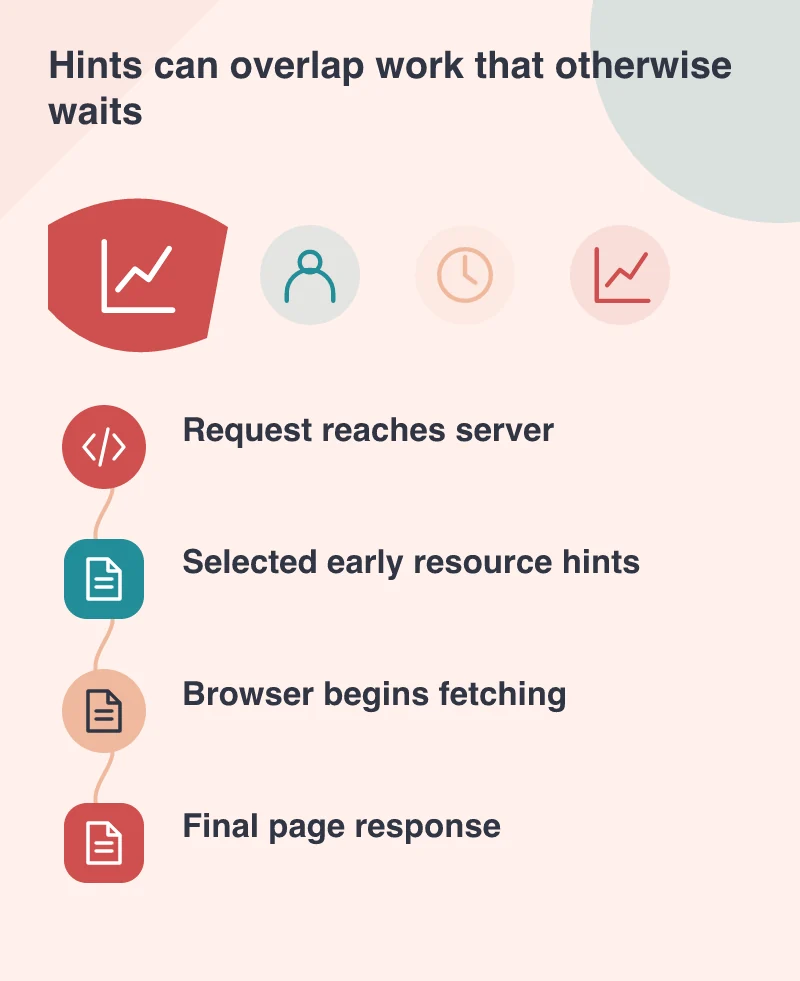
A browser requests a page and waits while the server prepares the response. During that interval, it may not yet know which stylesheet or other critical resource the page will need. Chrome 103’s June support for HTTP 103 Early Hints offers a way to overlap some of that work. The opportunity is narrow and practical: identify useful resources early enough that the browser can begin fetching them before the final page arrives.
Choose the hint from the route
The release adds browser support for an early response that can identify resources ahead of the final response. This is different from sending the whole page sooner. The application, server or delivery infrastructure needs to supply appropriate information, and the resources named should actually serve the route the customer requested.
Imagine a store with one shared stylesheet and several campaign-specific scripts. Hinting the stylesheet may be worth investigating. Hinting every campaign asset for every product page could create unnecessary competition for the same connection. Earlier work is not automatically useful work.
Check the infrastructure path
The early response must make its way through the actual hosting and delivery setup. A local demonstration does not establish that a proxy, CDN or production server forwards and handles the same behaviour. Ask the implementation team to verify the complete path used by the public site.
Also review how the hints are generated. If a deployment changes an asset filename, the hint should not continue advertising an obsolete resource. The feature becomes easier to maintain when it shares the application’s knowledge of the assets being released rather than relying on a separate list somebody must remember to edit.
Measure the page that has room to benefit
Start with a representative route whose response preparation creates a meaningful wait. Compare a controlled run with and without the change under the same conditions. Inspect when the hinted resource starts and whether the important content becomes usable sooner. Keep the network evidence beside the result.
Do not assume that an improvement on one template applies to every page. A static page, a personalised response and a heavily scripted application can spend their time in different places. The appropriate hint and the potential benefit may therefore differ.
Keep priorities disciplined
Early Hints is another delivery tool, not a substitute for removing unnecessary resources or improving the server response itself. If the page begins loading a large amount of work earlier, the customer may still wait for the useful part.
Test Early Hints on a page whose server preparation leaves time worth using. Keep only hints that bring forward an important resource, then compare the result without them. A delivery mechanism earns its place by helping the page people actually use, rather than by adding another optimisation label.