

A ranking update has begun, and the performance report suddenly feels more consequential. That is understandable. It is also the moment when a team can lose sight of the person behind the measurement. Google’s 15 June notice confirms the start of the page-experience rollout. The strongest response is still to identify a customer problem, investigate it under understood conditions and verify that the corresponding change helps.
A rollout is not a switch on every page
Google describes a gradual introduction of page experience into its ranking systems. That does not turn a single Lighthouse run into a forecast of a page’s search position. Content relevance and the broader search context remain part of the picture. A business should therefore resist attaching a precise traffic promise to a performance task that cannot support one.
The 2021 Core Web Vitals remain Largest Contentful Paint, First Input Delay and Cumulative Layout Shift. Keep those signals distinct when deciding what needs attention. They describe loading, the first interaction and visual stability, rather than interchangeable versions of one speed number.
Understand what the report observed
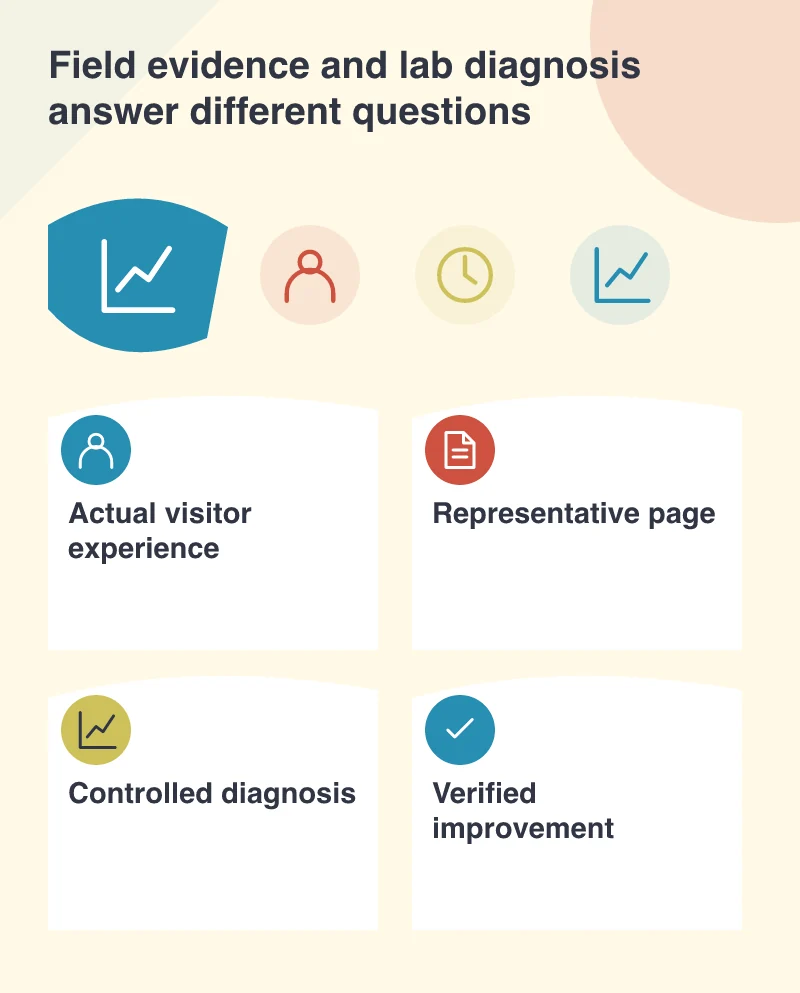
Field information reflects actual visits where the relevant data is available. A lab test places a page under controlled conditions to help diagnose behaviour. First Input Delay, in particular, depends on a real interaction; a lab’s blocking-time diagnosis is not the same measurement simply presented under another name.
This distinction can explain why two tools appear to disagree. Before changing the website, compare the URL, period, device context and measurement being discussed. An honest account of those differences is more useful than selecting whichever result best supports a preferred conclusion.
Follow one troublesome interaction
Imagine a product page where size selection feels unresponsive while several scripts initialise. Watch and trace that moment. Which work must finish before the interface can respond? Which scripts are necessary for selecting a size, and which belong to a later part of the visit?
A targeted change might defer unrelated work or simplify a component. Repeat the comparable test and check the customer task itself. A smaller script bundle is interesting evidence, but the practical acceptance question is whether the control now responds as expected without damaging the rest of the page.
Keep improvements visible through ordinary releases
Record the representative pages and the conditions used to test them. Recheck when a new feature, image treatment or external service changes a relevant template. Editors and designers should understand which decisions preserve the page’s loading priorities and stability so the work is not quietly undone during routine publishing.
Keep the visitor’s task beside the measurement. Important content should appear, actions should respond and the page should remain stable while it settles. A score can help locate a problem; it cannot replace those experiences with a number that every visitor is assumed to share.