
A future search update can easily turn into an anxious deadline. Turn it into a visible list of customer problems worth fixing. On 10 November, Google announced a May 2021 target for bringing page-experience signals into Search ranking. That leaves time to investigate the website deliberately instead of making broad changes at the last moment.
Treat the date as planning information
The announcement builds on the Core Web Vitals introduced earlier in 2020: loading, first-interaction responsiveness and visual stability. It does not say that page experience replaces the relevance of the content a person is looking for. Nor does it establish that one improved test score guarantees a particular ranking.
That distinction helps a business set a sensible objective. The work should make important pages easier to use and the relevant measurements healthier. It should not be sold internally as a mechanical route to a promised search position.
Choose the pages that represent the business
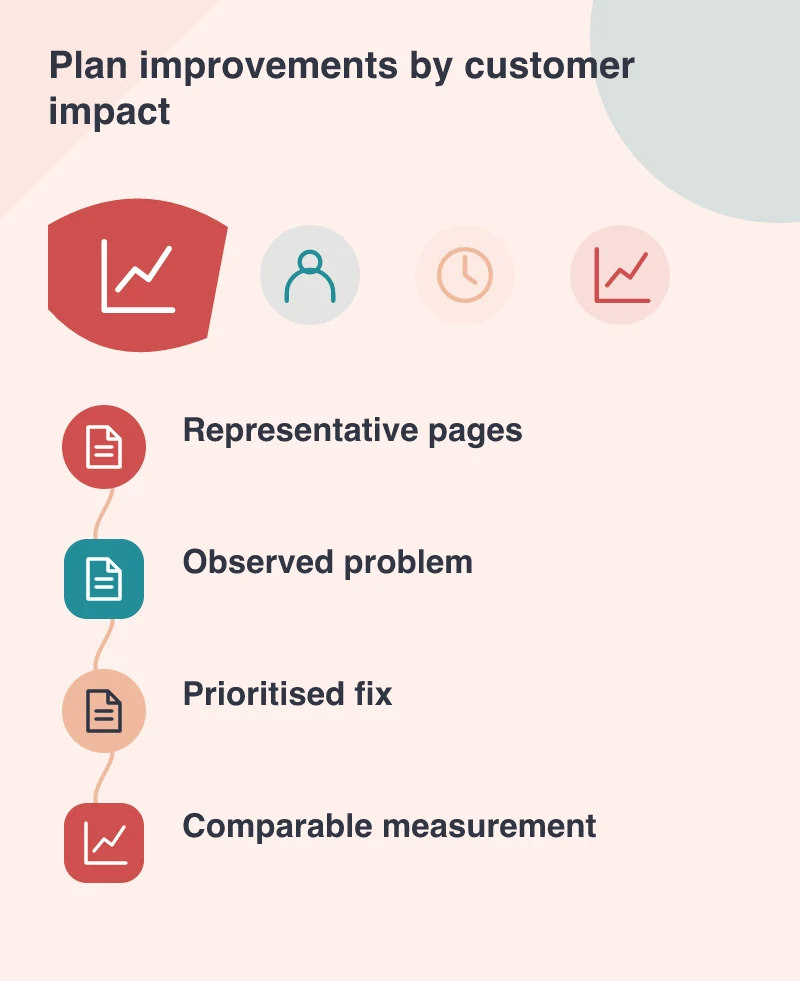
For an ecommerce site, begin with a category page, a product page and a substantial buying guide. For a service business, include the main service explanation and the enquiry route. Different templates can create different delays and movements, so the homepage alone is an incomplete sample.
Watch the pages on a phone while they load. Note which information appears first, whether controls respond and whether content shifts unexpectedly. These observations make the report easier to discuss with designers and managers. They also prevent the team from treating every diagnostic warning as equally important.
Turn the diagnosis into owned work
A large main image may need a better size and loading priority. A late promotional panel may need reserved space. Unnecessary JavaScript may need to be removed or delayed. Each item should name the affected template, the behaviour being changed and the person responsible for verifying it.
Separate the work the team controls from external dependencies. A third-party service may require configuration or a supplier discussion. Hiding that dependency in a general performance ticket makes the schedule harder to understand and the final result harder to assess.
Verify progress without changing the question
Keep comparable reports and record the conditions under which they were produced. Use field information and controlled diagnostics for their different purposes, rather than expecting them to agree at every moment. A measured improvement should be tied to the customer problem it was meant to address.
Put each correction on the release calendar with a page, an owner and a way to verify it. A known timetable is useful when it creates room for steady work: a lighter image, a stable panel or a script removed before another feature is added.