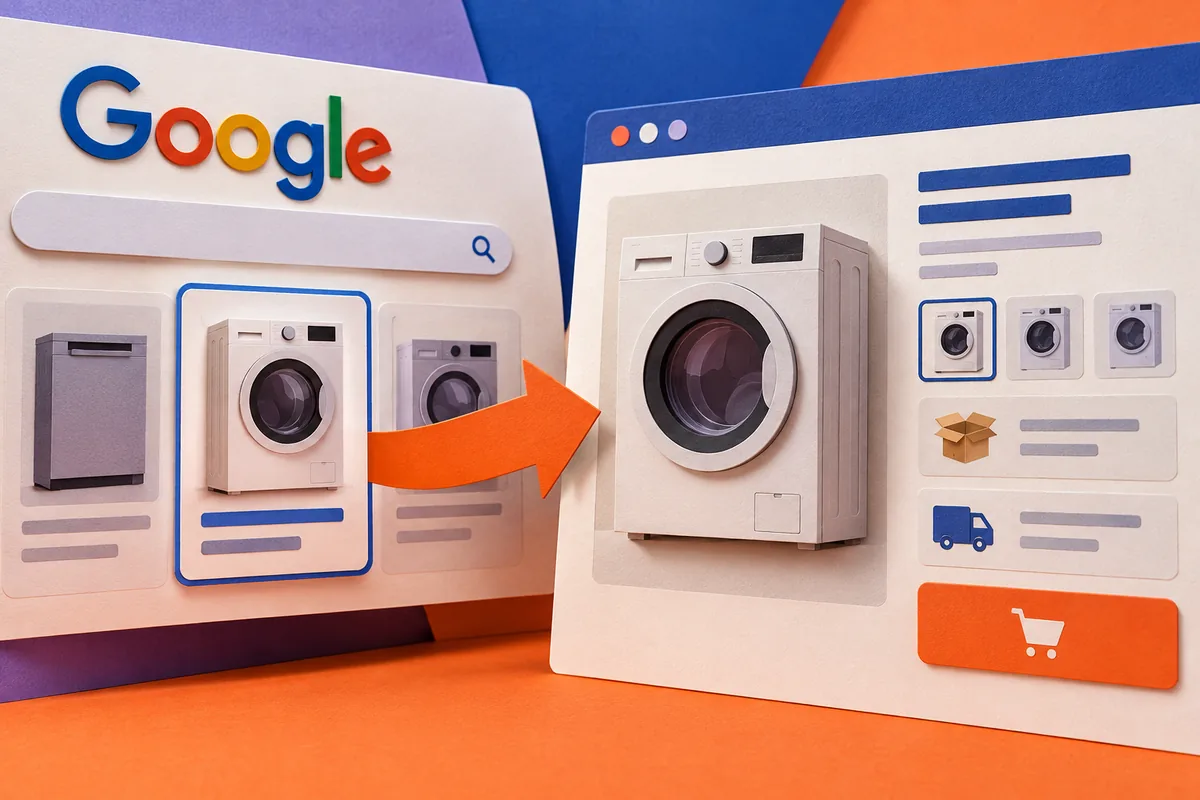
Someone searching for a particular product may reach the store without seeing its homepage, brand story or seasonal campaign. The product page has to do the introducing. Google’s June announcement about free retail listings in Search makes that situation worth reviewing: discovery can bring a useful visit, but the destination still has to help a person decide whether this is the right item from the right seller.
Know which experience is being expanded
On 29 June, Google announced free retail listings in product knowledge panels on Search in the United States, extending the earlier Shopping-tab initiative. The announcement should be read in that geographic and product context. It does not establish that every retailer in every market will receive the same placement or that inclusion guarantees traffic.
For a store team, the immediate work is to prepare reliable product information and understand the relevant participation route. A well-maintained catalogue supports that work even when the exact presentation of a search result is outside the retailer’s control.
Answer the first three uncertainties
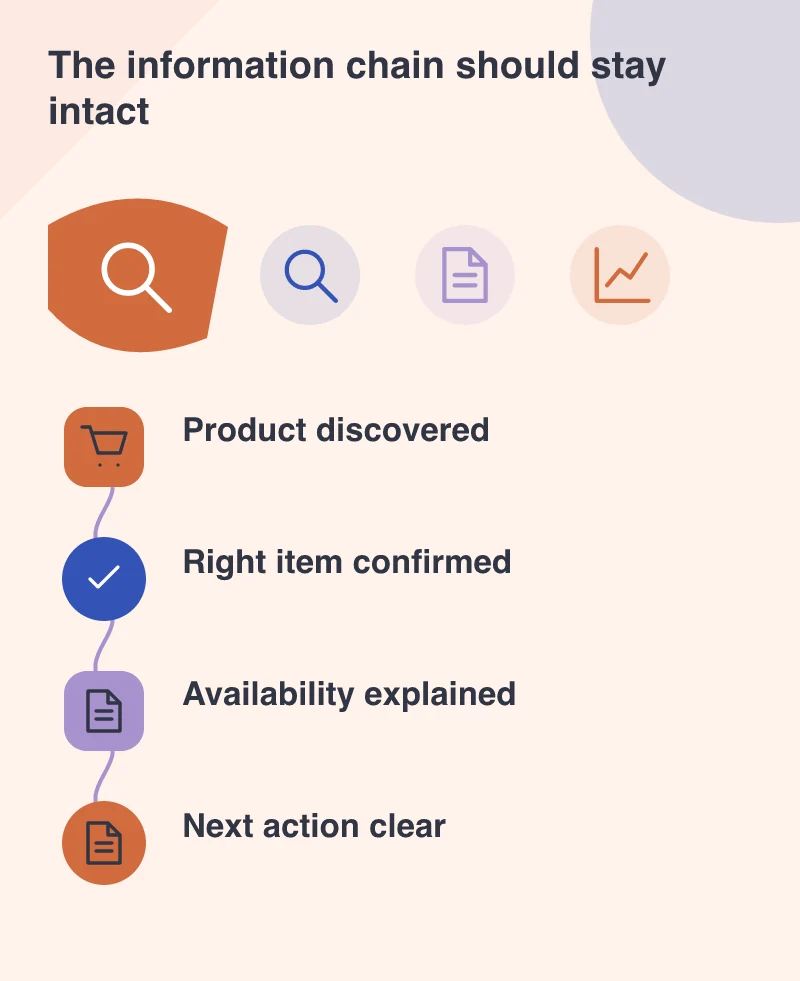
Take a appliance retailer. A visitor landing on a product page needs to confirm the model, understand what is included and find the available delivery arrangement. A large photograph and an Add to basket button do not answer all three questions. The page should make the distinction between similar models easy to understand.
Put important qualifiers near the decision. If installation is separate, a particular finish is unavailable or a delivery area is restricted, reveal that before checkout. This is not a matter of filling the page with warnings. It is a matter of keeping the offer precise enough that a customer can proceed with confidence.
Let the catalogue and content teams work together
Product data often belongs to an operational system, while useful explanations live in the content team’s documents. Bring them together. Specifications can describe measurable characteristics; a short buying note can explain who a product suits and which accessory is needed. Neither should contradict the price, variant or stock state produced by the commerce platform.
Assign ownership for corrections. If a customer repeatedly asks the same question, the answer may belong on the page rather than in another support email. If a feed repeatedly exports an old value, repairing the public page alone will not solve the underlying information problem.
Follow the visit through to a sensible action
Test the journey on a phone from an actual product URL. Check the loading of the main image, the readability of options and access to delivery information. Make sure the selected variation remains clear when the customer enters the basket. The page should leave someone ready to continue, with the price, delivery promise and next action understood.
June’s announcement adds another reason to take product pages seriously. A visitor arriving through discovery is already asking a focused question. A good page respects that intent by confirming the item, explaining the offer and making the next step feel proportionate to what the customer now knows.