
A private-looking search result can be surprisingly public. An old campaign page appears in Google, someone adds a robots.txt rule, and the team assumes the problem is solved. The page is still reachable by customers with the address. More subtly, the crawler may now be unable to read the instruction intended to remove it from search.
Crawling and indexing are different decisions
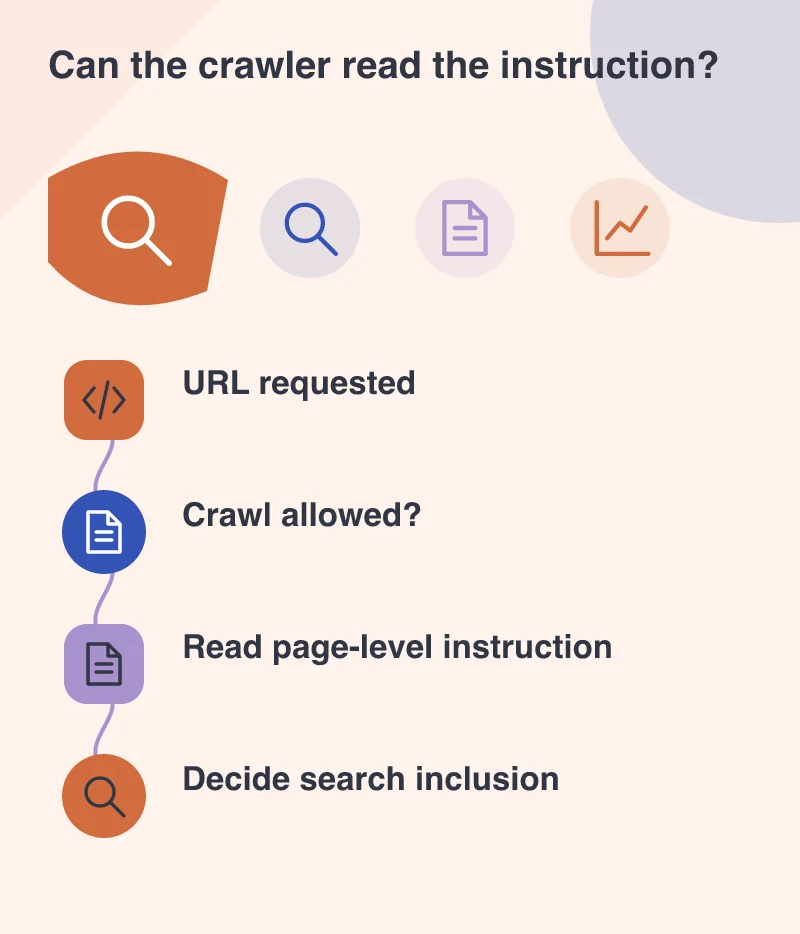
Google’s March refresher explains that robots meta tags and X-Robots-Tag response headers are page-level controls. Crawlers must be able to fetch a URL to see them. A robots.txt disallow rule can prevent that fetch. The two controls therefore need to be considered together, rather than applied as interchangeable switches.
For a business owner, the distinction is practical. Do you want to stop a crawler spending time on a route, or tell a search engine that a reachable page should not appear in results? Write the intended outcome down before changing a setting in an SEO plugin or server configuration.
Sort the pages by their real purpose
Consider an events business with a public programme, an expired registration page and a customer-only document area. These are three separate publishing decisions. The public programme should remain useful to visitors. The expired registration route needs a deliberate destination or explanation. Customer documents need proper access control.
Search preferences are not a login system. A page that contains material intended only for customers must enforce that boundary when someone requests it. Keeping its address out of a sitemap or asking cooperative crawlers not to visit is a different task from restricting access to the content itself.
Test the response that is actually delivered
CMS settings are only part of the route. A cache, security layer or server rule may add headers, return an old page or redirect the visitor. Check the final URL, HTTP response and rendered page instruction together. Google notes that response headers can be inspected in the browser’s network tools.
Use a small set of representative addresses: an ordinary article, a filtered listing, a downloadable file and a page being retired. Have the developer explain the rule that applies to each. A readable record of intent makes the next redesign much safer than a collection of unexplained exclusions.
Include visibility checks in a launch
Staging and production often need different search settings. Before launch, verify that the pages meant to attract customers are crawlable and carry the intended indexing instructions. After launch, inspect the same routes again through the real public configuration.
The goal is not to make every route indexable. It is to make the business’s publishing choices consistent. When a team can explain why a page exists, who can reach it and whether it belongs in search, the technical controls become easier to apply without accidental contradictions.