

A team can spend weeks improving headlines while its new service pages remain blocked from indexing. Another site can be technically accessible yet offer so little information that a visitor has no reason to enquire. Both have a search problem. They need different work. Google’s October 13 refresh of its Webmaster Guidelines, now called Search Essentials, makes that distinction easier to discuss. Technical requirements, spam policies and key best practices have their own place. A practical search review should be equally clear about which barrier it has found.
Can the intended page be reached?
After a redesign, begin with the actual URLs the business wants people to find. A staging restriction left in place can undermine the launch. So can a broken redirect that sends every old article to the homepage.
Inspect representative URLs in Search Console and compare what is accessible with the public page. Check server responses, indexing instructions and the content returned to a visitor who has not signed in.
These are basic questions, but they are not answered by a green performance score. A fast page and an indexable page are different achievements. Neither one alone means that Google will select it for a particular search.
Does the page explain its purpose?
Imagine a manufacturer launching a new installation service. The page contains a large photograph, a poetic headline and a contact button. It never says where the team operates or which products it installs.
Clear headings and ordinary descriptive words help a visitor understand the offer. They also give a search engine something concrete to interpret. Write the title around the page’s actual purpose, rather than a list of loosely related search phrases.
Internal links should help readers continue a task. A guide to choosing equipment might naturally lead to installation requirements. Linking every mention of a product category to the same sales page adds noise without necessarily adding understanding.
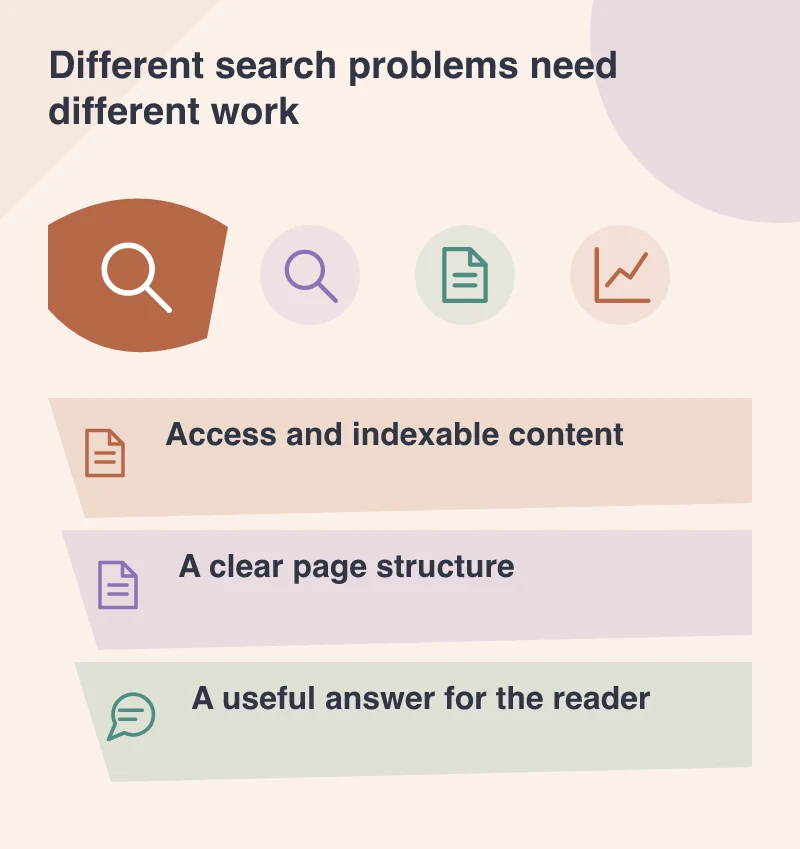
Is the method building something worth finding?
Search Essentials also consolidates policies about practices intended to manipulate results. A proposal based on manufactured links or pages with no distinct value should prompt questions about the method, rather than excitement about its promised position.
Ask an SEO supplier to explain the work in terms the business can inspect. Which pages will improve? What will a visitor learn? What technical obstacle will disappear? A ranking guarantee does not answer those questions.
Keep technical fixes, editorial improvements and promotion visible as separate activities in the plan. This makes it easier to evaluate progress and avoid repeatedly rewriting a page whose real problem lies elsewhere.
A successful search project connects access to a useful destination. The headline matters most when there is already a page worth reaching.