

A business blog does not become helpful by containing the right topic names. A visitor who searches for a platform comparison needs to choose a platform. If the article ends after a few definitions and a sales pitch, the visitor still has the original problem. Google announced its helpful content update on August 18, stressing content made for people rather than primarily for search traffic. The announcement also rejects the idea that Google has a preferred article word count. That should free an editorial team to finish an answer properly, rather than stretch it to fill a template.
Start with the decision behind the search
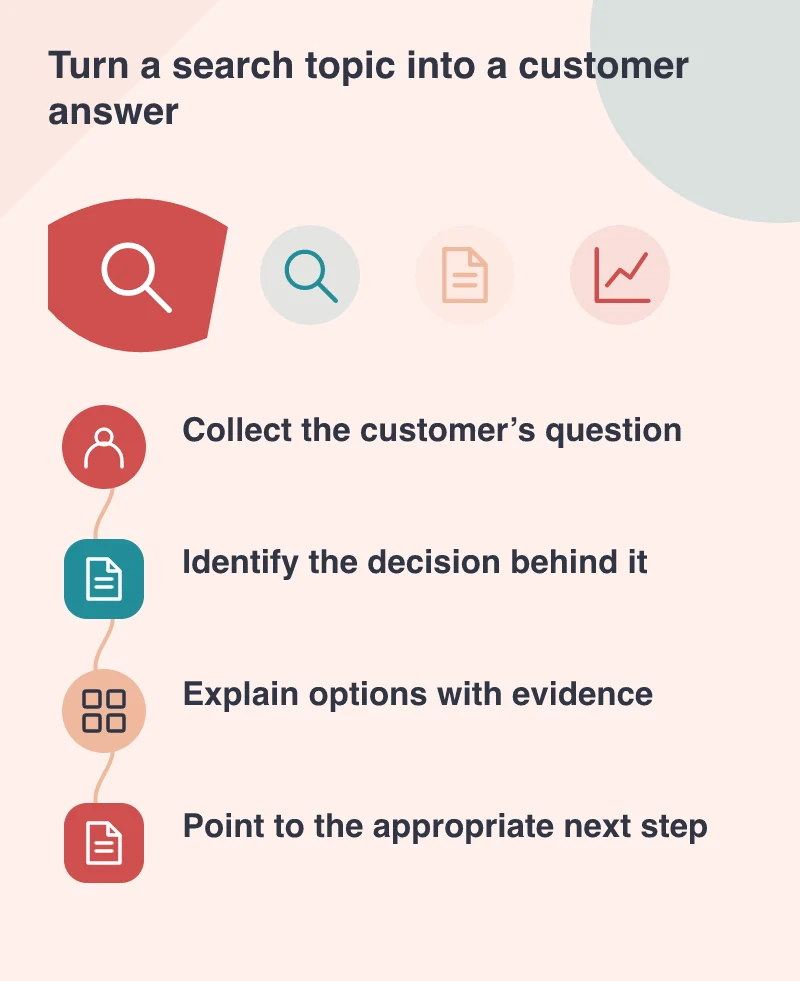
Take the question “Does our shop need a mobile app?” A weak article lists generic benefits of apps. A useful one asks how often customers return, which phone features the service needs and what the existing mobile website cannot do.
The answer might favour an app, improvements to the website or a smaller experiment. That range is part of its value. If every article inevitably recommends the most expensive service, readers have little reason to trust the reasoning.
Keep a record of questions raised in sales and support conversations without exposing customers’ private details. These can reveal confusing terms and missing explanations that a keyword list alone cannot show.
Replace general claims with working detail
Instead of “Magento is flexible,” explain a situation where a retailer has different customer prices and approval steps. Show which requirement creates the complexity and what should be clarified before selecting an approach.
Examples do not need invented results. A short comparison of two possible setups can teach more than an unsupported promise to increase revenue. When the topic depends on a platform announcement, link to the original material and distinguish available features from a proposed implementation.
An illustration should carry part of the explanation. A diagram showing who approves an order is more useful than a decorative robot beside a paragraph about automation.
Give the archive an editorial purpose
Google describes a site-wide signal in this update, initially affecting English searches. The sensible response is to look at the quality and focus of the archive, rather than hurriedly add a fashionable phrase to each page.
Keep articles that still answer a real question. Update an outdated explanation when there is something worth preserving. Combine overlapping pieces when readers must otherwise assemble the answer themselves. Avoid deleting useful material simply because its subject is old.
Before approving a new post, ask what the reader can now understand or do. If the answer is only “they know we offer this service,” the draft needs more work.
Search optimisation can help a good answer reach its audience. It cannot supply the missing answer.