

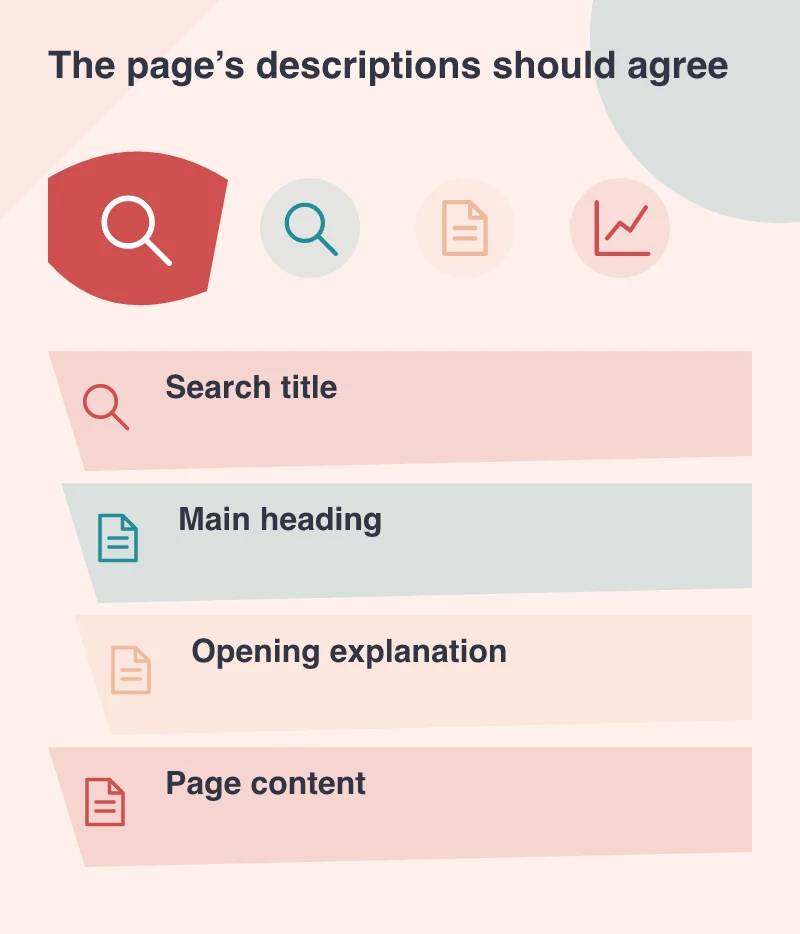
A business searches for its own page and sees a title it did not write. The first instinct may be to assume a penalty or start changing keywords. Google’s August explanation of its title-generation system suggests a more grounded first step: look at the different ways the page describes itself. The search title, visible heading and introduction may be giving the reader several competing accounts of what they will find.
A title in results is assembled for the searcher
Google’s 24 August announcement describes using information from the page, including prominent visible text, when generating titles. HTML title tags remain an important source. The announcement is not a promise that every tag will be displayed verbatim, nor does a changed title by itself establish that a page has been penalised.
That leaves publishers with a clear area of responsibility. They can make the page’s identity accurate and consistent, and avoid asking a title tag to compensate for a confusing page.
Read the page without its brand name
Picture a retailer’s guide headed Everything you need, with a title tag listing several product categories and an introduction about the company’s history. A reader cannot easily tell whether it is a buying guide, a category page or a general brand story. The problem exists even before a search engine chooses a title.
A more useful heading names the subject and purpose. The introduction can then explain the situation the guide helps with. Brand context may still belong on the page, but it should not obscure the information a visitor came to find.
Avoid turning the correction into keyword accumulation
A title that tries to contain every location, product and service can become less descriptive rather than more complete. Choose the specific subject of the page and express it in natural language. Distinguish nearby pages by what they actually cover so the archive does not look like a collection of almost identical promises.
Check the template as well as the individual page. A repeated suffix, an empty field or a duplicated heading can affect many URLs. Editing one title manually will not solve a shared output problem that appears again with the next article.
Keep examples before and after the change
Record the page, the title tag, the visible heading and the result observed. After an editorial correction, allow for search systems to revisit the page rather than expecting an immediate display change. Keep the reasoning tied to reader clarity, because the exact presentation remains outside the publisher’s direct control.
Keep a before-and-after example of the search result and the page it describes. A clear, consistent identity gives both the reader and the team something to evaluate. If the promise is muddled across the title, heading and content, a new title alone is unlikely to resolve it.