

A supplier comparison is only useful if the rows mean the same thing. One vendor quotes installation, another excludes it and a third has a price from last year’s brochure. An AI-generated table can make these differences look tidier without making them comparable. The brief is where much of the real work begins.
Ask for a decision aid, not a pile of links
ChatGPT agent’s July 17 introduction brings browsing, analysis and editable outputs together in a virtual-computer workflow. One appealing use is preparing research that would otherwise involve moving between several websites and a spreadsheet. The result should help a person decide what to investigate next.
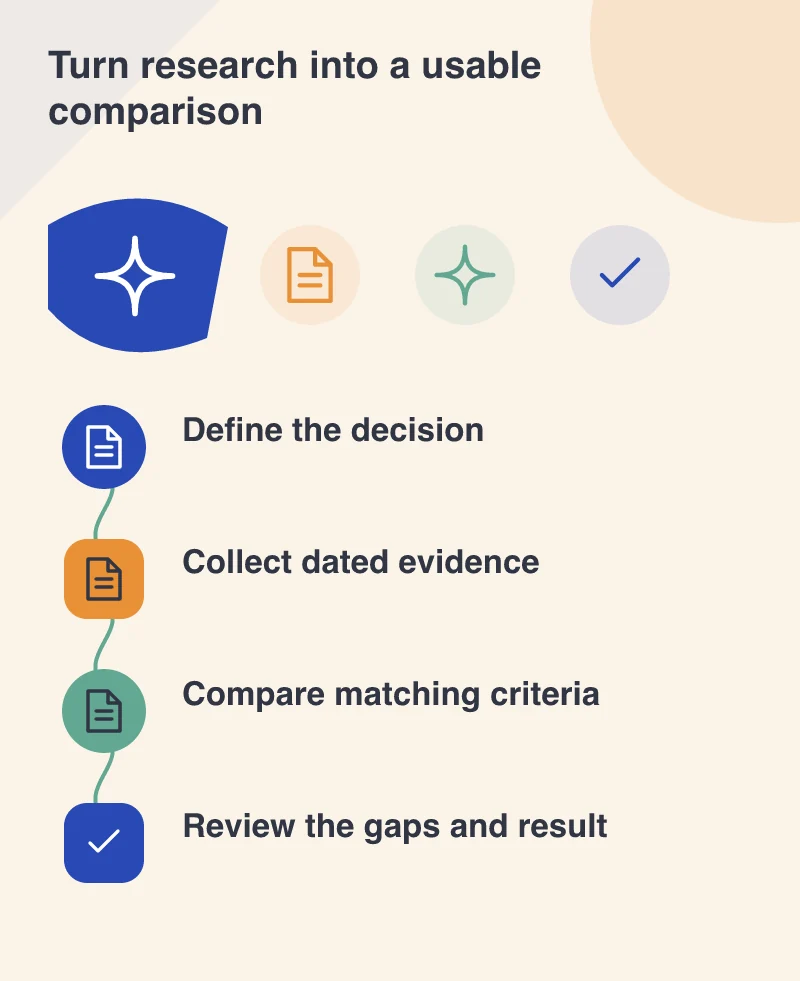
Define the comparison columns first. For a booking platform, they might include supported booking types, data-export options, documented integrations and the date each claim was checked. Ask for an unknown value when evidence is missing. A blank with an explanation is more useful than a plausible guess.
Separate the offer from the marketing language
“Enterprise ready” is not a directly comparable feature. “Supports exporting bookings as a documented file format” is a claim that can be checked. Break broad language into concrete requirements before collecting the evidence. This also helps vendors answer the same questions during a demonstration.
Imagine a training business choosing a scheduling system. It needs to move existing bookings, handle different session types and provide staff with a daily view. A comparison built around those jobs is more useful than one ranked by whichever vendor has the most polished homepage.
Preserve the trail without overwhelming the reader
Keep a source link beside each material claim and record the relevant date. Put a short summary above the table explaining the strongest matches and the unresolved questions. The reader should be able to understand the recommendation, then inspect the evidence that matters.
An editable spreadsheet or document is valuable because the research continues. Staff may add answers from a vendor call or correct a misunderstood requirement. A flattened image of a table makes that ordinary collaboration unnecessarily difficult.
Keep the original requirement list with the comparison. When a stakeholder introduces a new must-have feature, the team can review that criterion across every option instead of adding an isolated note to the favourite vendor. This preserves a fair comparison as the research evolves.
Give the output a practical destination
Finish with the questions that would change the decision. Perhaps one vendor’s migration path is undocumented or another’s integration needs custom work. These are useful prompts for a follow-up discussion, not reasons to hide the uncertainty behind a numerical score.
An agent can help prepare the ground for a choice while the business keeps ownership of the criteria and commitments. The reward is a comparison that is easier to review and extend, with the inconsistencies exposed rather than polished away.