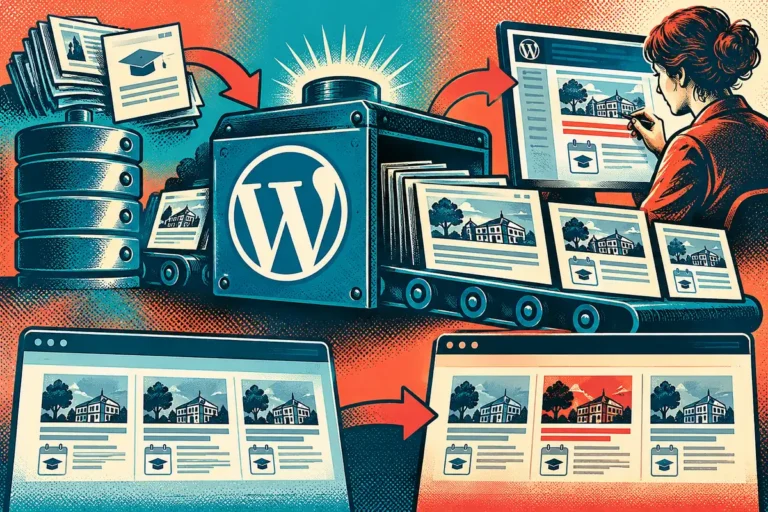
A business can pay for a website and still feel unable to move it. The editor fears touching the layout. Nobody knows where a form sends its enquiries. The only developer who understands the theme is no longer available. The December 16 recap of State of the Word places the freedoms of open source at the centre of WordPress’s identity. For a business owner, those freedoms become especially meaningful at a handover. Being allowed to study and change software helps most when the actual website is understandable enough to continue.
Know what belongs to the business
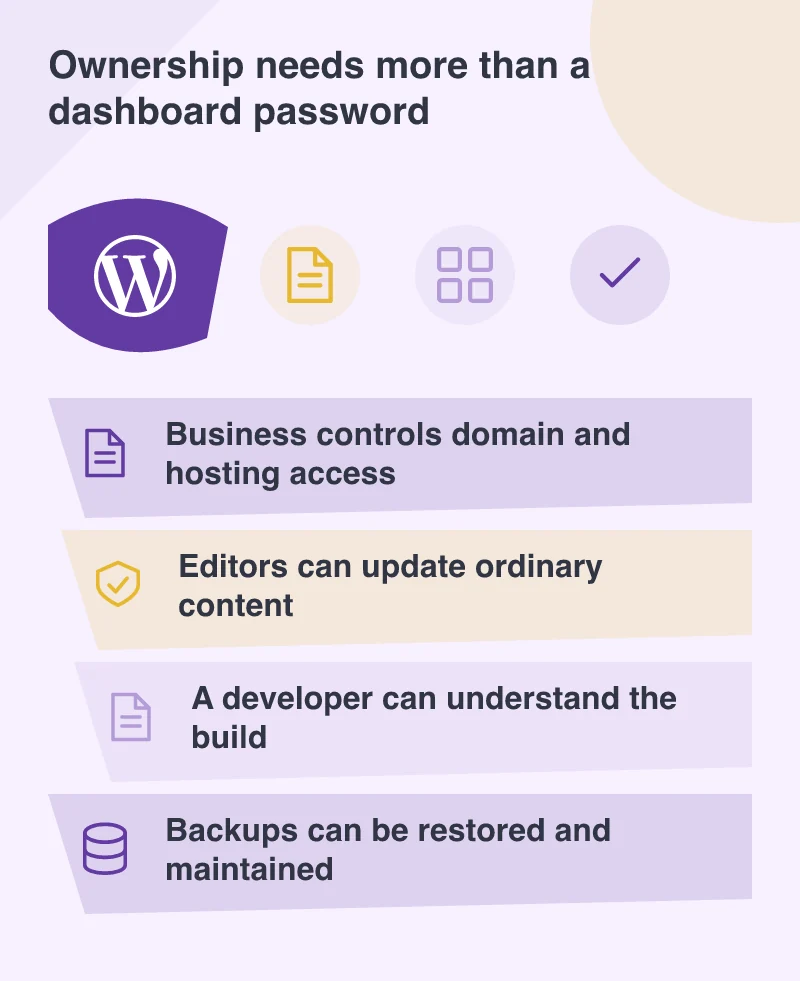
Start with access to the domain, hosting, administrator account and backups. Keep a record of who controls each service and how access is recovered when a staff member leaves.
Distinguish the website’s own code and content from external services it depends on. A booking integration, paid plugin or email provider can have its own account and renewal. WordPress being open source does not make those dependencies disappear.
Record them plainly. The next person should not need to search through invoices or guess which personal email address holds an essential account.
Make routine edits ordinary
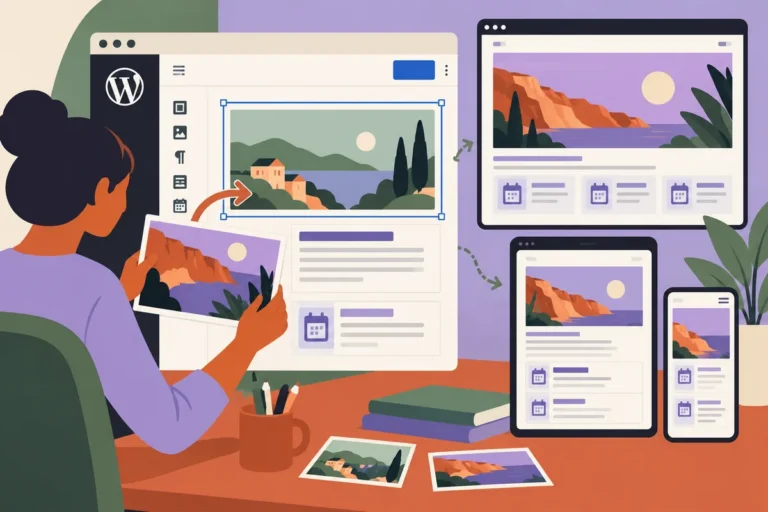
Imagine a marketing colleague taking over the website after its original editor leaves. They need to change a service description and replace a team photograph. Those tasks should not require an explanation of theme source files.
Use a small set of well-named blocks, patterns or content fields for the work the team actually does. Keep structural decisions predictable while making the words and images easy to find.
A short handover exercise is revealing: give the colleague a real update and let them carry it out. Any step that depends on unwritten knowledge becomes a candidate for a clearer interface or a useful note.
Leave the next developer a map
A custom theme can be straightforward to maintain when its purpose and dependencies are clear. Explain where templates live, how assets are built and which features belong to plugins. Include the local setup and release process.
Keep source files in version control and document configuration without committing passwords. A minified stylesheet on the server is not an adequate substitute for the source used to build it.
Finally, test a restore. A backup that nobody has tried to recover is an assumption, not a demonstrated route back to a working site. Document what must be restored together and who can do it.
Open-source freedom does not remove the need for maintenance. It gives the business options about who performs that maintenance and how the website develops. A well-prepared handover turns those options into something practical: another person can pick up the work without starting again.