
A cached listing can be wonderfully quick and quietly wrong. An editor changes a title, a feed imports a new item, or an event moves to a different date. The database holds the new information, but the page still shows an earlier result. WordPress 6.1 is approaching release, with RC3 available for testing on October 25 and the final version scheduled for November 1. One significant performance change is caching of WP_Query results. It is worth testing now, particularly on sites that import or update content through custom code.
Remember the answer, then know when to forget it
A query asks the database for information, such as the latest published articles in a category. Caching allows a repeated query to reuse its result rather than do the same database work again.
That reuse needs a way to become invalid when the underlying content changes. WordPress’s developer note recommends using its core functions for writing posts, so the relevant cache invalidation happens. Code that changes database rows directly must take responsibility for clearing the affected post cache.
This distinction can be invisible in an ordinary page review. The first result looks right. The defect appears only after a change.
Test the route your content actually takes
Consider a business importing training sessions from an internal system. Its import routine may have been built years ago to update rows directly. Manually editing a session in WordPress could work perfectly while the nightly import leaves cached listings stale.
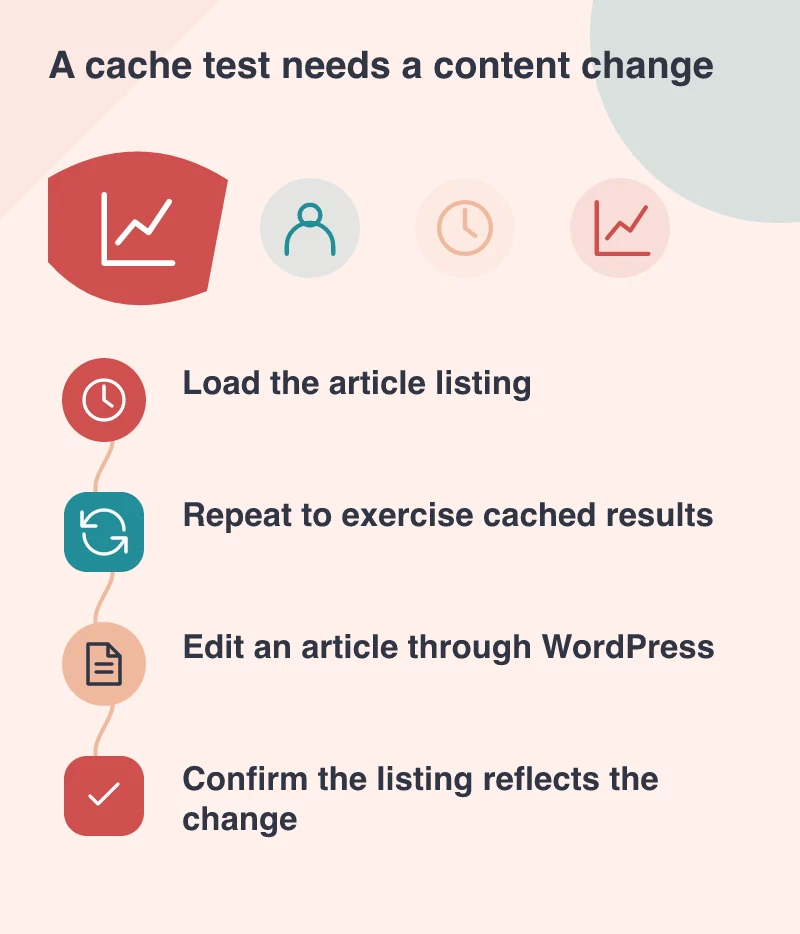
On a test copy, run the real import with a small controlled dataset. Change the date, title or category of an existing item, add another and withdraw one. Check the individual pages and any listings that depend on those values.
Then repeat the same task through the normal editor. Differences between the two paths can point directly to the integration that needs attention. Keep private information out of the test dataset.
Measure the change without hiding the result
Compare repeat requests and database work in a consistent environment. A persistent object cache can retain query results across requests; an ordinary in-memory cache has a different lifetime. Record which setup the test uses before comparing numbers.
Query caching is also different from serving an entire cached HTML page. If a change fails to appear, identify the layer retaining it rather than indiscriminately clearing everything until the symptom disappears.
The release candidate belongs on a test server, as the announcement explicitly advises. Use that opportunity to fix the writing path and retest content freshness.
Performance work succeeds when the page is both quick and correct. A faster answer to yesterday’s question is not enough for today’s visitor.