
A splash screen can disappear quickly while the customer still waits for the information they came to use. The app is technically open, but the booking list is empty and the main button is disabled. For a business app, startup performance should be judged by useful work, not just the first visible frame.
Runtime improvements are a foundation
React Native 0.84 makes Hermes V1 the default JavaScript engine. A platform improvement can benefit an application’s foundation, but it does not remove the work the application chooses to do at launch. Authentication, network requests, large assets and unnecessary setup can still shape the customer’s wait.
Define the first useful state for your product. For a ticketing app, that may be showing the customer’s upcoming ticket. For a staff scheduler, it may be today’s appointments. A generic home dashboard is not automatically the most valuable destination.
Remove work that belongs later
Many applications prepare every possible feature before the user has chosen a task. Review what truly needs to happen before the first useful screen. Some work can wait until a relevant feature is opened, while other information may need to be fetched early.
Imagine a service technician opening a job app at a customer’s door. They need the current appointment and its address. Downloading a full history of unrelated jobs first is a product decision that no runtime upgrade can make sensible. Order the work around the immediate task.
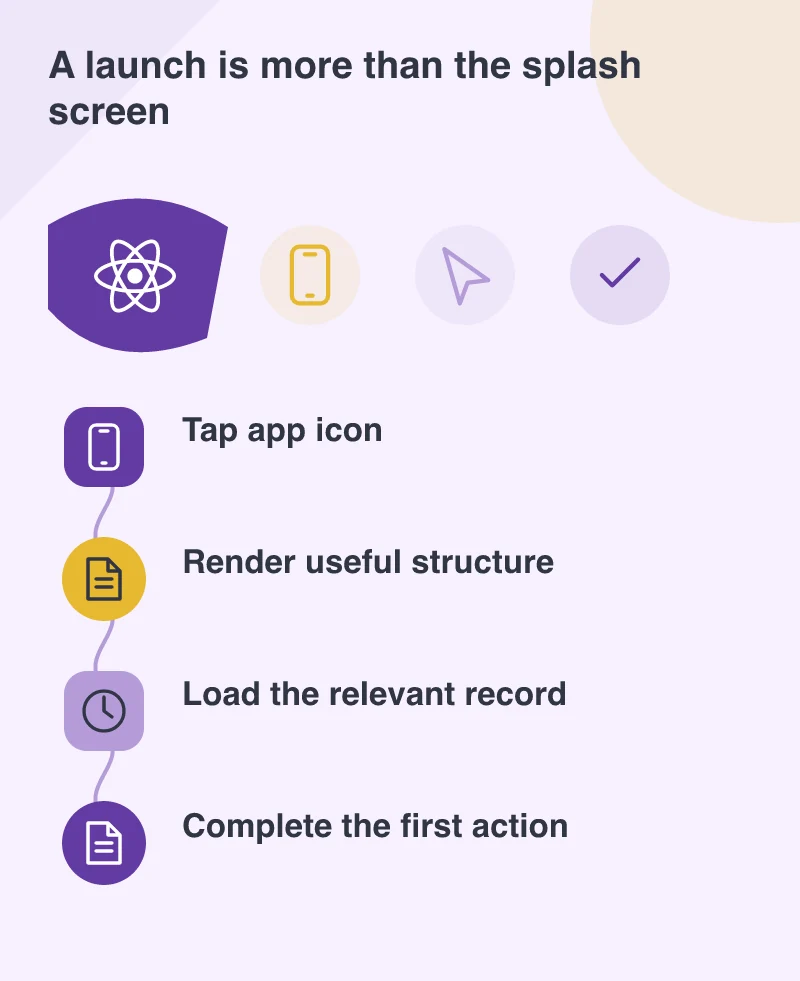
Keep saved and current information distinct
A previously loaded record can make an app useful sooner, provided its freshness is clear. Show when information is being refreshed and avoid presenting an old status as a newly confirmed fact. The right design depends on how much a change could affect the task.
For a simple reference list, saved content may be adequate. For a changed appointment or cancelled ticket, current server information may be essential before acting. Make that difference explicit rather than applying one loading strategy to every screen.
Ask whether the first screen earns its place. If most returning users immediately leave it for the same record or task, consider a clearer return destination. Performance work and navigation design often meet at that first useful moment.
Compare the journey under realistic conditions
Measure a cold launch, a return from the background and a launch with weak connectivity. Use a representative device, not only the newest developer phone. Record the point where the intended first action becomes possible.
This creates a more useful conversation than a broad claim that the app is faster after an upgrade. React Native 0.84 provides a new foundation to evaluate; the product team still decides what deserves to load first. Put the customer’s first useful task at the front of that decision.