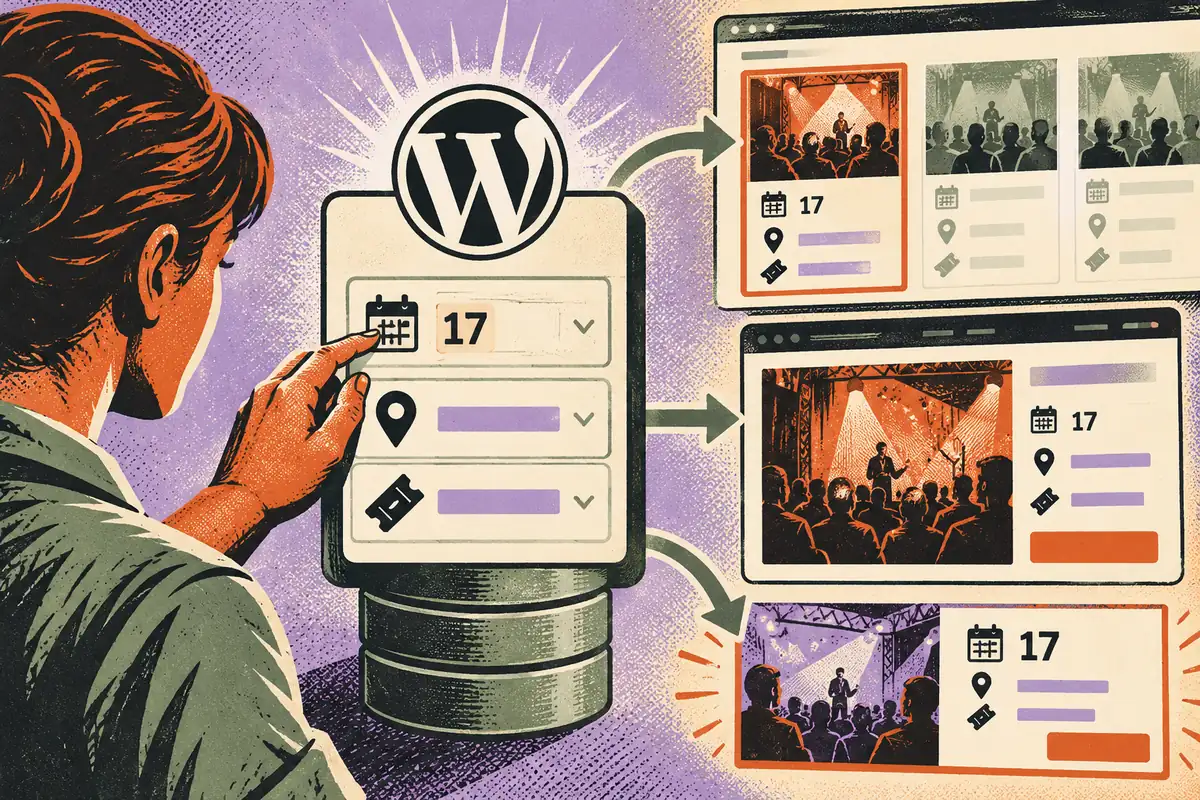
Move an event by one day and the weakness of a content model becomes obvious. The detail page is corrected, the homepage card still shows the old date and a promotional section contains a third version. WordPress 6.7’s new interface for connecting blocks to custom fields makes structured content easier to work with. It is worth using that flexibility to remove duplicated facts, rather than merely add more fields to the editor.
Identify the facts that should exist once
An event has a date, location and booking destination. A team member has a name and role. A service may have a maintained enquiry destination. Those facts can appear in several layouts without needing several independent editorial copies. Begin by listing which details must stay consistent and who owns them.
Not everything belongs in a field. A thoughtful introduction or an article’s argument needs room for ordinary writing. The useful boundary is between reusable information with a stable meaning and prose that explains a particular page. Turning every sentence into a field can make publishing unnecessarily rigid.
Connect the block without losing its purpose
The new WordPress interface can connect supported block content with custom fields. Keep the field’s meaning clear in its name and editing guidance. A label such as Event start date is more informative than Custom value2, especially for a colleague who did not build the template.
Preview the result in every place the value appears. The same date may need different presentation in a compact card and a detailed schedule, but it should retain the same meaning. If formatting is applied separately, document where it happens so a future template change does not alter the underlying fact accidentally.
Design for incomplete information
An event may not yet have a venue or a booking link. Decide what the page should show in that state. A blank value should not leave a broken button, a mysterious empty label or a layout that implies information has been lost. Publishing rules can make genuinely required details explicit.
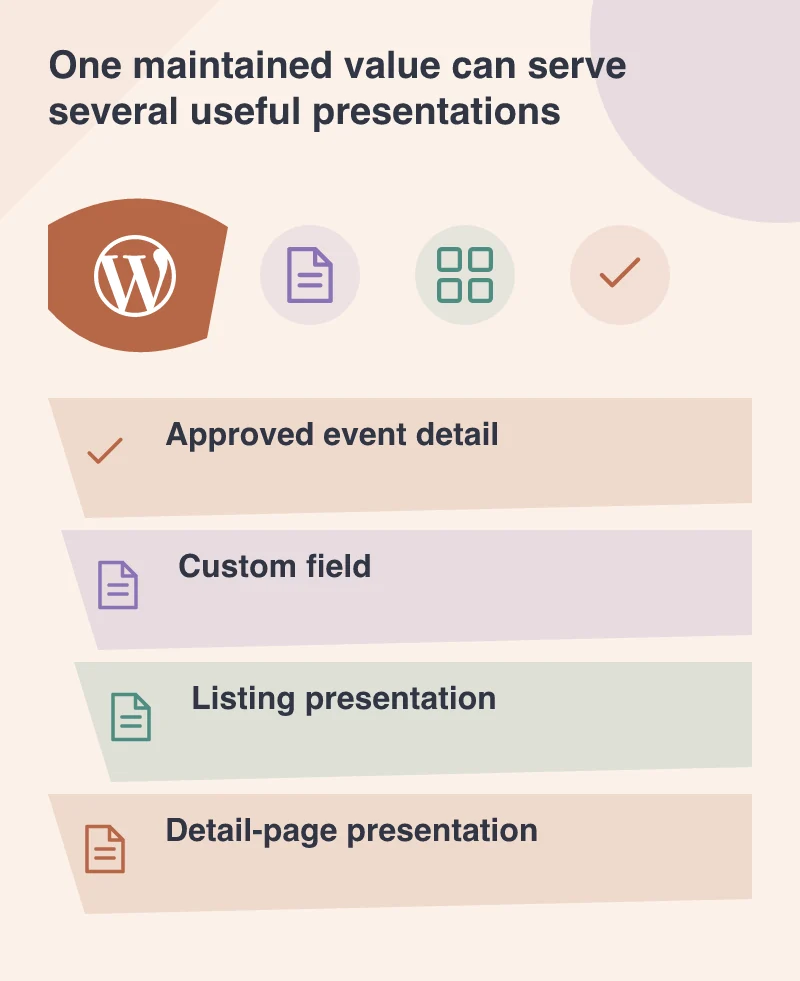
Also consider changes after publication. If the venue moves, the field should update the connected views through the intended workflow. Review any cache or derived output that could delay that change. A single editorial source is valuable only when its presentations actually follow it.
Rehearse one correction across the site
Ask the responsible editor to update a test event and inspect the listing, detail page and reused section. The exercise should reveal whether the field is easy to find, whether the right value is connected and whether the result remains readable on a phone.
The goal is a correction that reaches the places it is meant to reach, with no hidden copies left behind. When a colleague can change the event once and trust the connected views, the website becomes easier to own. Structured content earns its place by removing a real source of inconsistency from everyday publishing.