
A report showing a hundred new links can look reassuring. It says almost nothing about whether anyone needed those links, followed them or found a useful destination. Counting placements is easier than judging the reputation a business is building. Google’s December 14 link spam announcement makes that distinction pressing. The company says SpamBrain is being used to detect sites buying links and sites used to pass outgoing links, neutralising the ranking credit of unnatural links. A promotional strategy built around manufacturing that credit has a fragile foundation.
Ask what the reader gets
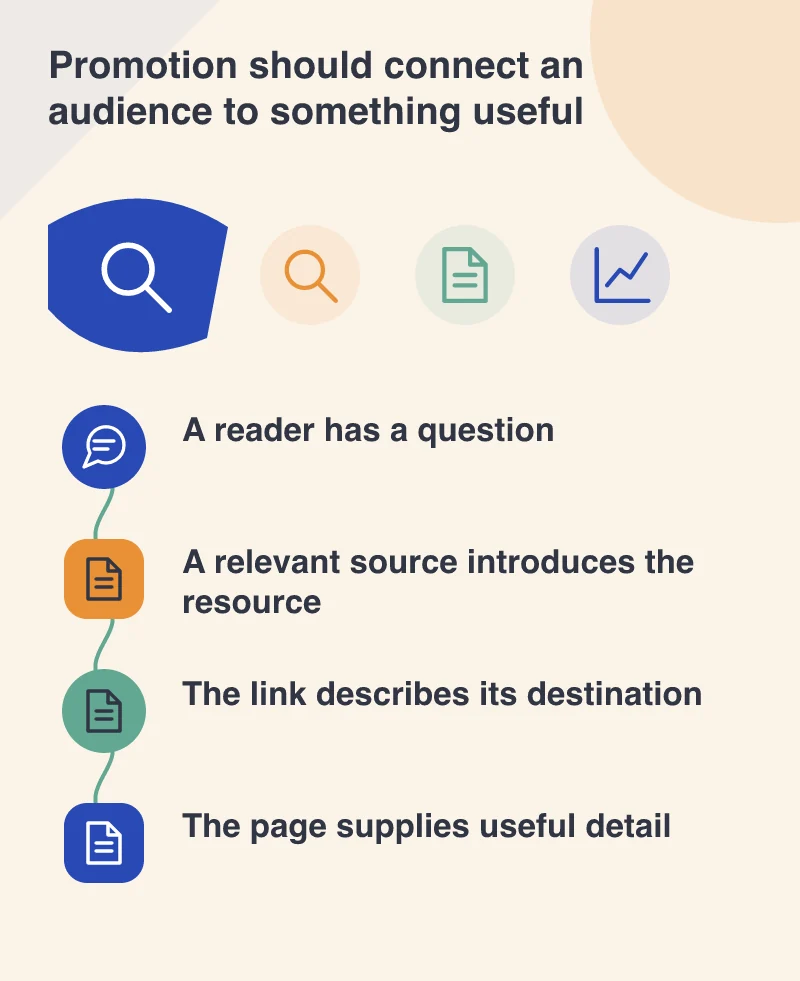
Imagine a specialist supplier publishing a clear guide to measuring a replacement part. A relevant trade association might reference it because the guide answers a question its members regularly ask. The destination has a purpose beyond being a place to insert a link.
Now compare an unrelated article that awkwardly mentions the supplier in its second paragraph. If the sentence exists only to carry a purchased search phrase, the placement offers little to the reader.
This is a practical review a business owner can perform without understanding every detail of search ranking. Open a sample placement. Read the surrounding page. Would the link still make sense if search engines did not exist?
Build a resource someone can confidently recommend
A useful destination might be a sizing table, a documented comparison, a worked example or an explanation of a difficult process. It does not need to be large. It needs to answer its question accurately and clearly.
Make the page easy to reference. Give it a descriptive title, a stable address and an obvious explanation of who it helps. Keep important information in readable text rather than requiring a download before the visitor knows what is inside.
Then tell relevant people that it exists, with an honest reason it may interest their audience. Good outreach connects the resource to a real editorial need. It does not require the recipient to insert a specific promotional phrase.
Change the report you ask for
Ask a promotion partner to show the actual pages and explain the intended audience. Include referral visits and meaningful enquiries where they can be measured, alongside the work completed. No single metric explains every useful reference.
If search traffic changes during the announced rollout, investigate the affected pages and wider site context. A movement in a chart alone does not prove which links were involved. Do not answer uncertainty by buying a different package of the same thing.
The stronger objective is a business people can find through credible, relevant recommendations. Links can contribute to that reputation when they take someone somewhere worth visiting. A link count without that purpose is an incomplete measure of progress.