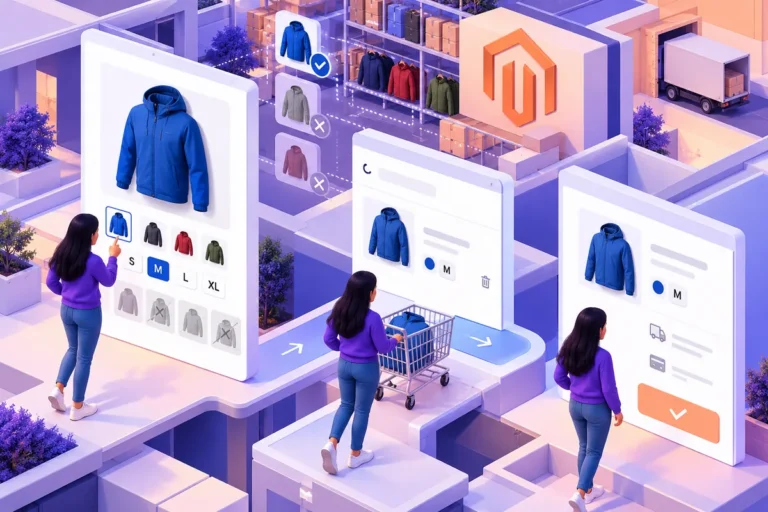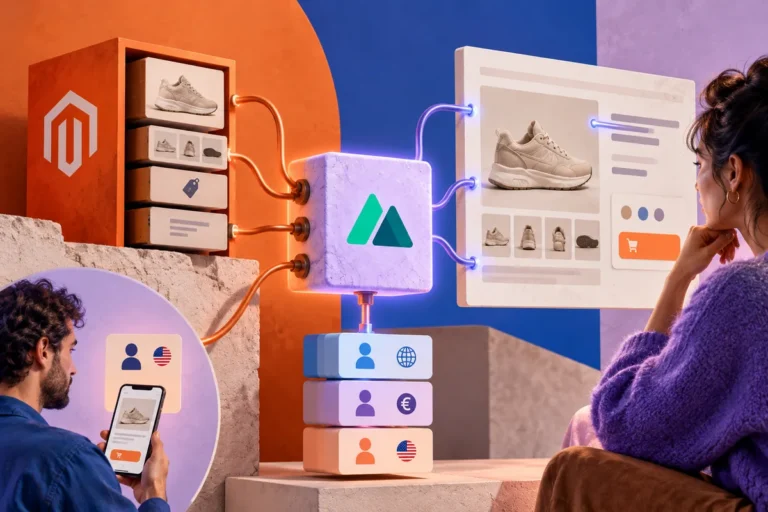

A heart icon promises that a customer can come back later. What they often find is a grid of product names with no reminder of the size, finish or quantity they had in mind. For considered purchases, a wish list can do a better job: it can preserve the beginning of a decision.
Design for a return visit
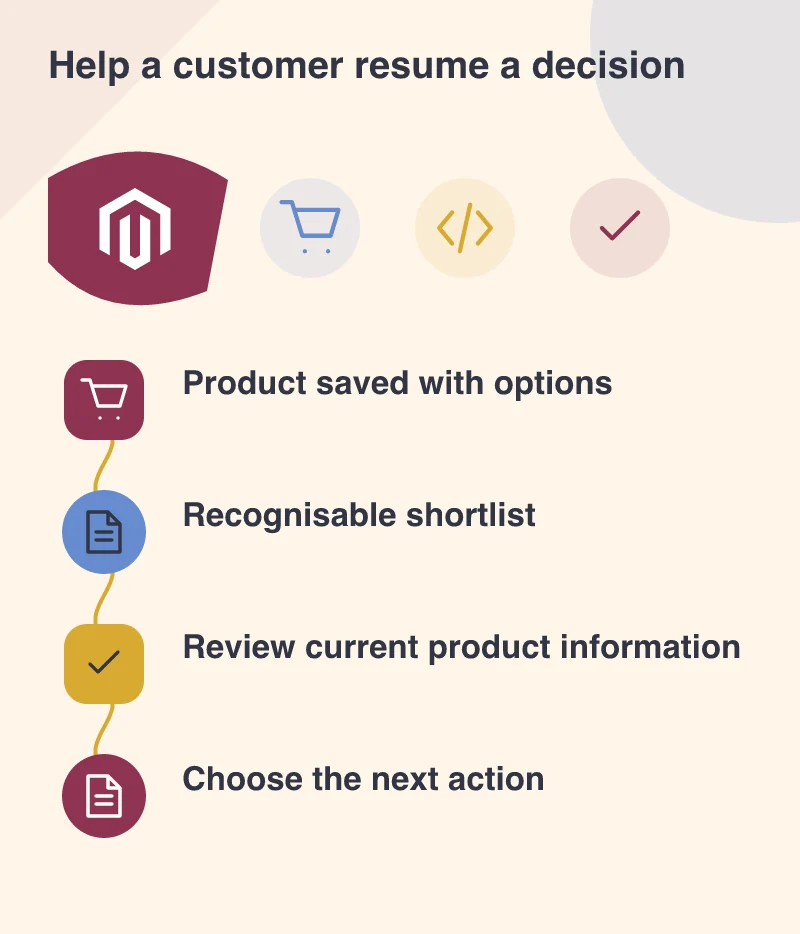
Magento’s 2.4.8 wish-list GraphQL schema includes product information, quantity, an item description, selected custom options and the date an item was added. Those details give a headless storefront more to work with than a binary saved state. They do not need to make the interface complicated.
Imagine a customer planning lighting for a room. They shortlist two fittings over several visits. Showing the selected finish and a recognisable image helps them continue the comparison. Requiring them to open every product again just to remember their earlier choice makes saving feel less useful.
Saving is not reserving
A shortlist should make its promise clear. Keeping an item for later does not necessarily hold stock or preserve a previous price. When the customer returns, show current product information and explain any relevant change before they move into the basket.
This distinction is especially important when a saved selection is no longer available. Preserve enough context to identify it, then offer an understandable route to alternatives or the product family. Silently deleting the item can make the customer wonder whether they saved it at all.
Keep the next action close
The shortlist should support the type of decision your products require. Some customers are ready to add an item to the basket. Others need to revisit specifications or compare dimensions. Make these actions clear, with the saved choice carried through where appropriate.
Avoid filling the page with generic recommendations before the customer can inspect their own list. The saved items are an expression of intent. Give them the strongest visual position and use supporting content only where it helps the person finish that decision.
Match the design to the installed edition
Magento Open Source and Adobe Commerce do not offer identical wish-list capabilities. The schema explicitly distinguishes the number of lists available. Confirm the actual platform and extensions before promising named project lists or other behaviours in a custom design.
A modest shortlist done well can make a store feel attentive. It remembers the details that matter, explains what may have changed and helps the customer pick up where they left off. That is a more useful purpose than merely increasing the number of heart icons clicked.