
A product page can ask for the same information several times. The title needs the name, the gallery needs images and a sticky purchase panel needs the price. When each part fetches independently, the code becomes harder to maintain and the screen can briefly show mismatched states. A coherent data model makes the design feel coherent too.
Let the page own its product
Nuxt 4 was released on July 15 with changes to project organisation and data fetching. Components using the same data key can share their result. For a Magento storefront, this is a useful prompt to decide which information belongs to the page and which belongs to an individual interaction.
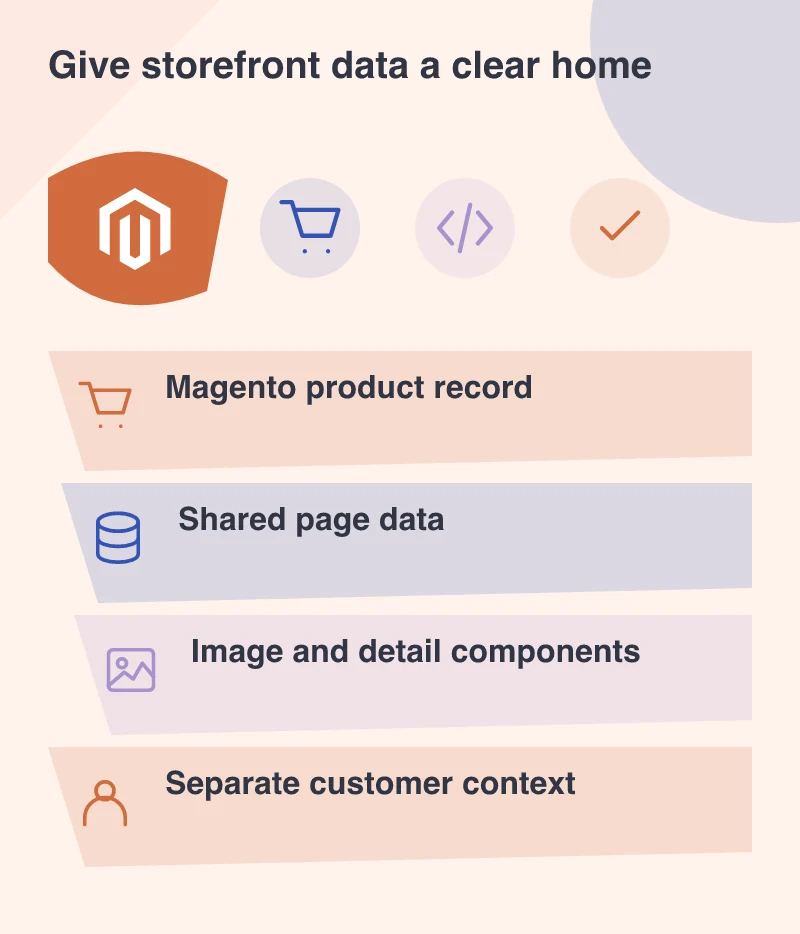
The product identity, basic description and selected gallery should have an understandable source. Components can then present that information in different ways without inventing their own competing versions. This is a design decision with an architectural consequence, rather than a request to use one enormous query for everything.
A shared key is a claim about sameness
Two requests should share a key only when they represent the same data in the intended context. A product in one store view, currency or customer context may not mean the same thing as a similarly named product elsewhere. Make those distinctions explicit in the data design.
Consider a store serving two languages. Moving between language views should not leave the old description in one panel while the new title appears above it. The page needs a consistent identity that includes the relevant context, followed by a deliberate update of its dependent components.
Keep private information out of the public model
A public catalogue page and a customer’s basket have different lifetimes and access boundaries. Sharing product information across visual components does not mean sharing an authenticated response across customers. Keep customer-specific information separate and make the caching policy understandable.
Nuxt 4 also separates application, server and shared project contexts more clearly. Use that distinction to document where trusted server work happens and where browser presentation happens. Future maintainers should not need to infer a security boundary from the name of a visual component.
Spend the simplification on a better interface
When the data model is predictable, the frontend can give useful feedback during a variant change: retain the page structure, update the affected information and show a clear waiting state. That is preferable to replacing the whole product page with a spinner.
A framework upgrade becomes valuable when it helps the team deliver these ordinary details consistently. For headless Magento, the strongest architecture is often the one that makes a product choice, a language change and a return visit feel unsurprising to the customer.