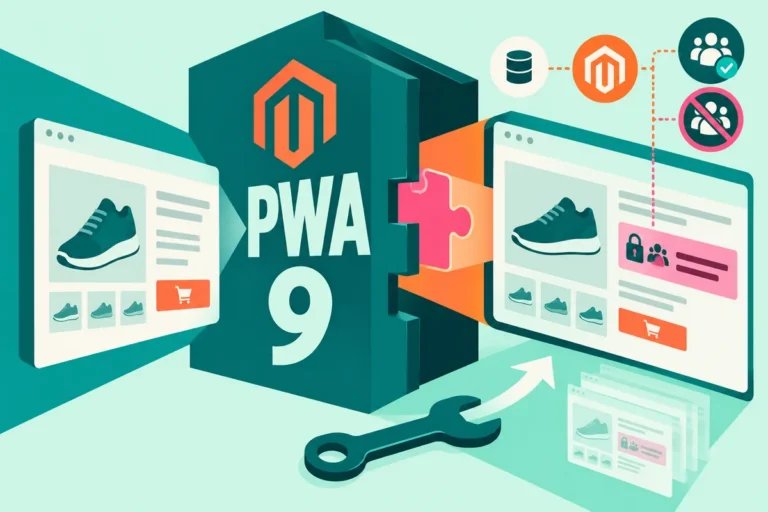

A shopper is interested but not ready to buy. Saving the item should make the next visit easier, not merely create another place to display a product photograph. PWA Studio 11’s August release completes wish-list features in the Venia storefront reference. That is a good moment for a headless Magento team to consider what the customer actually expects the list to remember.
Saving is a different decision from buying
The release, compatible with Magento 2.4.3, includes routes for adding items from several storefront contexts and moving items from a wish list towards the basket. The exact capabilities available still depend on the backend and project configuration. A reference feature should be checked against the edition and experience the business intends to provide.
The customer’s intention is usually straightforward: help me find this again. The interface should make it clear whether the item was saved, where to return and whether signing in is required to keep it across visits.
Preserve the meaningful part of the choice
Imagine a lighting retailer with several finishes and sizes. A customer who saves a particular combination may be disappointed to return to a generic product with no indication of what they chose. Decide which options the list can retain and explain any choice that still needs to be made before purchase.
Photographs and labels should support that memory. Two similar products can be hard to distinguish weeks later. A concise model name, selected finish and a clear route to the product detail may be more useful than making the image larger.
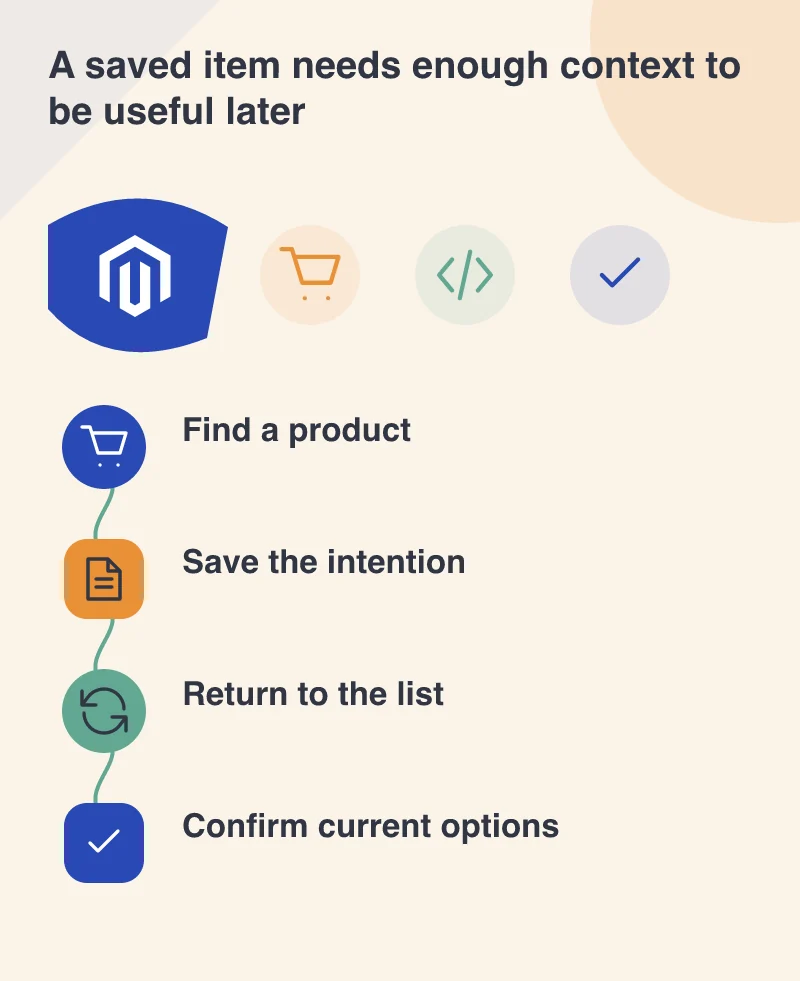
Check the current offer when the person returns
A saved product can change price or become unavailable. The wish list should not present old information as a guaranteed offer. When the customer moves towards the basket, verify the current state and explain changes at the appropriate moment. Keeping an intention does not freeze the store’s catalogue in time.
Test an item that is removed, a variation that becomes unavailable and an account that is signed out. Decide how much context can remain safely visible on a shared device. A list that appears to work only on the first visit has not fulfilled its main purpose.
Make the list easy to leave as well as use
People should be able to remove saved items and understand the result. If several lists are supported by the relevant backend, naming and moving items should remain clear. Avoid turning a simple memory aid into an administrative task with controls that outgrow the customer’s need.
Some purchases need comparison, discussion or a return visit. A wish list should preserve that intention without pretending the saved price or availability can never change. When the customer returns, make the current choice clear and let them continue at their own pace.