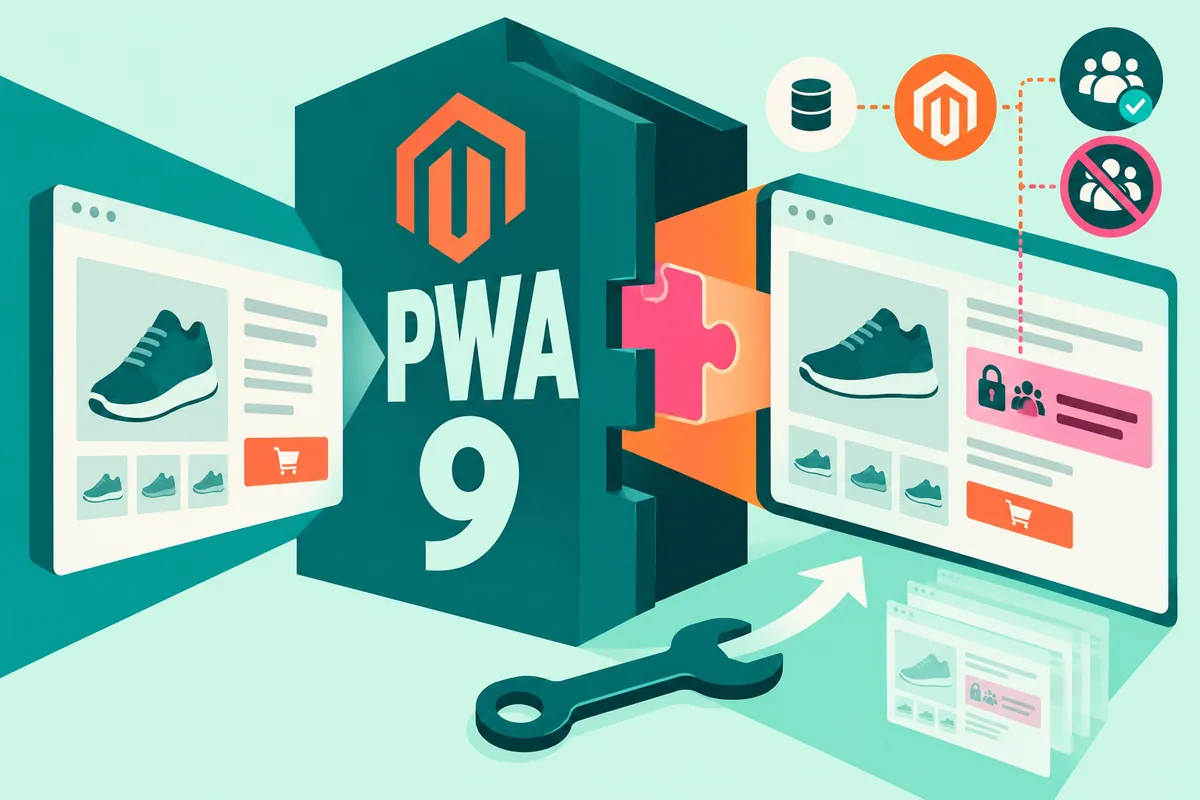
A merchant asks for a small change to a product screen and receives a result that looks simple. Months of future maintenance can hide behind that small result if the implementation copied an entire framework component. PWA Studio 9’s February release expands the tools available for extending a Magento storefront. It is a useful opportunity to discuss customisation in terms of ownership and updateability, not only the appearance of the finished screen.
A defined change is easier to explain
The release expands the extensibility framework and introduces Targetables, allowing build-time changes to relevant source files without requiring developers to copy those files into the storefront project. Its notes also flag a scaffolding problem addressed by a follow-up patch. Both points matter: extension mechanisms can help, and release-specific details still need to be read.
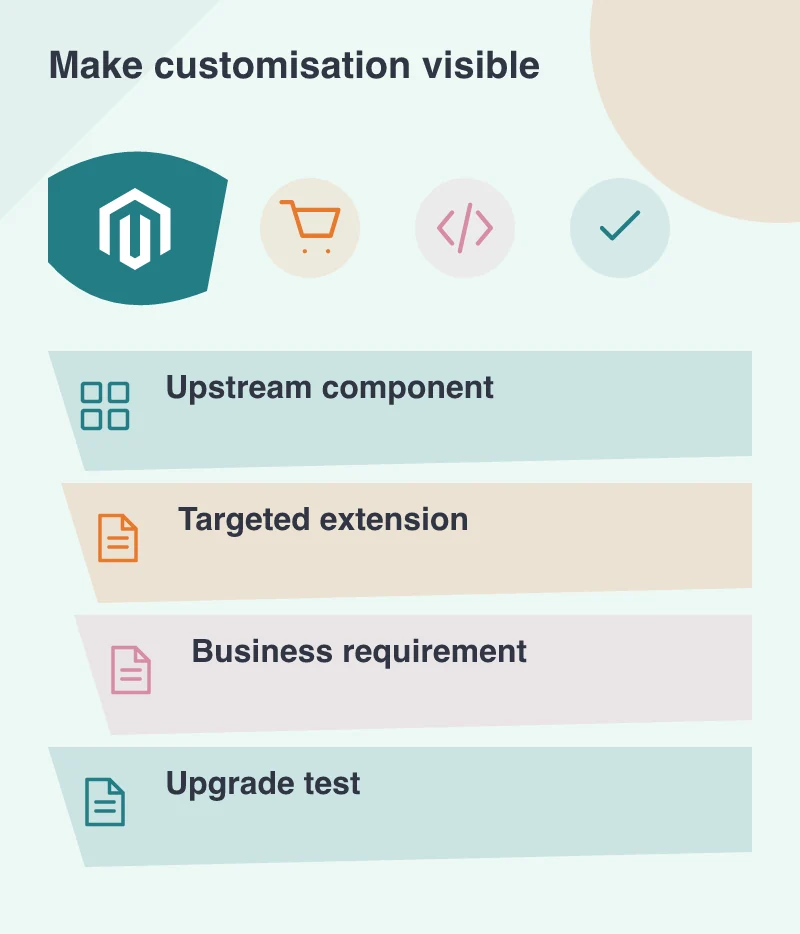
For a business, the useful request is an explanation of how a custom requirement connects to the shared framework. That explanation need not include every internal API, but it should identify the component changed and the behaviour the project now owns.
Separate the visual request from the business rule
Take a store that needs to display a trade-only purchase message. The visible change may be one line of text, while the underlying rule depends on account status and product eligibility. Moving the text is a presentation task; deciding who may see or act on it is a commerce task.
Test both together. A custom component should not merely hide an action while leaving the underlying operation unrestricted. Conversely, a correctly enforced rule can still be confusing if the interface gives the customer no understandable explanation.
Keep the upgrade question close to the implementation
Ask how the change will be checked when the relevant PWA Studio packages are updated. A defined extension point can reduce unnecessary copying, but it does not eliminate compatibility work. A test should show both the ordinary state and the exceptional state that motivated the customisation.
Keep a short record of dependencies and any remaining source copies. When a framework feature eventually overlaps with custom behaviour, that record helps the team decide whether to retain, simplify or remove its implementation instead of maintaining two versions indefinitely.
Review the handover from more than one role
The catalogue editor should know which information they can change. The support team should recognise the messages a customer sees. The developer should know which rules require backend enforcement. A headless project becomes easier to operate when those responsibilities are visible rather than hidden in a frontend repository.
Leave the next developer enough information to identify the custom behaviour, its extension point and the test that proves it still works. The aim is a storefront whose differences are understood. Avoiding custom code altogether would miss the reason the business chose a tailored experience in the first place.