
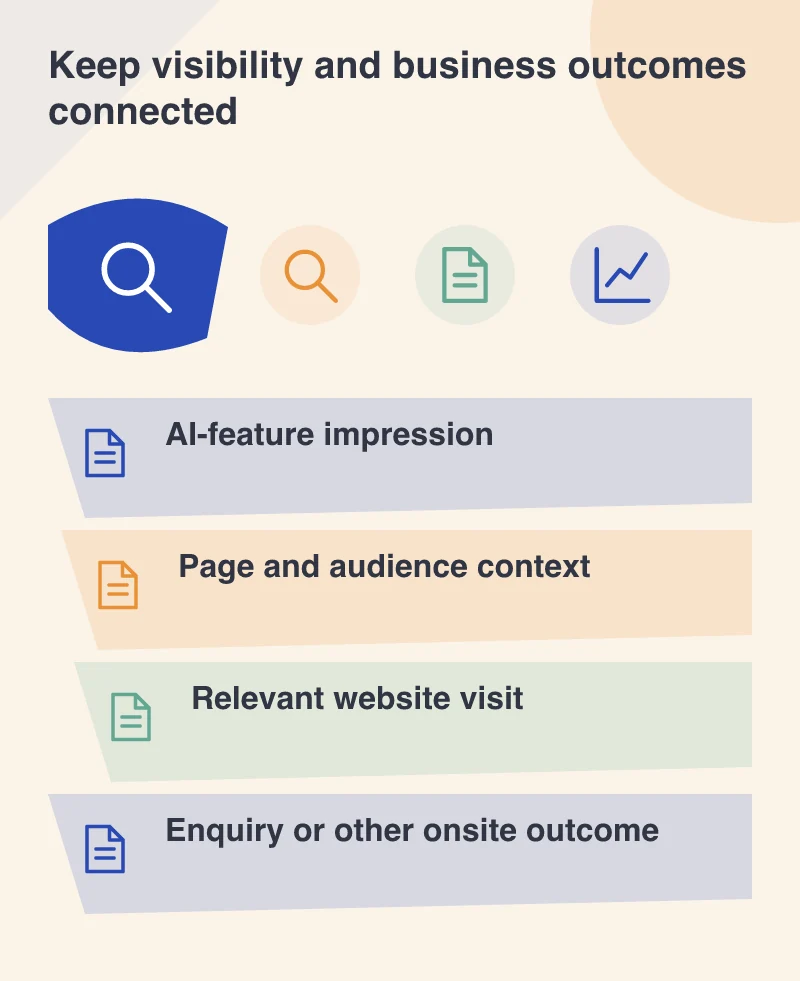
A page appearing in an AI-generated search experience is useful to know about. It does not, by itself, tell you whether someone read the page, contacted the business or bought a product. New reporting can improve the visibility picture while making clear distinctions more important.
Understand what the new view contains
Google’s June 3 announcement introduces dedicated Search Console views for impressions within generative AI features in Search and Discover. The initial rollout covers a subset of websites. The report includes detail such as pages, countries and dates, with device information available for Search results.
Treat it as another way to inspect exposure. A page appearing frequently may be contributing to the business’s visibility, but an impression is not the same as a visit or a qualified enquiry. Keep those stages separate when reporting results to stakeholders.
Start with a meaningful page group
A site-wide total can hide differences between service pages, help content and general articles. Group pages by purpose before interpreting the new data. The question is not simply which URL appears most often, but whether the visibility relates to subjects the business wants to be known for.
Imagine a specialist supplier with detailed maintenance guides and a separate product catalogue. A guide receiving AI-feature impressions may support awareness and understanding. Its role is different from a product page helping someone evaluate a purchase. The reporting should recognise both without forcing them into the same measure.
Compare without inventing an explanation
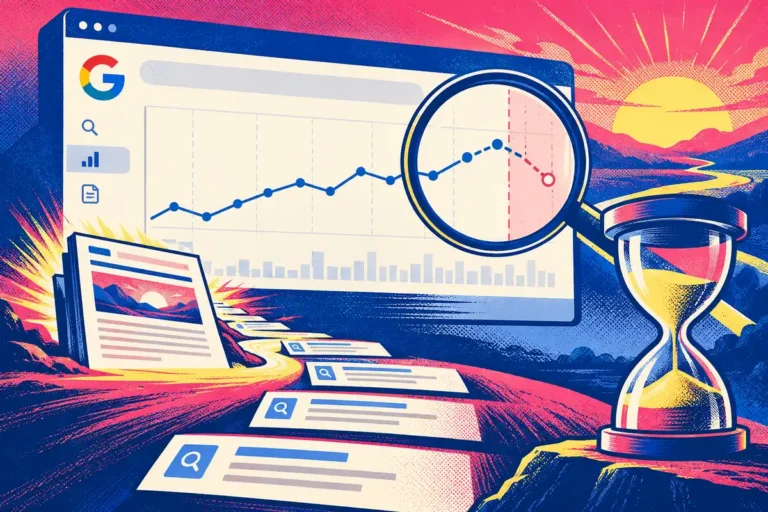
Record the period, page group and any relevant site changes. If an article was rewritten or a product section expanded, note that alongside the chart. A coinciding movement is worth investigating, but it does not prove that the edit caused the change.
Small or partial data sets need particular care. A newly available report may not support the same historical comparison as an established one. Explain the scope of what is visible before turning it into a broad statement about the website’s performance.
Keep a record of when the report became available for the property. That prevents an apparent blank period from being described as zero exposure. Availability, measurement scope and observed performance are separate parts of the reporting story.
Bring the discussion back to the visitor
Review the pages that receive relevant visibility. Do they answer the question clearly, show useful evidence and offer an appropriate next step? This is work a content team can act on even when the search presentation itself is outside its control.
The new view can make AI-search reporting less speculative. Use it to identify subjects and pages worth examining, then connect that evidence to the rest of the customer journey. Good reporting tells the business what has been observed, what remains unknown and which improvement is worth trying next.