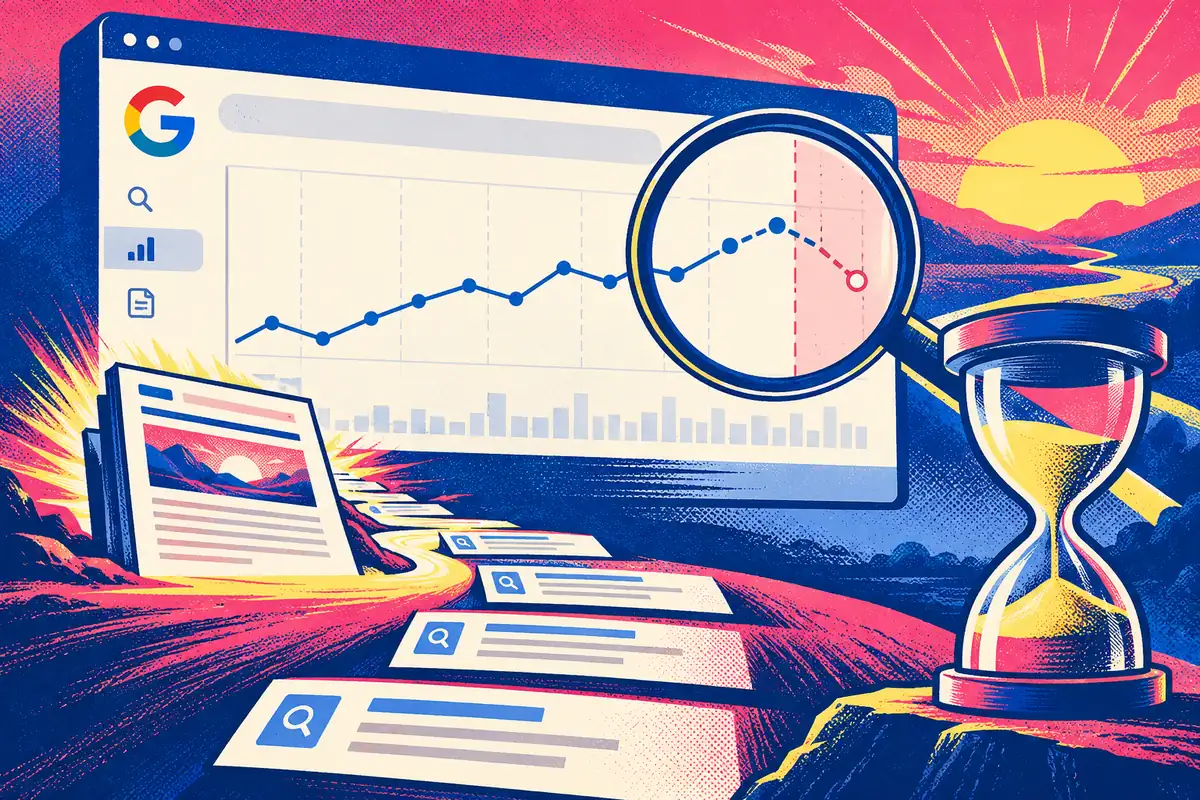
A newly published page receives its first search impressions and the team wants to know what they mean. Search Console’s new 24-hour view makes recent activity easier to examine, with fresher data and hourly detail rolling out gradually. That is helpful for noticing a change. It does not turn the first few incomplete hours into a reliable judgement of a page’s long-term performance.
Read the newest point with its collection state
Google’s announcement explains that the view can show information before collection is complete, indicated in the interface with a dotted line. A recent dip may therefore describe an unfinished period rather than a sudden loss of interest. Check that state before turning the chart into an urgent development request.
The rollout is gradual, so not every property will display the new view immediately. Keep the available reporting scope clear when discussing results. The new window also uses the browser’s local time zone, which matters when several people compare screenshots from different locations.
Start with the question you are trying to answer
For a new article, the useful question might be which searches are beginning to surface it. For a changed product page, it might be whether the relevant query and destination still align. Define that question before exploring every dimension in the report.
Separate impressions, clicks and the site’s own conversion measures. Search Console can reveal useful information about search visibility and interaction, but a click is not the same thing as a qualified enquiry or completed order. Connect the evidence carefully rather than treating every reported movement as a direct business outcome.
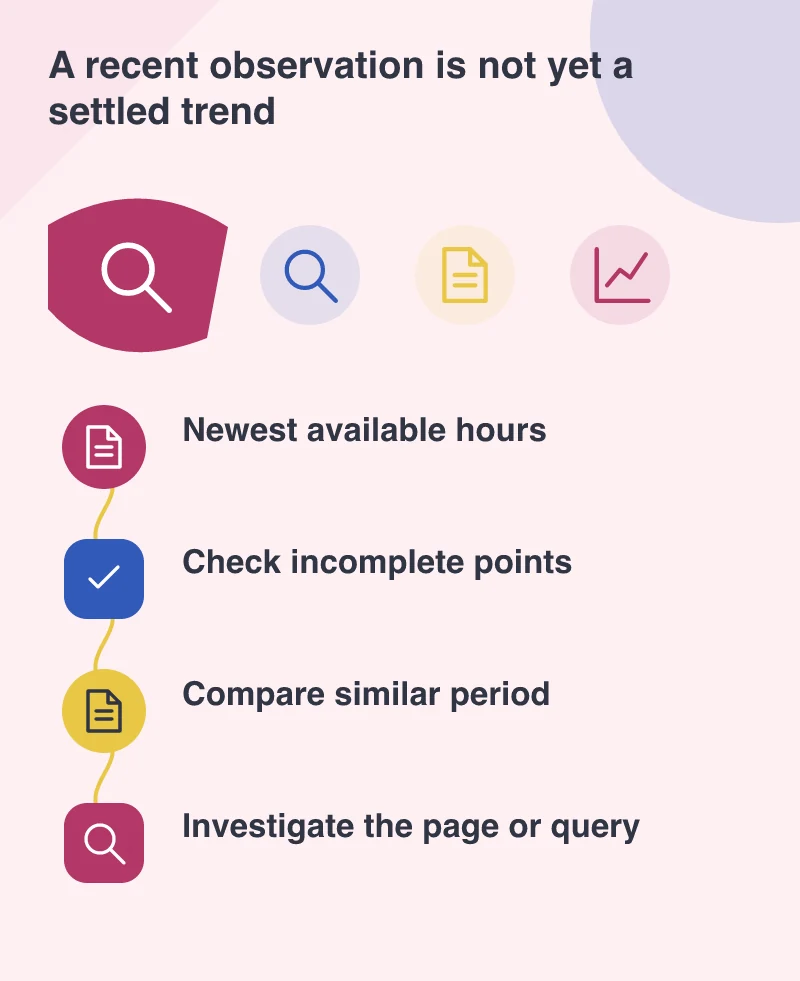
Compare like with like
A partial morning and a full previous day are poor comparison partners. Consider the completeness of the period and ordinary patterns in the business before interpreting a change. A store with weekday buying activity may behave differently at the weekend without anything being wrong with its pages.
Also inspect the specific query, page, device or country where a change appears. An aggregate number can conceal several different movements. A narrower view gives the team a more useful investigation than a general instruction to fix SEO because one overall line has moved.
Use the signal to choose the next check
If a page is receiving unexpected queries, review its title, content and the expectation created by the search result. If clicks change while the page’s role remains important, inspect the actual destination and relevant technical state. The newest report should lead to a concrete question that can be examined.
Keep a record of meaningful page changes so later comparisons have context. Faster reporting is valuable when it supports a measured response, not a cycle of rewriting content after every hourly fluctuation. The next useful action is the one supported by a clear question, a comparable period and a page someone has actually looked at.